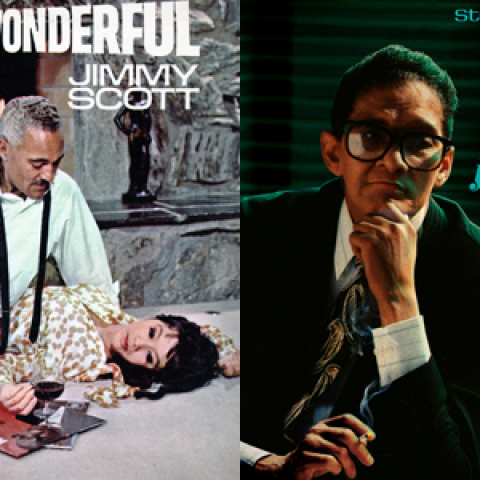
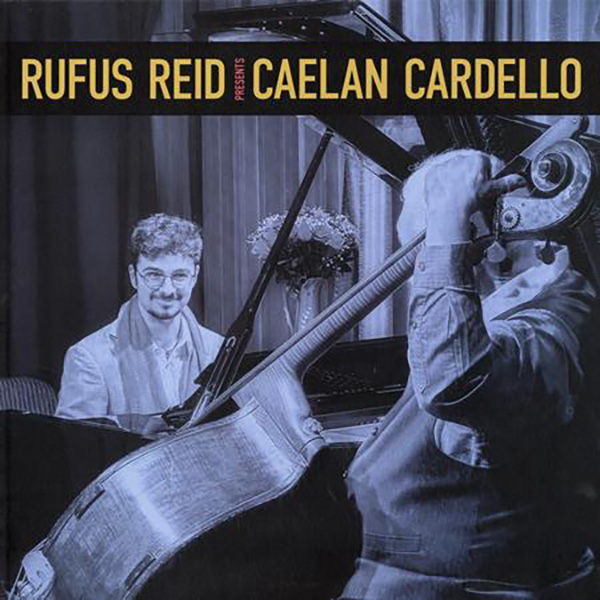
 The clarity of the soundstage was just as superb, as I remember from my time with the DAC502. This was particularly evident on a new album of jazz duets produced by erstwhile Stereophile writer Michael Fremer: Rufus Reid Presents Caelan Cardello (16/44.1 WAV files, Liam Records), one of the last albums mastered by Bob Ludwig before he retired. Reid's round-toned double bass and Cardello's Fazioli piano were palpably present in the rather dry club acoustic, the instruments superbly well-defined in both space and tonal balance.
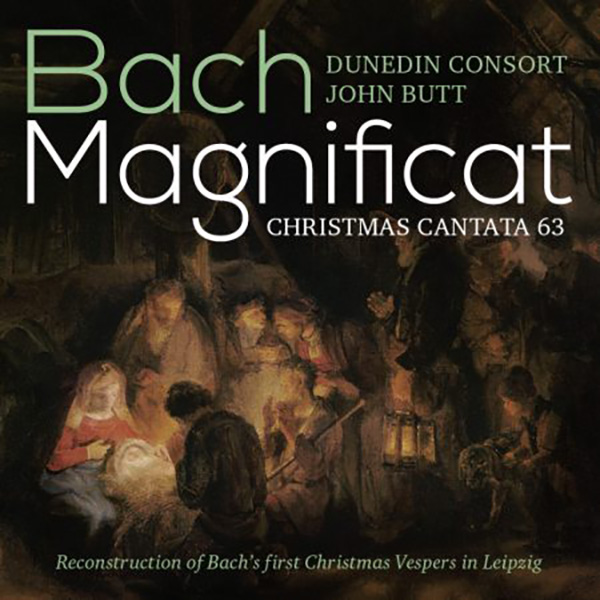
As I was finishing writing this review a few days before Christmas, I finished my listening first with the Dunedin Consort's "Hodie Christus natus est a 8," from Magnificat (24/192 ALAC, Linn Records). The sparse arrangement was laid meticulously clear by the Helios, each singer presented stably in the stereo image. I was intending to audition just this one track, but I ended up listening to the entire album. I didn't quite get up to dance in the first movement of the "Christen, atzet diesen Tag" cantata, but it was a close-run thing.
The clarity of the soundstage was just as superb, as I remember from my time with the DAC502. This was particularly evident on a new album of jazz duets produced by erstwhile Stereophile writer Michael Fremer: Rufus Reid Presents Caelan Cardello (16/44.1 WAV files, Liam Records), one of the last albums mastered by Bob Ludwig before he retired. Reid's round-toned double bass and Cardello's Fazioli piano were palpably present in the rather dry club acoustic, the instruments superbly well-defined in both space and tonal balance.
As I was finishing writing this review a few days before Christmas, I finished my listening first with the Dunedin Consort's "Hodie Christus natus est a 8," from Magnificat (24/192 ALAC, Linn Records). The sparse arrangement was laid meticulously clear by the Helios, each singer presented stably in the stereo image. I was intending to audition just this one track, but I ended up listening to the entire album. I didn't quite get up to dance in the first movement of the "Christen, atzet diesen Tag" cantata, but it was a close-run thing.
 Magnificat was followed by Sinéad O'Connor's "Silent Night (Long Version)" (16/44.1 FLAC, Chrysalis/Qobuz). O'Connor's vocals floated satisfyingly free in front of Peter Gabriel's synthesizer wash, though, peculiarly, her echoed sibilants were thrown to the far left and right of the soundstage. The Helios was allowing me to be aware of something I had never noticed before—that detail-retrieval thing!
I have been using the MBL Noble Line N31 CD player/DAC as my reference digital source since I reviewed its Roon Ready version in December 2020. At $19,980 with its optional Roon Ready module, the N31 is priced comparably to the Helios (footnote 2). The MBL's maximum balanced output level at 1kHz was 4.15V, which is almost identical to the Weiss's 4.1V when set to "–12dB." Even so, I matched levels to within 0.1dB using the 1kHz warble tone from my Editor's Choice CD (16/44.1 ALAC, STPH016-2; no longer available). I then compared the two processors' presentations of my recording of the Jerome Harris Quintet's Rendezvous album (16/44.1 ALAC files, STPH013-2; footnote 3).
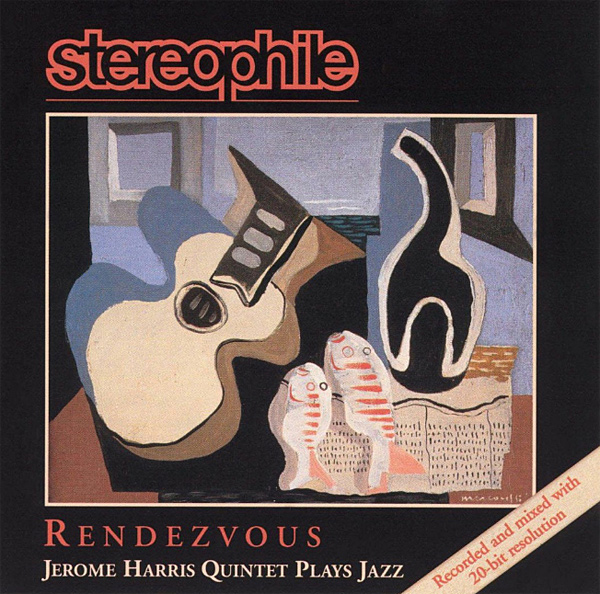 The N31 offers a choice of reconstruction filters; the minimum-phase filter offers an optimal balance between the presentation of detail and listenability, particularly with CD-resolution files like Rendezvous. With this filter, Jerome Harris's soft-toned acoustic bass guitar purred as expected with the MBL processor, and Billy Drummond's trap set was set back in the supportive church acoustic of Blue Heaven Studio. Playing the album with the Weiss Helios, with the levels matched, the Weiss sounded a little quieter. The drums were a little more forward, and Harris's bass was less warmly balanced. It was admittedly a close-run comparison, but the Helios offered a slightly more transparent window into the recording's soundstage than the N31. This was especially the case at high frequencies, which favored the sound of Drummond's cymbals.
An example of the Helios's resolving power was on "Decision Point," the first track on the Jerome Harris album. There is a splice between two of the takes of Marty Ehrlich's alto saxophone solo at 6:08, and the join sounded a touch less seamless than I was used to with the MBL. The character of the studio ambience is very slightly different before and after the crossfade due to the different decay of the other instruments at the splice point in the two takes. The ambience is tens of decibels lower in volume than Erlich's sax, but I had no problem hearing that difference with the Helios.
The N31 offers a choice of reconstruction filters; the minimum-phase filter offers an optimal balance between the presentation of detail and listenability, particularly with CD-resolution files like Rendezvous. With this filter, Jerome Harris's soft-toned acoustic bass guitar purred as expected with the MBL processor, and Billy Drummond's trap set was set back in the supportive church acoustic of Blue Heaven Studio. Playing the album with the Weiss Helios, with the levels matched, the Weiss sounded a little quieter. The drums were a little more forward, and Harris's bass was less warmly balanced. It was admittedly a close-run comparison, but the Helios offered a slightly more transparent window into the recording's soundstage than the N31. This was especially the case at high frequencies, which favored the sound of Drummond's cymbals.
An example of the Helios's resolving power was on "Decision Point," the first track on the Jerome Harris album. There is a splice between two of the takes of Marty Ehrlich's alto saxophone solo at 6:08, and the join sounded a touch less seamless than I was used to with the MBL. The character of the studio ambience is very slightly different before and after the crossfade due to the different decay of the other instruments at the splice point in the two takes. The ambience is tens of decibels lower in volume than Erlich's sax, but I had no problem hearing that difference with the Helios.
 Headphone listening
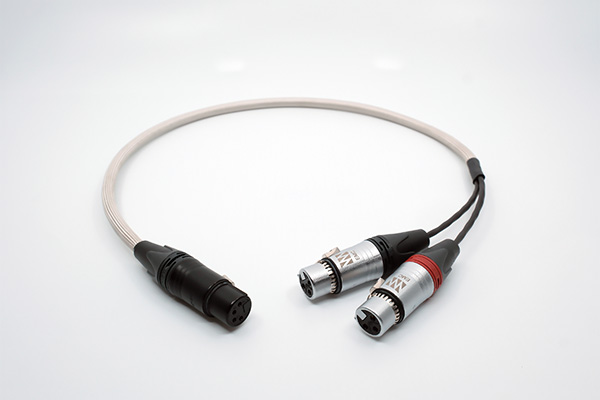
I used my Audeze LCD-X headphones to audition the Helios's balanced output, set to Headphone, using the optional balanced adapter cable together with a balanced Nordost Heimdall 2 cable. The Headphone setting reduces the chosen maximum level by 12dB, meaning the maximum level of "–12dB" I had been using with Loudspeaker was now "–24dB." I reset the maximum level to "–16dB" for my headphone listening, which meant that with the volume control set to its maximum, the presentation was just the right amount of loud.
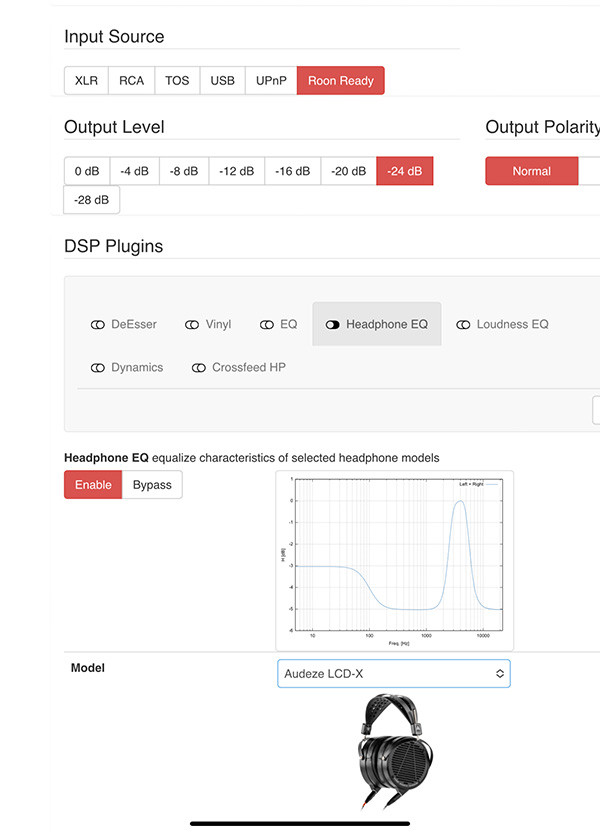 Before I did any serious listening, I experimented with the Headphone DSP settings. I tried the parametric EQ before realizing that the Helios offers a preset equalization curve for a long list of headphone models. Nineteen settings are available for Audeze models alone! Using the web app, I enabled Headphone EQ and selected the Audeze LCD-X setting (above). This applied a 3dB reduction in level below 80Hz, another 2dB reduction between 100Hz and 1kHz, and a narrow peak reaching 0dB between 3kHz and 5kHz.
With the Audeze LCD-X preset, Patricia Barber's "Use Me," from Companion (DSD64, Mobile Fidelity), was less overtly warm than with no equalization. Michael Arnopol's double bass was better defined, as were drums and percussion. As with my loudspeaker listening, the Helios's presentation pulled me into the music.
Before I did any serious listening, I experimented with the Headphone DSP settings. I tried the parametric EQ before realizing that the Helios offers a preset equalization curve for a long list of headphone models. Nineteen settings are available for Audeze models alone! Using the web app, I enabled Headphone EQ and selected the Audeze LCD-X setting (above). This applied a 3dB reduction in level below 80Hz, another 2dB reduction between 100Hz and 1kHz, and a narrow peak reaching 0dB between 3kHz and 5kHz.
With the Audeze LCD-X preset, Patricia Barber's "Use Me," from Companion (DSD64, Mobile Fidelity), was less overtly warm than with no equalization. Michael Arnopol's double bass was better defined, as were drums and percussion. As with my loudspeaker listening, the Helios's presentation pulled me into the music.
 With conventional recordings like this, of course, headphones present the soundstage inside the listener's head, between the ears. Binaural recordings move the soundstage outside the head, and I made a lot of binaural recordings back in the day, using a portable cassette or DAT recorder with a pair of electret lavalier microphones suspended in front of my ears. The most memorable of these was a 1981 Grateful Dead concert at London's Rainbow Theatre (16/44.1 ALAC files, transferred from analog cassette original).
I was recording the sound of the Dead through their PA system, but the band was meticulous in getting good sound. I never could get my binaural recordings to project in front of my head, and it was somewhat peculiar to hear the drums behind me on this recording. But with Jerry Garcia's guitar outside my right ear, the keyboards outside my left ear, and Phil Lesh's bass guitar lighting up the Rainbow's low-frequency acoustic, the equalized Helios and the LCD-Xes placed me solidly in the center of the ecstatic audience, where I had been standing with a bunch of "tapers." And when my then-girlfriend asked me a question about the band during "Friend of the Devil," her voice was so solidly placed to my right that I instinctively turned my head to mansplain the answer.
With conventional recordings like this, of course, headphones present the soundstage inside the listener's head, between the ears. Binaural recordings move the soundstage outside the head, and I made a lot of binaural recordings back in the day, using a portable cassette or DAT recorder with a pair of electret lavalier microphones suspended in front of my ears. The most memorable of these was a 1981 Grateful Dead concert at London's Rainbow Theatre (16/44.1 ALAC files, transferred from analog cassette original).
I was recording the sound of the Dead through their PA system, but the band was meticulous in getting good sound. I never could get my binaural recordings to project in front of my head, and it was somewhat peculiar to hear the drums behind me on this recording. But with Jerry Garcia's guitar outside my right ear, the keyboards outside my left ear, and Phil Lesh's bass guitar lighting up the Rainbow's low-frequency acoustic, the equalized Helios and the LCD-Xes placed me solidly in the center of the ecstatic audience, where I had been standing with a bunch of "tapers." And when my then-girlfriend asked me a question about the band during "Friend of the Devil," her voice was so solidly placed to my right that I instinctively turned my head to mansplain the answer.
 Conclusion
Three decades ago, I chaired a seminar at a show entitled "Accuracy or Musicality?," following a discussion at a Stereophile writers' conference. Choosing a product that favored one or the other of these may have been necessary back then, but today it isn't necessary to choose: The Weiss Helios shows you can have both.
Footnote 2: Though, of course, the MBL includes a CD transport. Footnote 3: The CD is out-of-print but the files can be downloaded or streamed from jeromeharris.bandcamp.com/album/rendezvous.