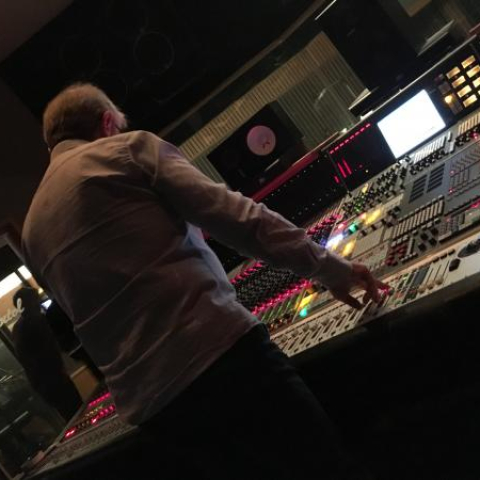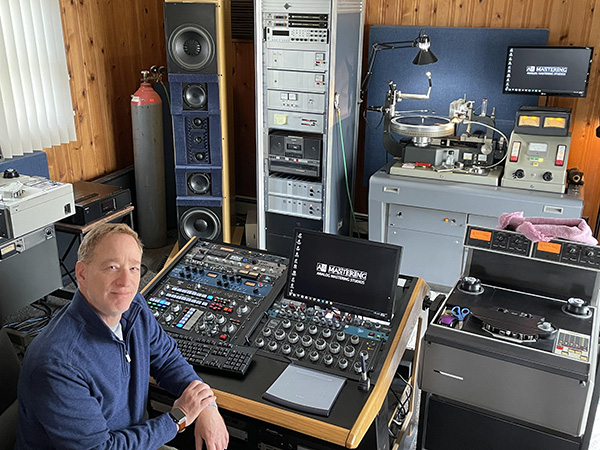
Alex Abrash of AA Mastering was brought in by Universal to cut the lacquers.
For Abrash, who cut the new lacquers for the UMG reissues, matching the sound characteristics of the original DMM Waits masters made for a uniquely challenging job. "So my thing was, could I reverse engineer the DMM cuts? I studied the groove spacing. They look very good under a microscope. They're very thin, very narrow grooves. The plus thing is that you don't have pre- and post-echo," Abrash said. "For me it was about trying to match the cutting levels as close as I could to the original, not alter the audio, or as little as possible. These weren't the kind of things where you could just set it and forget it, hit the red button and go.
"The way I did it was run the lathe by hand, along with the pitch computer that's doing the job, but with me kind of overriding it and paying attention to the program material. Controlling the pitch by hand. Keep the head up, run the system in real time, do all the moves without cutting anything, and you see if you can get it before you hit the run-out groove. Then if you don't, you drop it down by half a dB. There's no fast way to do it. It's very tedious, very long. It's almost a performance in itself." Using his reference turntable system, which employs a Technics SP-10 Mark III, "a calibrated laboratory type setup" that gives him exact playback relative to his cutting system, Abrash did direct comparisons to the original LPs. "The audio that was supplied by Chris Bellman was some of the best audio I have ever been delivered," Abrash enthused. "Terrific. And the original production team, they were just the pinnacle of audio sound. And as far as high-resolution digital audio, just superb.
Abrash would do test cuts, play them back, record them as high-resolution digital files, and send them to Derfler for his and Waits's opinions. "I wanted them to hear test cuts so they could get an idea what the noisefloor is," Abrash continued, "and how much of the sound they are going to get back. I sent them at 24/192, all high definition. It's just a rip of what it really sounds like coming out of my place.
 "When I cut these high-def files, there's no DSP. Any gain adjustments are within a transfer console, no DSP at all. Did I have to use some elliptical filter, yeah, probably, to eliminate the possibility of a vertical excursion. As they were cut low, that kind of eliminates the need to do processing. I really tried to stay the hell out of the audio.
"This was not an easy one for sure. I've been doing this for 10 years, hundreds of projects, and I racked my brain over whether this situation has come up before where I had to reverse engineer a DMM cut, and I can't think of anything."
At its best, remastering can put a brighter face on a cherished masterpiece. It can freshen the sound in audible ways. In cases like the Waits catalog, where the original recordings were done well, the changes are invariably subtle but with good gear, audible. Here, with the exception of Swordfishtrombones, where the effect of the remastering is negligible, the remasterings are a success. What do Waits and Brennan think?
"When I cut these high-def files, there's no DSP. Any gain adjustments are within a transfer console, no DSP at all. Did I have to use some elliptical filter, yeah, probably, to eliminate the possibility of a vertical excursion. As they were cut low, that kind of eliminates the need to do processing. I really tried to stay the hell out of the audio.
"This was not an easy one for sure. I've been doing this for 10 years, hundreds of projects, and I racked my brain over whether this situation has come up before where I had to reverse engineer a DMM cut, and I can't think of anything."
At its best, remastering can put a brighter face on a cherished masterpiece. It can freshen the sound in audible ways. In cases like the Waits catalog, where the original recordings were done well, the changes are invariably subtle but with good gear, audible. Here, with the exception of Swordfishtrombones, where the effect of the remastering is negligible, the remasterings are a success. What do Waits and Brennan think?
 "Tom and Kathleen felt that there were a couple of tracks on which there was a little bit of harshness in the mastering, that I had Chris back off on," Derfler said, reading through his notes on each track. "Sometimes we cut in the midrange to kind of smooth the voice out a little bit. There were one or two songs when Tom asked to have his vocal dug out, but the only time he brought that up was on Swordfishtrombones. On the second verse of 'Trouble's Braids,' Tom felt the voice was fading away and hoped we could dig it out some without messing up the percussion part of it. On 'Town with No Cheer,' he felt there was too much harshness in the voice that he wanted backed off."
On several of the best-known tracks on Swordfishtrombones, the verdict from its creators was thumbs up. On "Johnsburg, Illinois," Waits's love song to Brennan, his comment was "Beautiful," Derfler says with a chuckle. In "16 Shells from a Thirty-Ought Six": same comment. For "In the Neighborhood," Waits's response was, "Sounds great."
"Tom and Kathleen felt that there were a couple of tracks on which there was a little bit of harshness in the mastering, that I had Chris back off on," Derfler said, reading through his notes on each track. "Sometimes we cut in the midrange to kind of smooth the voice out a little bit. There were one or two songs when Tom asked to have his vocal dug out, but the only time he brought that up was on Swordfishtrombones. On the second verse of 'Trouble's Braids,' Tom felt the voice was fading away and hoped we could dig it out some without messing up the percussion part of it. On 'Town with No Cheer,' he felt there was too much harshness in the voice that he wanted backed off."
On several of the best-known tracks on Swordfishtrombones, the verdict from its creators was thumbs up. On "Johnsburg, Illinois," Waits's love song to Brennan, his comment was "Beautiful," Derfler says with a chuckle. In "16 Shells from a Thirty-Ought Six": same comment. For "In the Neighborhood," Waits's response was, "Sounds great."
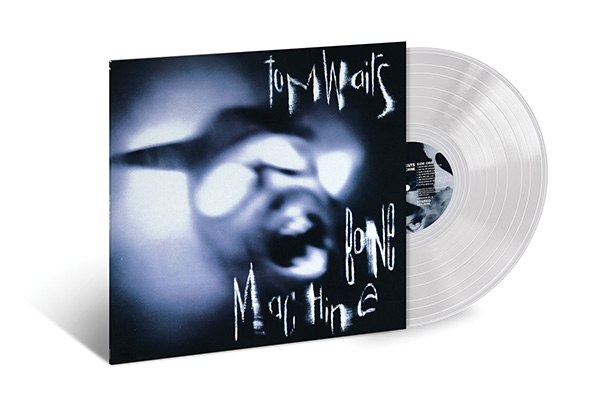 "Tom and Kathleen, their ears are unbelievable, but they are so diverse," Derfler explained. "Kathleen is very sensitive to low frequencies and high frequencies, so she hears certain things that us males might miss." On Rain Dogs, Waits and Brennan perceived some issues with volume: In the original mastering, there was a dynamic from song to song that they felt was lost.
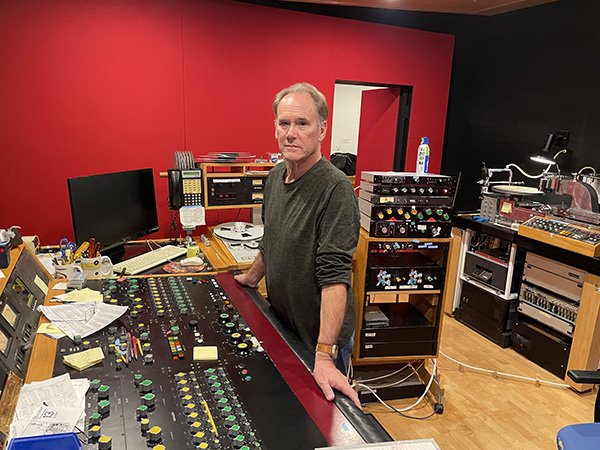
Chris Bellman
"To me Chris [Bellman] opened it up; somehow he removed some of the veil that was on the original vinyl," Derfler concluded. "While the original mix was brought back and reproduced properly, there's a little more dimension and certain things are made more distinct."