Stian Westerhus plays guitar in a band called Puma. Having enjoyed Puma’s latest album, Half Nelson Courtship, a powerful assault on the senses, I was anxious to hear Westerhus’s solo work. I expected something brutal—even something frightening, something perhaps verging on the unlistenable—but Westerhus’s second solo LP, Pitch Black Star Spangled (Rune Grammofon RCD 2099/RLP 3099), is something else, something more. Having listened to Pitch Black Star Spangled several times now and having noted that Westerhus’s debut solo work, Galore, was printed exclusively to vinyl, I have no doubt that this new release is intended to be listened to as a whole. Pitch Black Star Spangled is an album. Songs flow into one another, purely and effortlessly and with hypnotic power, so that the listener loses sense of time and place. In that sense, the album resembles a suite more than it does a series of discrete songs.
Westerhus sounds as if he’s playing alone—physically, alone—and far away from civilization—perhaps in some cold and forgotten mansion, perhaps again on another planet. This is bleak and heavy stuff, at times. Westerhus also seems to vacillate between the utmost love, and the utter abhorrence, for the sound of the electric guitar. There are moments during Pitch Black Star Spangled when we forget that we are hearing the sound of a guitar: “Music for Leaving” (the title alone suggests some heavy stuff) sounds more like some early electronic experiments—John Cage and David Tudor playing together (in separate rooms, of course), messing around with balloons and darts, Bugs Bunny taunting Elmer Fudd, or Vladimir Ussachevsky rolling around in oceans of warbling, scintillating tape. “Trailer Trash Ballad” sounds like elephants being dragged backwards, over nails, by their tails.
But Westerhus balances these more abstract settings with the sounds of flesh against string, the shimmer of strings played above and below the fretboard, the hiss and charge of amplification. In the darkest moments of “The Antagonist” or of the title track—pieces marked by enormously thick, gritty tones, and anchored by heavy, tugging drones, to sound as if Westerhus, with his bare hands, is shaping pure current into sound, contouring electricity into highways and bridges and towers, as a child might fashion castles out of sand—the guitar suddenly makes itself known again, glimpses of white light shrieking out of the blackness. It’s as if Westerhus has surrounded himself by thick walls of noise, curious to learn whether he’s capable of breaking free from his own isolation, content just to think that someone might hear what’s happening inside.
(I should write more about the beauty of Pitch Black Star Spangled, but I’m not sure how. I mentioned the darkness, the bleakness, but there is joy in this, too—a very pure joy, the joy of invention, I think, the joy of freedom, the joy of possibility, the freedom from the holy, and the joy of destruction and desecration.)
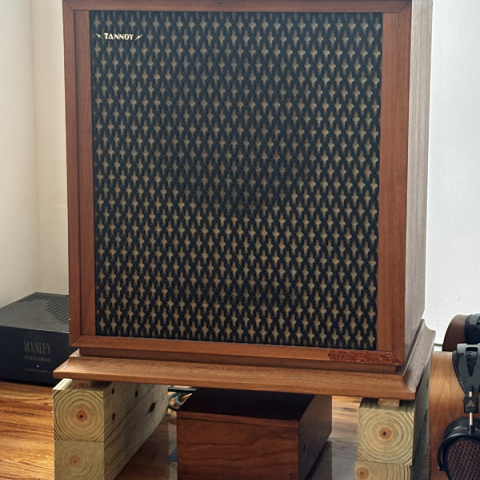
Pitch Black Star Spangled was recorded and mixed by Stian Westerhus, mastered by Jorgen Traen, Iver Sandoy, and Stian Westerhus. It has a surprisingly clear sound marked by a wide and deep soundstage, with well-defined images emerging, sometimes shockingly, from well beyond the boundaries of my room—as if the sounds are coming from Monmouth Street or even Richards Street in Newark or even Coventry Street in Florida—and certainly often from beyond the boundaries defined by the little DeVore Fidelity Gibbon 3s, which seem to love this music as much as I do. The music blooms into the room when called for, erupts into the room when called for, and always surprises.
I sometimes wonder why I love this sort of music as much as I do. I can't tell you why, but I do. I do wonder, and I do love it. If you get to the end, one way or another, you'll be rewarded.


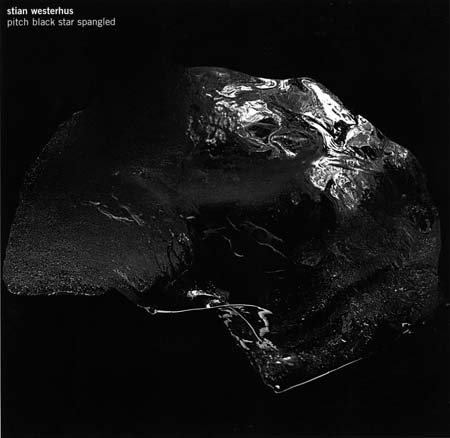
 Stian Westerhus plays guitar in a band called Puma. Having enjoyed Puma’s latest album, Half Nelson Courtship, a powerful assault on the senses, I was anxious to hear Westerhus’s solo work. I expected something brutal—even something frightening, something perhaps verging on the unlistenable—but Westerhus’s second solo LP, Pitch Black Star Spangled (Rune Grammofon RCD 2099/RLP 3099), is something else, something more. Having listened to Pitch Black Star Spangled several times now and having noted that Westerhus’s debut solo work, Galore, was printed exclusively to vinyl, I have no doubt that this new release is intended to be listened to as a whole. Pitch Black Star Spangled is an album. Songs flow into one another, purely and effortlessly and with hypnotic power, so that the listener loses sense of time and place. In that sense, the album resembles a suite more than it does a series of discrete songs.
Westerhus sounds as if he’s playing alone—physically, alone—and far away from civilization—perhaps in some cold and forgotten mansion, perhaps again on another planet. This is bleak and heavy stuff, at times. Westerhus also seems to vacillate between the utmost love, and the utter abhorrence, for the sound of the electric guitar. There are moments during Pitch Black Star Spangled when we forget that we are hearing the sound of a guitar: “Music for Leaving” (the title alone suggests some heavy stuff) sounds more like some early electronic experiments—John Cage and David Tudor playing together (in separate rooms, of course), messing around with balloons and darts, Bugs Bunny taunting Elmer Fudd, or Vladimir Ussachevsky rolling around in oceans of warbling, scintillating tape. “Trailer Trash Ballad” sounds like elephants being dragged backwards, over nails, by their tails.
Stian Westerhus plays guitar in a band called Puma. Having enjoyed Puma’s latest album, Half Nelson Courtship, a powerful assault on the senses, I was anxious to hear Westerhus’s solo work. I expected something brutal—even something frightening, something perhaps verging on the unlistenable—but Westerhus’s second solo LP, Pitch Black Star Spangled (Rune Grammofon RCD 2099/RLP 3099), is something else, something more. Having listened to Pitch Black Star Spangled several times now and having noted that Westerhus’s debut solo work, Galore, was printed exclusively to vinyl, I have no doubt that this new release is intended to be listened to as a whole. Pitch Black Star Spangled is an album. Songs flow into one another, purely and effortlessly and with hypnotic power, so that the listener loses sense of time and place. In that sense, the album resembles a suite more than it does a series of discrete songs.
Westerhus sounds as if he’s playing alone—physically, alone—and far away from civilization—perhaps in some cold and forgotten mansion, perhaps again on another planet. This is bleak and heavy stuff, at times. Westerhus also seems to vacillate between the utmost love, and the utter abhorrence, for the sound of the electric guitar. There are moments during Pitch Black Star Spangled when we forget that we are hearing the sound of a guitar: “Music for Leaving” (the title alone suggests some heavy stuff) sounds more like some early electronic experiments—John Cage and David Tudor playing together (in separate rooms, of course), messing around with balloons and darts, Bugs Bunny taunting Elmer Fudd, or Vladimir Ussachevsky rolling around in oceans of warbling, scintillating tape. “Trailer Trash Ballad” sounds like elephants being dragged backwards, over nails, by their tails.