Digital Component of the Year
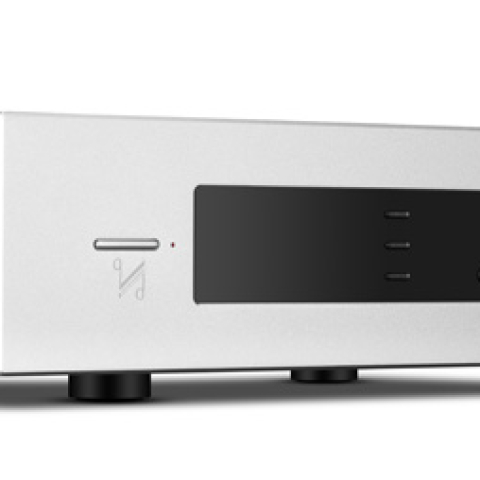
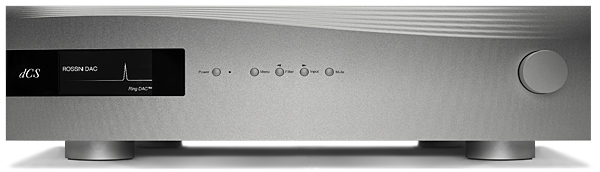
dCS Rossini Apex D/A processor ($32,800; reviewed by Jason Victor Serinus in Vol.45 No.10 review)
 Finalists (In alphabetical order)
Burmester MusicCenter 151 MK2 D/A processor ($27,500; reviewed by Jason Victor Serinus in May 2022, Vol.45 No.5 review)
CH Precision D1.5 SACD/CD player/ transport ($41,000–$46,000; reviewed by Jim Austin in March & May 2022, Vol.45 Nos.3 & 5 review)
Meitner MA3 Integrated D/A processor ($10,500; reviewed by Jason Victor Serinus in June 2022, Vol.45 No.6 review)
Mola Mola Tambaqui D/A processor ($13,500; reviewed by Herb Reichert and Ken Micallef in January & June 2022, Vol.45 Nos.1 & 6 review) As most audiophiles are aware, the technology of our field is mature. Amplifiers and loudspeakers have been around practically forever, stereo records for something like 70 years. Although it might still feel new to many of us, digital audio has been around for almost 40 years, perhaps more, depending on whether you start with digital recording or digital delivery, so it's not new either. What, then, is a company like dCS, which has been producing state-of-the-art digital converters for decades, to do for its next act?
The company's answer to that question is the dCS Rossini Apex (and the other Apex-series products). Satisfied with its signature Ring DAC, dCS went back to the drawing board and figured out what it could improve without making major changes to that core technology. With such evolutionary changes—tweaking the DAC's other parts, importantly, its analog parts—dCS ended up with something that, in Jason Victor Serinus's assessment, is revolutionary. "I repeatedly switched back and forth between the Rossini Apex DAC and the original Rossini DAC," he wrote. "The differences were astonishing."
"Depictions of instrumental texture, silence, nuance, perceived distance from and space around instruments, and bass response were significantly improved. ... I heard more sound from the viola's bow than before. More of the overtones that distinguish the viola from the violin emerged, and the complex character of instruments was easier to discern." There were deeper silences between notes, more grace, flow, and warmth, and a beautiful finish to the sound. Jason concluded, "The Rossini Apex DAC is more than another upgrade; it's a major advance in digital sound reproduction. ... The improvements are impossible to miss."
About the Vote
It was a clear victory for the dCS DAC, although the Mola Mola Tambaqui also did well, trailing by four votes. The CH Precision D1.5 transport/player came in third, followed by the Meitner MA3. The Burmester Musiccenter did well in the early voting rounds but faded down the stretch.
Finalists (In alphabetical order)Burmester MusicCenter 151 MK2 D/A processor ($27,500; reviewed by Jason Victor Serinus in May 2022, Vol.45 No.5 review)
CH Precision D1.5 SACD/CD player/ transport ($41,000–$46,000; reviewed by Jim Austin in March & May 2022, Vol.45 Nos.3 & 5 review)
Meitner MA3 Integrated D/A processor ($10,500; reviewed by Jason Victor Serinus in June 2022, Vol.45 No.6 review)
Mola Mola Tambaqui D/A processor ($13,500; reviewed by Herb Reichert and Ken Micallef in January & June 2022, Vol.45 Nos.1 & 6 review) As most audiophiles are aware, the technology of our field is mature. Amplifiers and loudspeakers have been around practically forever, stereo records for something like 70 years. Although it might still feel new to many of us, digital audio has been around for almost 40 years, perhaps more, depending on whether you start with digital recording or digital delivery, so it's not new either. What, then, is a company like dCS, which has been producing state-of-the-art digital converters for decades, to do for its next act?
It was a clear victory for the dCS DAC, although the Mola Mola Tambaqui also did well, trailing by four votes. The CH Precision D1.5 transport/player came in third, followed by the Meitner MA3. The Burmester Musiccenter did well in the early voting rounds but faded down the stretch.