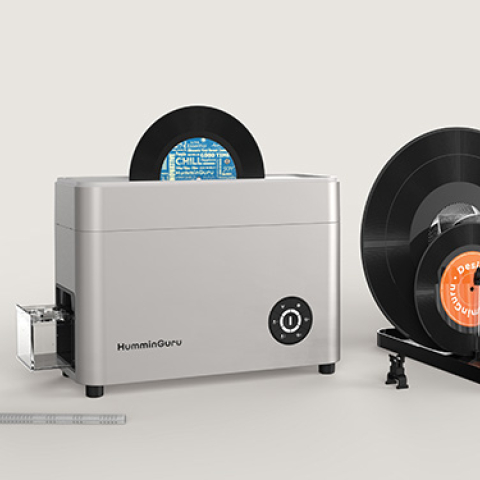
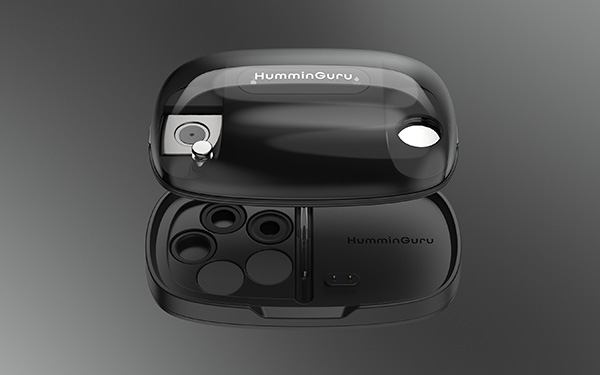
The NOVA takes the three years of experience and feedback from HG01 owners and incorporates several improvements and upgrades. The basics remain the same. The NOVA is a single-disk cavitation cleaner with both automatic and manual cleaning cycles. NOVA upgrades include more powerful ultrasonic transducers with a revised power supply circuit, more automatic and manual cleaning-cycle options, a more powerful fan for shorter drying times, and built-in adjustments for 7" and 10" records, eliminating the need to attach adapter rings to smaller records. They have also redesigned the cover, so it can do double duty as a rack for staging or air-drying records.
The NOVA now includes a small bottle of their proprietary surfactant, which they call the Small Bottle. They also sent me a bigger bottle of the Small Bottle. Maybe that one should be called the Bigger Small Bottle.
If you search online for information about ultrasonic record cleaning, you'll discover that it's a minefield of opinions that generates nearly as much contentious debate as audio cables. Some manufacturers claim that every machine except theirs isn't a true cavitation machine, and there are debates about the ideal frequency and power for the transducers and about whether to use a surfactant. The NOVA has two 40kHz transducers with a sweeping frequency. The ultrasonic transducers draw a combined 60W, and they recommend adding a drop of the Small Bottle surfactant to the water.
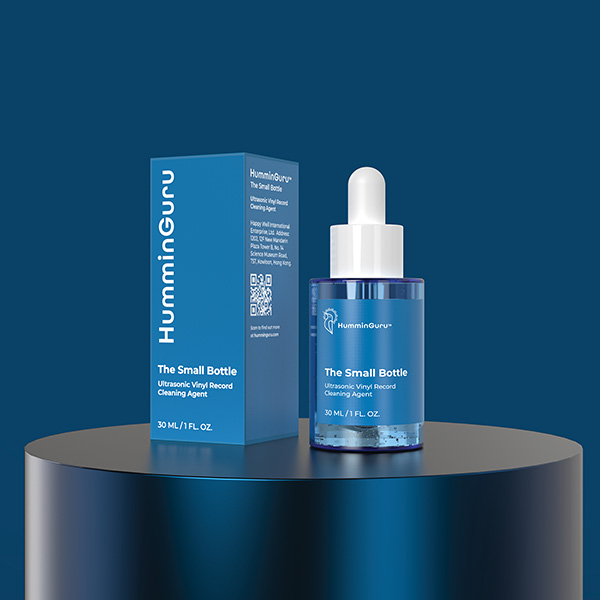
I tried using the NOVA both with and without the surfactant and found that the water coated the record far more completely with the surfactant (footnote 2). For people concerned that using a surfactant will leave a coating on the disc, HumminGuru will sell you a second tank for $39, making it easy to add a rinse cycle using plain distilled water.
One notable difference between the HumminGurus and most other machines is the relatively small quantity of water used, around 7 fluid ounces. That's a tiny fraction of the 1.2 gallons used in an Audio Desk and a fifth of the 45oz used in the Degritter. Such a small amount of water means that the ultrasonic transducers have far less water to energize for the cavitation process. It also gives the dirt a much smaller volume to dissolve into, as if a family of five used the same bathwater to wash themselves. For the first person, the water would be fresh, but by the fifth it would be pretty dingy.
With the NOVA, I found that the water started to get cloudy after a half-dozen records, despite the filter it passes through each time you return the water to the basin for the next record. But changing the water is easy, and with just 7oz required, you can replace the water 18 times from a single gallon of distilled water, so it's simple to just keep using fresh water.
One big advantage ultrasonic cleaners have over vacuum-type cleaners is that most are quite automatic, requiring little attention from the user. To clean a record with the NOVA, you pour the required amount of distilled water into the removable reservoir, add a drop of surfactant if you wish, and pour that water into the machine using the supplied funnel. You can now lower the record into the slot, ensure that it's seated correctly, and choose a cleaning program. There are three fully automatic programs, with the user's choice of 2-, 5-, and 10-minute cleaning cycles followed by either a 3- or 6-minute drying cycle. Once you have selected a program, simply push the start button and walk away, leaving the NOVA to do its thing. You return 5–16 minutes later (depending on the program you chose) to find a record that's clean, dry, and ready to play.
During the cleaning cycle, the NOVA makes a kind of spitty high-pitched sound that's typical of ultrasonic cleaners, followed by the whirring of the pump as it drains the water basin, and finally, during the dry cycle, the fan noise. This last stage is the loudest part, but it's never offensively loud like some of the vacuum-slot cleaners where hearing protection is advised.
Perhaps it's just that the air in my room tends to be very dry in winter, but I never needed to go beyond the shortest, three-minute drying time to get a perfectly dry record. Cleaning time really depends on the condition of the record. I used the shortest (two-minute) clean with new records, and five minutes with most older records. A super-grungy thrift store Columbia six eye of Dylan's
Blonde on Blonde got the full 10-minute treatment, followed by a two-minute rinse with clean water. It looked amazing afterwards. The HumminGuru representative told me it was important to preclean the worst gunk from
really dirty records, presumably to avoid gumming up the water and filter.
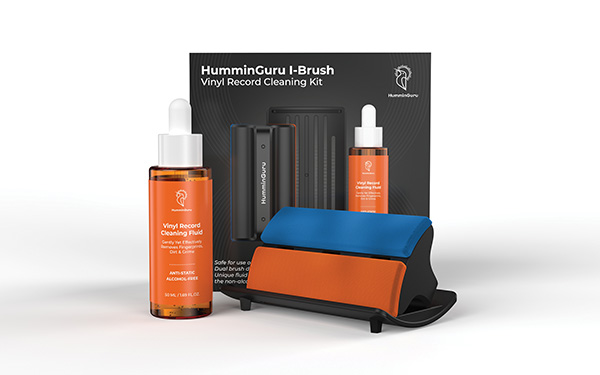
To help with this, they included one of their $25 I-Brush record brushes, a damp-cleaning system. The I-Brush has two velvet pads positioned side by side in a curved formation. The orange pad is for damp cleaning, and the blue pad is for drying. The I-Brush's base has a slot where you deposit a line of the supplied cleaning fluid; press the I-Brush into the base so the fluid is transferred to the orange pad. Then, starting with the orange pad against the record surface, sweep the brush around the record following the grooves, while picking up debris from the record. Tilt the I-Brush so the blue drying pad mops up any remaining liquid. The process reminded me a lot of the Discwasher D3 and D4 brushes from the 1970s and '80s, at least when they were used correctly.
Someone involved with Discwasher once told me that D3 was the best version. Its only problem was that the fluid contained a trace amount of a toxic fungicide called sodium azide. Seeing the bright red bottle, young kids would drink it and get sick. D4 got rid of the sodium azide along with its effectiveness.
I'm fairly certain that the HumminGuru Vinyl Record Cleaning Fluid—catchy name—contains no sodium azide, but it's a pretty effective record-cleaning fluid, especially for this precleaning task. Something like a Spin Clean would also be an excellent alternative, keeping the worst of the crud out of the NOVA water.
Back to the NOVA. When you finish the cleaning cycle and are ready to move to the next record, you must pull the reservoir out of its cubby on the end of the machine and pour the water back into the machine through the funnel. Having used an Audio Desk Systeme cleaner, which pumped its own water, this step was counterintuitive; a few times, I started a cleaning cycle with no water in the machine. But this added step has upsides: As you pour the water into the funnel, it passes through a foam filter built into the spout of the reservoir, which is designed to strain out larger particulates. Finer stuff tends to collect at the bottom of the basin and needs to be wiped out occasionally. A tool is provided to make this task easier. Maybe the best thing about this added step (combined with the small volume of water used) is that it makes changing out the water totally trivial. And changing the water often is the best thing you can do to maintain the HumminGuru's record-cleaning goodness.
Cleaning 45s and 10" records is much easier than it is with most ultrasonic cleaners, and once you get the hang of it, you can switch modes in less than a minute. A small plastic support is snapped onto the bottom of the tank using a supplied tool, and the roller wheels are moved closer together using a patented mechanism. I have a good-sized collection of 45s that my older Audio Desk Systeme couldn't handle—more recent versions can—so it was nice to be able to clean them.
After cleaning a few dozen records, the results from the NOVA were impressive, especially considering its price. It's not just good at getting dirt and other crud off records, reducing surface noise. It also manages to make the music itself sound clearer and more vivid—even a little bit louder—a quality that is characteristic of ultrasonic cleaning.
When I first heard about HumminGuru, I was concerned that it would look and feel like a cheap toy. Now that I have experienced it, I know that it's a serious product, and at a bargain price.
Footnote 2: A surfactant reduces water's surface tension, making it easier and more likely that the water will infiltrate the record grooves.