The sound of networks switching
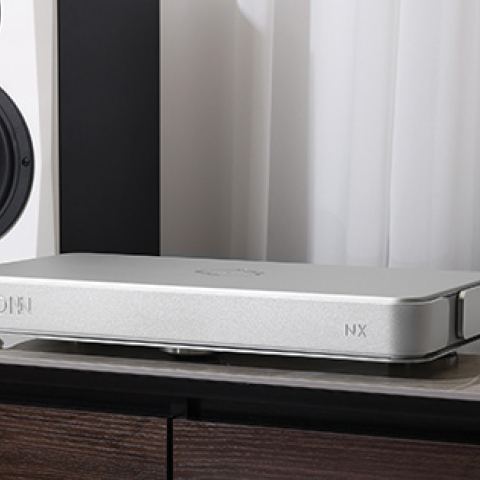
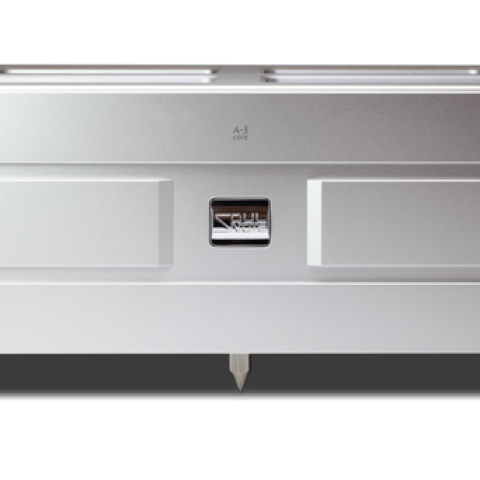
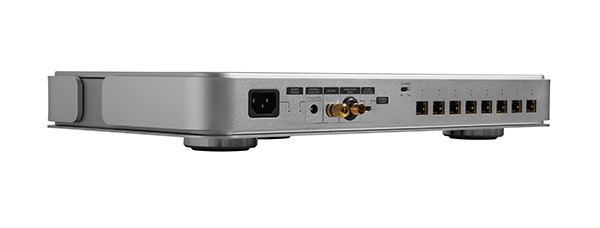
I have a relatively simple networking setup. One network supports my audio system and my other network activities—though when I'm listening intently, there's little nonmusical network activity beyond the occasional email (at which time my attention is diverted anyway). I'm tempted to turn off Wi-Fi when I listen seriously, but I usually keep it on, since it supports network-audio "remotes" such as Roon's. I'm not a tablet guy; my Mac laptop is my preferred "remote." I did turn off Wi-Fi briefly to compare, but I left it on most of the time (footnote 5). During the time I was auditioning the Bonn NX, a standard, high-quality CAT6 Ethernet cable—not an audiophile cable—ran from my router in a back room to the Bonn NX; from there, CAT6 cables went, variously, to my Roon Nucleus+, an Innuos Statement server-streamer, and directly to one of two streaming DACs: the CH Precision C1.2 followed by the Bel Canto Black (in for review). Another CAT6 cable went to a separate, inexpensive network switch 6' away, which services my nonmusical networking needs including a Wi-Fi access point. In the late 1990s, I engaged in some basic ear training by ABXing MP3 samples at various bitrates, attempting to choose the full-resolution samples over lossy-compressed samples. Those samples, I recall, were the usual MP3-judging fare including "Fast Car" and the notorious jangling keys. At first, I was rather bad at it—then I began to notice specific anomalies in the compressed samples that weren't present on the uncompressed samples. (I don't remember what they were.) After solving the puzzle, I got it right every time, though it got harder as the bit rate got higher and the compression ratio got lower.
To be confident in any new listening test, you need to find a specific cue you can listen for. Some differences lend themselves to this while others don't, yet both kinds of changes are real. As I wrote toward the beginning of this piece, I no longer require absolute certainty to believe in something, but it remains something I aim for. The more certainty, the better. Listening to music with the Bonn NX, I immediately (footnote 6) heard, or thought I heard, an intensification. Most of you know what I mean—everything seemed more vivid, even the silences ("blacker background" and all that). This was not a qualitative change but a matter of degree. Such changes are unreliable and hard to latch onto. It's hard to hold that sound in your brain, and it's the kind of change it is possible to experience just by paying closer attention to the music. This is a common reviewing hazard, and it takes experience to overcome. I have overcome it to a degree. While my confidence wasn't 100%, it was considerably better than 50:50.
Then I found a marker—a cue—although it wasn't ideal. It had to do with the structure of the soundstage especially with large-scale music such as symphonies: They had better separation between instrumental sections. By "better separation," I mean that the spaces between sections (first violins, violas, double basses) became blacker (or let's say darker gray) and deeper. This gave me something specific to listen for. I could hear the same effect, though less well, with simpler music—say, small group jazz. The soundstage had clearer layering front to back, a small improvement sonically (footnote 7). Its main value wasn't musical; it was in increasing my confidence that the change I heard was real. I had reasonable confidence then that this network switch was affecting the sound. I would even say that the effect was an improvement. I would not say it was dramatic.
What the heck was going on? How could improving a network signal impact sonics? The honest answer is: I don't know. But I've asked a lot of people working in hi-fi about this, and everyone I've talked to—including designers of purely digital audiophile devices—focus on the same thing in their explanations: noise. Sometimes it's noise in the signal intrinsically. Sometimes it's extra noise due to increased computation, as in error-correction. It's rather hand-wavy and not especially satisfying—we're still lacking a specific, verifiable mechanism—but that doesn't make it wrong.
 Conclusion
Maybe the most important question, assuming you accept my conclusion (you are of course free to listen for yourself), is how much are such changes worth? I doubt Silent Angel expects to sell the $4000 Bonn NX to people with, say, $5000 hi-fi systems; that's what the cheaper N8 Pro is for. If the value of your system is 10 times that, perhaps it starts to make sense. A few months back, I put cable risers under my speaker cables. Was there a sonic improvement? Maybe, maybe not, but that's not why I did it. I simply liked the idea of carefully placed, well-dressed cables that weren't lying on the floor collecting dust. The routing of the cables, I decided, was worthy of detailed attention, just like everything else in my system. Think of it as a matter of hygiene, of basic hi-fi housekeeping, a gesture of respect for the system and music that gives me so much pleasure. Paying attention always pays dividends, in equanimity if not directly in the way the system sounds, and equanimity may be the best hi-fi tweak of all. (Its chief competitor? Bourbon, which strongly overlaps equanimity.) A final question to consider: In the streaming age, where does your hi-fi end and your computer network begin? Is the network switch part of the system, or does it lie outside? What about the router?
What I'm getting at is, sonics aside, maybe a $30 network switch from Linksys or Netgear is a poor fit for a perfectionist audio system. A $4000 network switch may not be a good fit, either—but it might be. How much you wish to invest will of course depend on your inclinations, your resources, and the value of your system. I am reasonably convinced that a network switch can render small improvement, though I have no idea how it works. Another listener might consider the difference large, since people's sense of proportion can vary greatly.
And if you think it's overpriced snake oil? Don't buy one.
Footnote 5: Wi-Fi is a notorious source of high-frequency noise, but in my NYC apartment building, turning it off removes only the most intense and local EM radiation source. Currently my MacBook Pro is detecting nine other networks in this and surrounding buildings. Footnote 6: The idea that a network switch might sound better after break-in is too crazy even for me.
Footnote 7: At least one other reviewer reported hearing improvements in transient articulation. I listened for that but didn't hear it.
I have a relatively simple networking setup. One network supports my audio system and my other network activities—though when I'm listening intently, there's little nonmusical network activity beyond the occasional email (at which time my attention is diverted anyway). I'm tempted to turn off Wi-Fi when I listen seriously, but I usually keep it on, since it supports network-audio "remotes" such as Roon's. I'm not a tablet guy; my Mac laptop is my preferred "remote." I did turn off Wi-Fi briefly to compare, but I left it on most of the time (footnote 5). During the time I was auditioning the Bonn NX, a standard, high-quality CAT6 Ethernet cable—not an audiophile cable—ran from my router in a back room to the Bonn NX; from there, CAT6 cables went, variously, to my Roon Nucleus+, an Innuos Statement server-streamer, and directly to one of two streaming DACs: the CH Precision C1.2 followed by the Bel Canto Black (in for review). Another CAT6 cable went to a separate, inexpensive network switch 6' away, which services my nonmusical networking needs including a Wi-Fi access point. In the late 1990s, I engaged in some basic ear training by ABXing MP3 samples at various bitrates, attempting to choose the full-resolution samples over lossy-compressed samples. Those samples, I recall, were the usual MP3-judging fare including "Fast Car" and the notorious jangling keys. At first, I was rather bad at it—then I began to notice specific anomalies in the compressed samples that weren't present on the uncompressed samples. (I don't remember what they were.) After solving the puzzle, I got it right every time, though it got harder as the bit rate got higher and the compression ratio got lower.
ConclusionMaybe the most important question, assuming you accept my conclusion (you are of course free to listen for yourself), is how much are such changes worth? I doubt Silent Angel expects to sell the $4000 Bonn NX to people with, say, $5000 hi-fi systems; that's what the cheaper N8 Pro is for. If the value of your system is 10 times that, perhaps it starts to make sense. A few months back, I put cable risers under my speaker cables. Was there a sonic improvement? Maybe, maybe not, but that's not why I did it. I simply liked the idea of carefully placed, well-dressed cables that weren't lying on the floor collecting dust. The routing of the cables, I decided, was worthy of detailed attention, just like everything else in my system. Think of it as a matter of hygiene, of basic hi-fi housekeeping, a gesture of respect for the system and music that gives me so much pleasure. Paying attention always pays dividends, in equanimity if not directly in the way the system sounds, and equanimity may be the best hi-fi tweak of all. (Its chief competitor? Bourbon, which strongly overlaps equanimity.) A final question to consider: In the streaming age, where does your hi-fi end and your computer network begin? Is the network switch part of the system, or does it lie outside? What about the router?
Footnote 5: Wi-Fi is a notorious source of high-frequency noise, but in my NYC apartment building, turning it off removes only the most intense and local EM radiation source. Currently my MacBook Pro is detecting nine other networks in this and surrounding buildings. Footnote 6: The idea that a network switch might sound better after break-in is too crazy even for me.