Shane MacGowan (Photo: Creative Commons-Share Alike 2.0.)
There was a time in London, in the mid-'80s, when a party would invariably close with a couple of Pogues songs. It didn't matter what music had preceded them—it could be reggae or soul or whatever—but the Pogues would be played, to enthusiastic sing-a-longs by the party guests. Even I was known to join in occasionally.
As often as not, one of the songs would be the Pogues's cover of Ewan MacColl's "Dirty Old Town." It didn't matter that the song had been written about Salford (a city in Greater Manchester): Everyone would feel it had been written about their own town. This wasn't true just in my part of London, which has a large Irish diaspora, but in many other places across the world.
This was one of several gifts possessed by Shane MacGowan, who died November 30, 2023: Whether he had written the song or not, you felt he was singing about your world, your life. He involved you in the song. It was a skill similar to that possessed by Bruce Springsteen: You may never have visited New Jersey—couldn't even point to it on a map—but you can still relate to the stories within the songs.
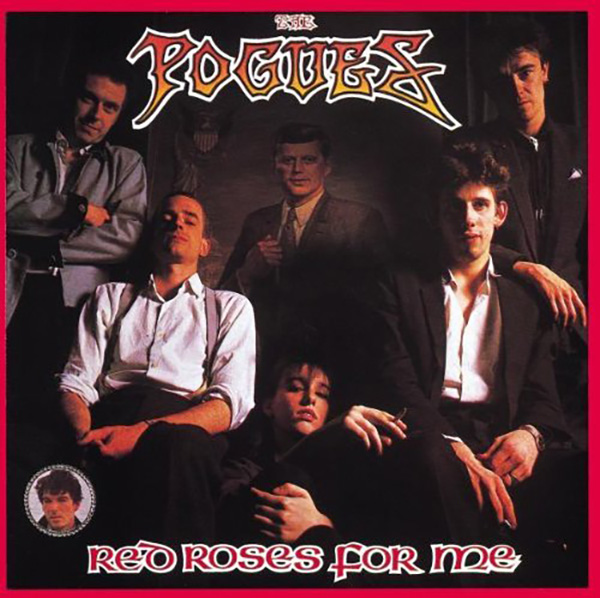 The Pogues were founded in 1982, with Shane MacGowan as singer, lead writer, and figurehead. The early releases didn't quite capture the excitement of hearing them live. The power of the band and the charisma of MacGowan just weren't fully conveyed—not that their first album (Red Roses for Me, from 1984) didn't have some good tunes. "The Dark Streets of London" is one of his many great songs about the city. The standout of his London tunes—possibly of all his songs—is "A Rainy Night in Soho," from the 1986 EP, Poguetry in Motion. It is beautiful and could easily have been taken from the Great American Songbook: His lyrics are a wonderful, poetic description of love, using London's Soho as metaphor. It's a song you play and play and play. (I would also recommend searching out, on YouTube, Sinead O'Connor's sublime cover, performed on Irish television station RTE One's The Late Late Show.)
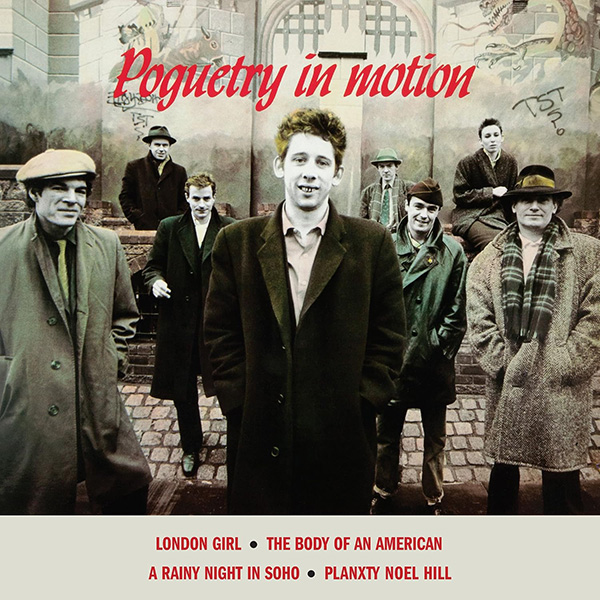 Poguetry was, like the album that followed (1985's Rum, Sodomy & the Lash), produced by Elvis Costello. This was a purple patch for MacGowan: RS&tL is a bona fide classic. This is where you'll find "Dirty Old Town" but also classics such as "A Pair of Brown Eyes" and "Sally MacLennane." The whole set has life and vibrancy about it—a feeling that it's good to be alive.
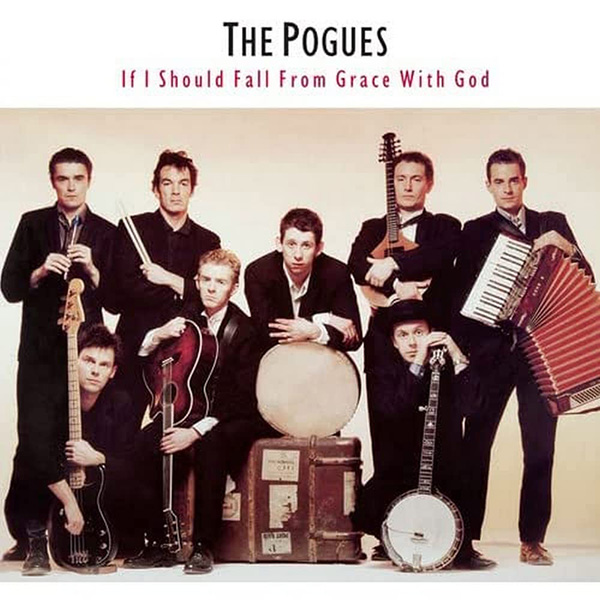
Costello was replaced by Steve Lillywhite for the next Pogues album, If I Should Fall from Grace with God, from 1988. The Pogues kept their Celtic influences but incorporated others from farther afield, Spain and even Turkey. Perhaps the album's only problem is the risk of such a monster of a song overshadowing the rest. On Grace, that song is "Fairytale of New York," which is regularly voted by the British the best-ever Christmas song. MacGowan's bittersweet duet with Kirsty MacColl is one of the UK's festive traditions, played in shops, on the radio—everywhere. But, as glorious as it is, it is just one of many gems on the album. "Fiesta" and "Bottle of Smoke" are two more of the album's great songs.
Poguetry was, like the album that followed (1985's Rum, Sodomy & the Lash), produced by Elvis Costello. This was a purple patch for MacGowan: RS&tL is a bona fide classic. This is where you'll find "Dirty Old Town" but also classics such as "A Pair of Brown Eyes" and "Sally MacLennane." The whole set has life and vibrancy about it—a feeling that it's good to be alive.
Costello was replaced by Steve Lillywhite for the next Pogues album, If I Should Fall from Grace with God, from 1988. The Pogues kept their Celtic influences but incorporated others from farther afield, Spain and even Turkey. Perhaps the album's only problem is the risk of such a monster of a song overshadowing the rest. On Grace, that song is "Fairytale of New York," which is regularly voted by the British the best-ever Christmas song. MacGowan's bittersweet duet with Kirsty MacColl is one of the UK's festive traditions, played in shops, on the radio—everywhere. But, as glorious as it is, it is just one of many gems on the album. "Fiesta" and "Bottle of Smoke" are two more of the album's great songs.
 His work of those years is the best evidence of the skill and artistry of Shane MacGowan—evidence that proves beyond doubt that he was one of music's best songwriters. Good albums followed, and MacGowan eventually left the band in 1991. It is true that these latter years were troubled by drink and drugs, something that, now that he has passed, elements of the media want to focus on.
I don't. When you listen to "Satisfaction," you enjoy Keith Richards's riff; you don't wonder what he was on when he played it. Shane set up a new band (The Popes), who, whilst not reaching the consistency of previous years, did have moments of brilliance: 1994's "That Woman's Got me Drinking," from the album The Snake, was perhaps the best example.
It is not necessary to just take my word about his genius, not when he received praise from the likes of Dylan, Springsteen, Strummer, and Cave. Even better, let his songs speak for themselves. Listen, and hear Shane MacGowan tell stories about the pain and the romance of people displaced—songs that express a deep understanding of the longing for a home.
His work of those years is the best evidence of the skill and artistry of Shane MacGowan—evidence that proves beyond doubt that he was one of music's best songwriters. Good albums followed, and MacGowan eventually left the band in 1991. It is true that these latter years were troubled by drink and drugs, something that, now that he has passed, elements of the media want to focus on.
I don't. When you listen to "Satisfaction," you enjoy Keith Richards's riff; you don't wonder what he was on when he played it. Shane set up a new band (The Popes), who, whilst not reaching the consistency of previous years, did have moments of brilliance: 1994's "That Woman's Got me Drinking," from the album The Snake, was perhaps the best example.
It is not necessary to just take my word about his genius, not when he received praise from the likes of Dylan, Springsteen, Strummer, and Cave. Even better, let his songs speak for themselves. Listen, and hear Shane MacGowan tell stories about the pain and the romance of people displaced—songs that express a deep understanding of the longing for a home.