 How Dorfsman set up the room in AIR Montserrat tells more of the sonic tale. He deployed Sennheiser MD 421 microphones on the toms, an Electro-Voice RE20 and AKG D12 on the kick, Shure SM57 and AKG C451 with a 20dB pad on the snare, more 451s for overheads and the hi-hat, and Neumann U87s a bit farther back in the room for ambience.
Clark's piano sat alone in a very tight, dead-sounding booth in the far-right corner of the live room and was miked with AKG C414s. His Hammond B-3 sat diagonally across from it, just beyond the barrier and to the right of the drums. The B-3's Leslie speaker was ensconced in a small airlock next to the control room, though it would be moved outside whenever it leaked too much.
Illsley's bass amp was positioned inside a small vocal booth with a Neumann U 47 FET and a DI. Knopfler's cavalcade of guitars—Strats, Schecters, Les Pauls, and that beautiful 1937 14-fret National Style "O" Resonator seen in all its heroic glory on the album's cover—were cordoned off with baffles between two amps and miked with 57s, 451s, and Neumann U 67s. Fletcher's synths resided in the control room. Things were going quite well at the commencement of recording Brothers in Arms—except for one problem.
How Dorfsman set up the room in AIR Montserrat tells more of the sonic tale. He deployed Sennheiser MD 421 microphones on the toms, an Electro-Voice RE20 and AKG D12 on the kick, Shure SM57 and AKG C451 with a 20dB pad on the snare, more 451s for overheads and the hi-hat, and Neumann U87s a bit farther back in the room for ambience.
Clark's piano sat alone in a very tight, dead-sounding booth in the far-right corner of the live room and was miked with AKG C414s. His Hammond B-3 sat diagonally across from it, just beyond the barrier and to the right of the drums. The B-3's Leslie speaker was ensconced in a small airlock next to the control room, though it would be moved outside whenever it leaked too much.
Illsley's bass amp was positioned inside a small vocal booth with a Neumann U 47 FET and a DI. Knopfler's cavalcade of guitars—Strats, Schecters, Les Pauls, and that beautiful 1937 14-fret National Style "O" Resonator seen in all its heroic glory on the album's cover—were cordoned off with baffles between two amps and miked with 57s, 451s, and Neumann U 67s. Fletcher's synths resided in the control room. Things were going quite well at the commencement of recording Brothers in Arms—except for one problem.
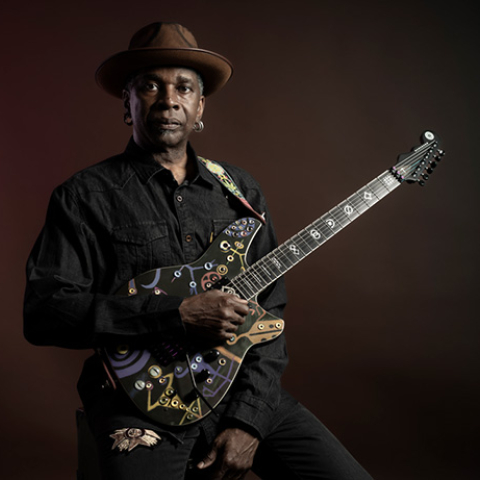
Early on in the AIR Montserrat sessions, both Dorfsman and Knopfler realized that Terry Williams—who had been in the Dire Straits fold since 1982, having emerged from the Dave Edmunds/Rockpile pub-rock universe to replace Pick Withers, the band's original (and likeminded) drummer—wasn't giving the broader-scope Brothers in Arms material the feel and touch it needed. (According to some sources, even Williams himself agreed.) Williams was dismissed, and to rectify those rhythmic issues, the producers reached out to jazz-fusion drummer Omar Hakim, who flew to Montserrat and cut all his drum tracks in 2½ days. Hakim's best moments occur during the back half of the lengthy soothing ballad "Why Worry"; he drives the train while Knopfler's guitar lines noodle all around him. Williams—who would return to film videos and for the lucrative Brothers in Arms tour—left an indelible stamp on the intro-buildup section of "Money for Nothing," where his furious, improvised snare and tom work remain intact. "I was actually trying not to use snare drums that much," Knopfler told me, "but of course—just to remind me of what a dumb person I am—the two songs that had snare drums on them became big hits in the States, and the album took off like a rocket." (footnote 14) While that Williams drum intro is spectacular, two other parts of "Money" helped cement its popularity. One is Sting's cameo on the repeated phrase, "I want my MTV." Sting was vacationing in Montserrat during the Brothers in Arms sessions, and he mind-melded with the idea to parrot the melody he had employed on the title phrase of the Police's 1981 hit, "Don't Stand So Close to Me," singing it into a brighter-sounding Telefunken 251 mike.
 In addition to the Sting thing—he performed it live during Dire Straits' two-song set at Live Aid at Wembley Stadium on June 13, 1985—the linchpin "Money" payoff comes when the volume-swelling intro hits a full stop and Knopfler's searing signature guitar riff enters loud and proud, spreading the soundfield far and wide. That snarling tone was a happy accident, the slightly out-of-phase result of Knopfler's finger-picked Les Paul Junior running through a Laney amplifier with the mikes positioned askew, without any additional processing. "A song like 'Money'—that one started pretty much full-on," Knopfler said in the interview. "Sometimes when I start a song, I like to hold back a bit so that I've always got somewhere to go. But other times, like on 'Money,' you find yourself in a position where you need that extra push to start. If you get a really, really great sound, you just play with it."
Everyone knew "Money" had that something extra. "Obviously, 'Money for Nothing' became quite big, and it all fell into place after that. We were just on a roll," Fletcher said. Clark added, "Did I know Brothers in Arms was going to be so popular? No. But I knew 'Money for Nothing' would leave a mark."
The rest of Brothers in Arms, though less intense than "Money" with its intro, is no less inspired: The wide expanse of the atmospheric "Ride Across the River," replete with buzzing crickets Fletcher believes were recorded in the hills above the Montserrat studio, served as the tour's set opener. For the distinctive, funkified low end of "One World," Knopfler called on session musician Neil Jason to deploy thumb slaps and index-finger pops on a 1965 L series Fender Jazz bass processed with an Ibanez CS9 Stereo Chorus and a Boss VB-2 Vibrato pedal in the latch setting (and there's lots of vibrato there, mind you).
In addition to the Sting thing—he performed it live during Dire Straits' two-song set at Live Aid at Wembley Stadium on June 13, 1985—the linchpin "Money" payoff comes when the volume-swelling intro hits a full stop and Knopfler's searing signature guitar riff enters loud and proud, spreading the soundfield far and wide. That snarling tone was a happy accident, the slightly out-of-phase result of Knopfler's finger-picked Les Paul Junior running through a Laney amplifier with the mikes positioned askew, without any additional processing. "A song like 'Money'—that one started pretty much full-on," Knopfler said in the interview. "Sometimes when I start a song, I like to hold back a bit so that I've always got somewhere to go. But other times, like on 'Money,' you find yourself in a position where you need that extra push to start. If you get a really, really great sound, you just play with it."
Everyone knew "Money" had that something extra. "Obviously, 'Money for Nothing' became quite big, and it all fell into place after that. We were just on a roll," Fletcher said. Clark added, "Did I know Brothers in Arms was going to be so popular? No. But I knew 'Money for Nothing' would leave a mark."
The rest of Brothers in Arms, though less intense than "Money" with its intro, is no less inspired: The wide expanse of the atmospheric "Ride Across the River," replete with buzzing crickets Fletcher believes were recorded in the hills above the Montserrat studio, served as the tour's set opener. For the distinctive, funkified low end of "One World," Knopfler called on session musician Neil Jason to deploy thumb slaps and index-finger pops on a 1965 L series Fender Jazz bass processed with an Ibanez CS9 Stereo Chorus and a Boss VB-2 Vibrato pedal in the latch setting (and there's lots of vibrato there, mind you).
No matter how you spin it, Brothers in Arms endures. "I feel lucky to have been involved with a record like Brothers in Arms," Clark confirmed. "Human beings are the same in whichever era you are in, so I think people will get the same feeling out of it 40 or even 50 years from now."
Footnote 14: The other hit single Knopfler is referring to is "Walk of Life," which reached No.7 on the US Billboard Hot 100 chart.