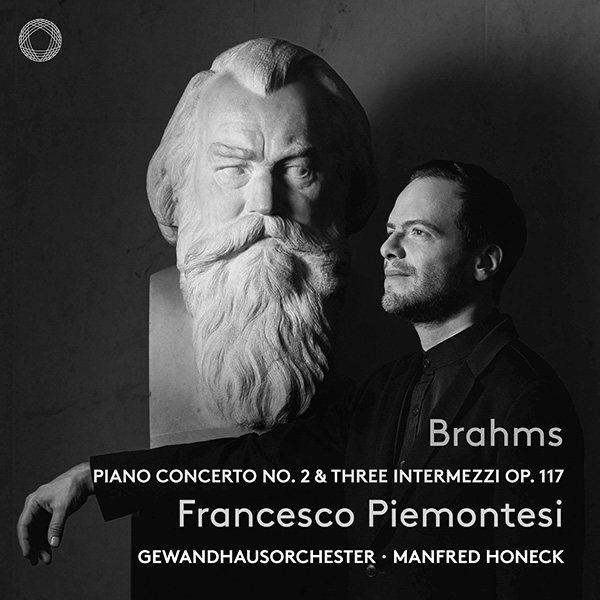
Brahms: Piano Concerto 2; Three Intermezzi
Francesco Piemontesi, piano; Gewandhausorchester/Manfred Honeck
Pentatone PTC5187461 (CD). 2025. Johannes Kammann, prod. and eng.
Performance ****½
Sonics **** The opening horn solo steps straightforwardly; the plaintive answering wind chorale picks up. The forte piano scales, brilliant and peremptory, propel the theme into a precipitate but firmly grounded tutti, setting things in motion. But it's a feint: Piemontesi and Honeck bring out the composer's lyrical, autumnal side. It's the quieter passages that linger in the mind's ear. The violins shape the second group gracefully. As the exposition winds down, the strings establish a nice relaxation and hush, and the reeds and piano fall in line. (Piemontesi properly treats his solo part as obbligato.) The winds are searching in the development, the soloist projects the softer runs with bell-like tones, and the shift into the recap elides smoothly. Piemontesi launches the Allegro appassionato ominously but not as a full-on outburst; the performance is tumultuous, not volcanic. The strings' hushed pianos and the soloist's delicate ones all produce clear, open textures. (Mild complaint: A perceived final ending in fact leads to another full go-round.) The Andante's vibrant yet restrained cello solo presages a series of prolonged ruminations, though they don't quite suspend time. And Piemontesi sparkles in the graceful, affirmative finale.
The Gewandhaus strings retain their traditional homogeneous blend and soft-edged attacks. The wind timbres are polished and uniform but slightly neutralized. The principal horn could use more velvet, but control is impeccable.
The Opus 117 Intermezzi bring a few surprises. The close of the B-flat minor is unexpectedly grim. The maggiore in the middle of the C-sharp minor is oddly ambivalent. Piemontesi sensitively and wistfully inflects the chorales, but the arpeggiated textures come off as monochromatic and thick.—Stephen Francis Vasta
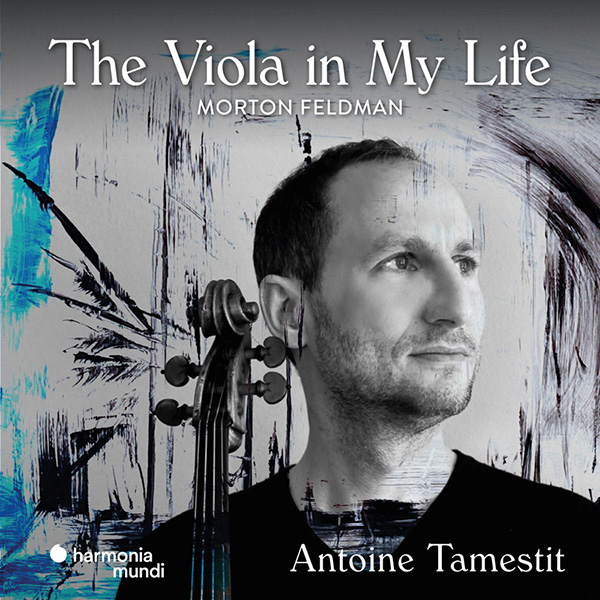 Morton Feldman: The Viola in My Life
Antoine Tamestit, Stradivari viola; Gürzenich-Orchester Köln, Harry Ogg (I, II) | François-Xavier Roth (IV), conds.
Harmonia Mundi HMM 925328 (CD; reviewed as 24/192). 2025. Stephan Cahen, prod.; Daniel Przemus, eng.
Performance *****
Sonics ****½
Morton Feldman creates a radically different sound world than Ludwig von Beethoven, one that willfully exalts and revels in silence Beethoven was forced to accept. Yet as different as their music may be, the two men share a common desire to lay bare the multifaceted profundity of the human soul.
In Feldman's four-part composition The Viola in My Life, which was commissioned by the Venice Biennale, the soul speaks through the viola. To quote violist Antoine Tamestit, in whose artistic development this music played a seminal role, Feldman "is able to imagine a whole life in a single note." Here, that life is revealed in four distinct sonic environments that share just one thing, a viola: (I) viola, violin, cello, flute, piano, and percussion, (II) viola, violin, cello, flute, clarinet, celesta, and percussion, (III) viola and piano, and (IV) viola and orchestra. While Feldman prescribed tempo precisely, he didn't prescribe microphone placement, which in this case is so close to the viola as to render the friction between bow and string a seminal part of a sonic landscape, captured in microscopic detail in Daniel Przemus's 24/192 recording.
Indeed, timbre and texture predominate, each extended silence between notes inviting deep and then deeper contemplation. What stands out most in this recording are the deep, percussive rumbles of movement I, the viola's frequent, sudden emergence from a muted state to full voice, the unexpected flashes of melody, and the complex beauty of movement IV. By highlighting the depth of the soundstage and the distance between instruments, Przemus and producer Stephan Cahen invite us to journey deep into the mystery. Paradoxically fascinating, gripping, revelatory, and unfathomable, Feldman's Viola is imperative listening. In silence of course.—Jason Victor Serinus
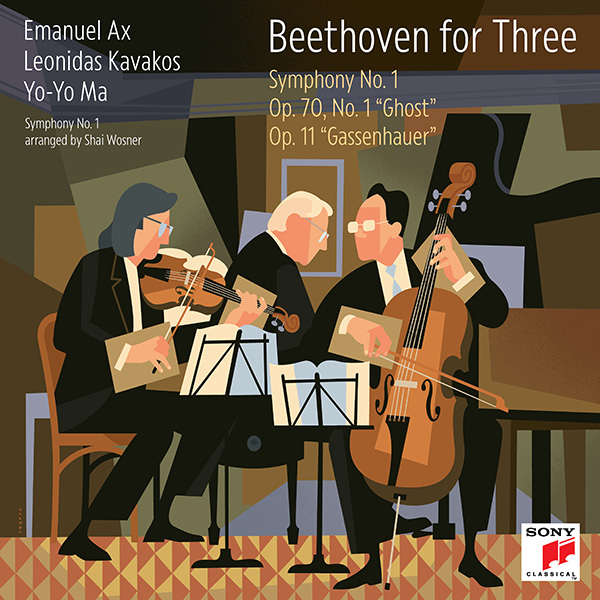 Beethoven: for Three, Vol.4
Emanuel Ax, piano; Leonidas Kavakos, violin; Yo-Yo Ma, cello
Sony 19802908842 (CD; reviewed as 24/96). 2025. Steven Epstein, prod.; Richard King, eng.
Performance ****
Sonics **** If asked to summarize the cumulative effect of this album in a single word, that word would be "delight." For sheer joy, the fourth volume in the Emanuel Ax–Leonidas Kavakos–Yo-Yo Ma series, which mixes Shai Wosner's piano trio reductions of Beethoven's symphonies with the composer's actual piano trios, is hard to beat. Here, Symphony No.1 is mixed with the "Ghost" Trio (Op.70 No.1) and the "Gassenhauer" Trio (Op.11). It hardly seems possible that a Beethoven symphony could be successfully reduced to three instruments, yet Wosner's arrangement of the First feels musically complete. Ax's pianism serves as the "orchestral" anchor, his fleet fingers dancing up and down the keyboard with a mix of joy and orchestral force and color; what's more, he plays with remarkable touch. Ma and Kavakos's touch don't quite match Ax's—without the aid of pedals, they cannot achieve ideal balance and tone without weighing into their instruments' strings—but their playing is warm and colorful, the trio's bonhomie infectious. Only those who worship at the altar of Bah Humbug orthodoxy will fail to warm to this.
The performances of the piano trios are lovely. The Gassenhauer Trio is an ideal companion for the symphony, which was composed two years later; its post-Haydnesque lightness complements Wosner's arrangement of the symphony. There's more density to the skeleton of No.5, the "Ghost," and more profundity, some of it left on the table here. Listen to how the Beaux Arts Trio, in their first recording from 1964, play faster while sounding graver at the start of the second movement largo and how deep the Beaux Arts goes in their slower second recording in 1981.—Jason Victor Serinus
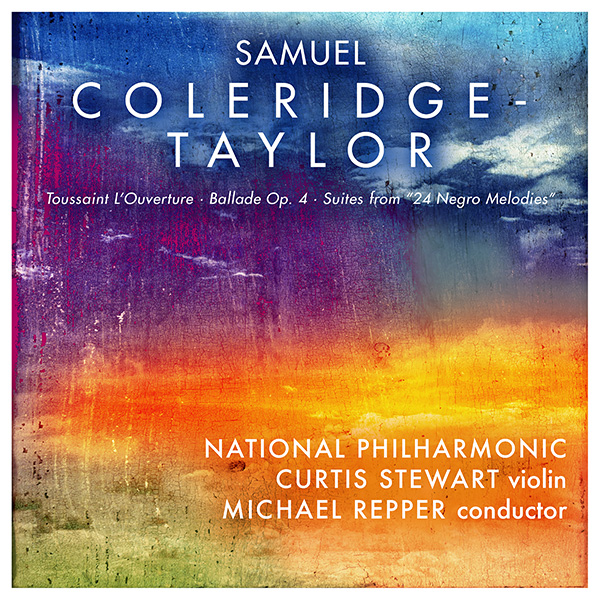 Coleridge-Taylor: Orchestral Works
Curtis Stewart, violin; National Philharmonic/Michael Repper
AVIE AV 2763 (CD). Judith Sherman, prod.; Rick Jacobsohn, eng.
Performance ***½
Sonics *** Samuel Coleridge-Taylor's Hiawatha is an English secular oratorio treating an American subject. Avie's program favors his "American" side. Among composers who, like Dvořák, adopted this late modal style, Coleridge-Taylor assimilated the idiom more successfully than, say, Florence Price.
Toussaint L'Ouverture is an overture, but it gets its name from the eponymous Haitian patriot. Its strong rhythmic profile and contrasts mark it as a 19th century work. A waltzish theme brings syncopated ostinatos; a woodwind countertheme reinforces the Dvořák echoes. A fragile, lyrical clarinet solo is broadly expressive. This is a score we should hear more often.
The opening of the Ballade for violin rolls along with varied scansion, sounding almost like Elgar. A lighter-textured, buoyant second group provides contrast. Curtis Stewart's violin tone is pure but narrow, even in the cadenza; he characterizes the themes well, but he can't change his color.
Two suites are included from the album 24 Negro Melodies for piano. In Three Selections, for violin and orchestra, Stewart, the principal arranger, is virtuosic, his small-scale flourishes foreshadowing The Lark Ascending. The second movement is pointed then meditative; the forward-looking third has a harder, Americanized beat.
Also drawn from 24 Negro Melodies, the five-movement orchestral Suite, conceived by the composer, makes a good impression. It's woodwind colors—a shiny clarinet; a plaintive oboe—that linger in the mind. The third movement, a march Scherzo, sounds like a final ending—a miscalculation by the composer.
The orchestra, based in Maryland, sounds good, though the unified strings sound short-staffed. Compact wind support produces fullness, but the peaks don't quite blossom or surge.—Stephen Francis Vasta
Francesco Piemontesi, piano; Gewandhausorchester/Manfred Honeck
Pentatone PTC5187461 (CD). 2025. Johannes Kammann, prod. and eng.
Performance ****½
Sonics **** The opening horn solo steps straightforwardly; the plaintive answering wind chorale picks up. The forte piano scales, brilliant and peremptory, propel the theme into a precipitate but firmly grounded tutti, setting things in motion. But it's a feint: Piemontesi and Honeck bring out the composer's lyrical, autumnal side. It's the quieter passages that linger in the mind's ear. The violins shape the second group gracefully. As the exposition winds down, the strings establish a nice relaxation and hush, and the reeds and piano fall in line. (Piemontesi properly treats his solo part as obbligato.) The winds are searching in the development, the soloist projects the softer runs with bell-like tones, and the shift into the recap elides smoothly. Piemontesi launches the Allegro appassionato ominously but not as a full-on outburst; the performance is tumultuous, not volcanic. The strings' hushed pianos and the soloist's delicate ones all produce clear, open textures. (Mild complaint: A perceived final ending in fact leads to another full go-round.) The Andante's vibrant yet restrained cello solo presages a series of prolonged ruminations, though they don't quite suspend time. And Piemontesi sparkles in the graceful, affirmative finale.
Morton Feldman: The Viola in My LifeAntoine Tamestit, Stradivari viola; Gürzenich-Orchester Köln, Harry Ogg (I, II) | François-Xavier Roth (IV), conds.
Harmonia Mundi HMM 925328 (CD; reviewed as 24/192). 2025. Stephan Cahen, prod.; Daniel Przemus, eng.
Performance *****
Sonics ****½
Beethoven: for Three, Vol.4Emanuel Ax, piano; Leonidas Kavakos, violin; Yo-Yo Ma, cello
Sony 19802908842 (CD; reviewed as 24/96). 2025. Steven Epstein, prod.; Richard King, eng.
Performance ****
Sonics **** If asked to summarize the cumulative effect of this album in a single word, that word would be "delight." For sheer joy, the fourth volume in the Emanuel Ax–Leonidas Kavakos–Yo-Yo Ma series, which mixes Shai Wosner's piano trio reductions of Beethoven's symphonies with the composer's actual piano trios, is hard to beat. Here, Symphony No.1 is mixed with the "Ghost" Trio (Op.70 No.1) and the "Gassenhauer" Trio (Op.11). It hardly seems possible that a Beethoven symphony could be successfully reduced to three instruments, yet Wosner's arrangement of the First feels musically complete. Ax's pianism serves as the "orchestral" anchor, his fleet fingers dancing up and down the keyboard with a mix of joy and orchestral force and color; what's more, he plays with remarkable touch. Ma and Kavakos's touch don't quite match Ax's—without the aid of pedals, they cannot achieve ideal balance and tone without weighing into their instruments' strings—but their playing is warm and colorful, the trio's bonhomie infectious. Only those who worship at the altar of Bah Humbug orthodoxy will fail to warm to this.
Coleridge-Taylor: Orchestral WorksCurtis Stewart, violin; National Philharmonic/Michael Repper
AVIE AV 2763 (CD). Judith Sherman, prod.; Rick Jacobsohn, eng.
Performance ***½
Sonics *** Samuel Coleridge-Taylor's Hiawatha is an English secular oratorio treating an American subject. Avie's program favors his "American" side. Among composers who, like Dvořák, adopted this late modal style, Coleridge-Taylor assimilated the idiom more successfully than, say, Florence Price.