I guess I lied when I said "More tomorrow." That should teach me something about making promises during "Recommended Components" time. I'm sorry.
Well, eighteen pages and 8000 words later, I'm all done blurbing. I've sent the file off to copy editor Richard Lehnert, and now it's his turn to have a little fun. He replied with a scream: "AAAAAAUUUUUUUUUUGGGGGGGGGGGHHHHHHHHHHH!!!!!"
Unusual for Richard. But I can't blame him.
So, let me see; This feels like old news already, but, here it is: I went home that other night — whatever night it was, I can't remember — thinking that I'd like to just hear one or two songs before calling it quits and saying hello to Peach. Peach is my bed.
So, yes, I was going to listen to one or two songs, say hello to Peach, and slip off into deep, sweet beddie-by. One or two songs would be just enough, I figured, since I'm pretty much sick of our first album, as I know it so well.
Funny thing happened, though: stuff sounded so damn good, I ended up listening to the entire thing.
I really want to explain this, especially for people who have little or no experience with real hi-fi. I have so many music-loving friends who, I hope, would be moved by an experience such as this. The trick, then, is putting it into words. Listening to good hi-fi is kinda like watching television. It's captivating. But in a good way. There are actual, palpable images placed in the space between the speakers. If you use your imagination, you can see them. It's crazy. It's like magic. I'm not kidding when I say you can almost feel the energy created by the performers as they bend strings or stamp their feet or clap their hands or say "Yeah." It's bananas.
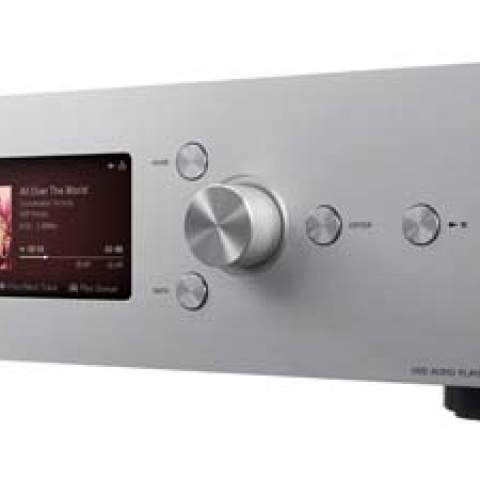
Audio critics talk about the ability of certain components to bring the venue or the recording studio right into the listening room. As if the gear were a time-machine, you know, or a transmogrifier, or something. As silly as this sounds, I've found it to be true. Check this out: When I used to listen to our first album through my Magnavox boombox, sure, I remembered what it was like to record the damn thing. Listening conjured memories and feelings and whatever, of course. But when I listened to it again using the Musical Fidelity pieces, it was almost as though a drunken Jim Teacher landed right in my room. I could've been like, "Yo, what's up, brother?" And he would have responded: "What the F, yo? How'd I get here?" Just like that.
I could hear him there. I could hear him there, in my room. He was totally there. Life-size, too. That makes a big difference. A lot of times, things can sound natural, but they'll be smaller-than-life. Or even larger-than-life. With the MF pieces in place, things were closer to real. And things being closer to real makes for drama. And drama can be cool, when you're talking about music. There's a point in the album, between tracks, where Dave and Jim Teacher have a brief conversation. It was just something that happened while we were recording, and we decided to leave it in there. Why? Because, I suppose, we wanted to provide the listener with a sense of the recording process. If you were to listen to it in your car or on your computer or your boombox, you'd hear it. But it wouldn't come through the way we intended. To be fair, I didn't even know what we really intended until I heard it that other night through the MF gear. Dave and Jim Teacher are talking about the song, and Dave is standing over there and JT is standing over here, and Dave is a little bit taller than JT and you can actually see all of this happening right before you. Crazy. So, little incidental stuff like that is all more pronounced. What's the big deal about that? Well, first of all, it's fun, man. Second, it's what we — the artists — wanted when we decided to leave it in there. That's important.
Alright, I gotta go again. More tomorrow.
Or maybe not. Who knows?