My first encounter with the Entity was underwhelming. It arrived in a box Amazon might use to ship two bottles of multivitamins; inside the box, I found a rather featureless, black, sheet-metal box about the size of six chocolate brownies arranged end to end in two layers, weighing about 2lb. The front panel contained only the company logo. The back had two sets of RCA jacks, a ground lug, and a pair of three-way switches for setting cartridge loading, with options for 90, 120, and 180 ohms. Unusually, the power cord is captive: Lejonklou believes that in the context of his circuit, his power cord is bound to sound better than yours. The Entity is intended to be left on, so it dispenses with a power switch. The brief manual specifies a gain of 71dB and a maximum nominal cartridge output of 0.4mV. I wish I could tell you more about what's inside the Entity, but that is all the information I was able to glean. In an industry that still values massive faceplates and things machined out of aluminum billets, the Entity comes across as a punk statement in nondesign that dares the listener to rely on the ears and not the eyes.
Listening
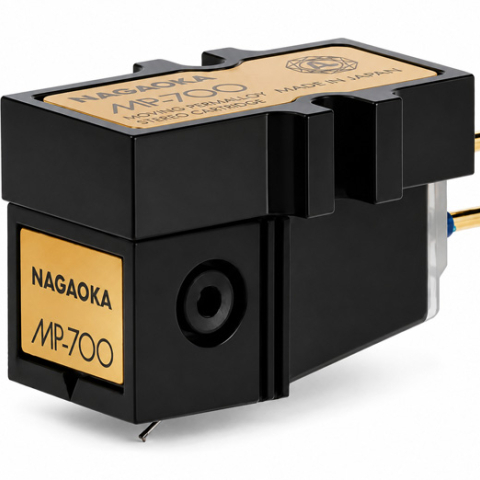
I listened to the Entity with three cartridges—the Ortofon SPU Classic G, the Zu/Denon 103, and the Dynavector Te Kaitora Rua—with my Garrard 301 turntable and its Schick 12" arm and also on a Technics SL-1200G. My favorite way to listen with the Entity was to route its output through my Shindo Aurieges preamplifier to the preamp inputs on the Line Magnetic LM-845IA integrated amplifier so the Line Magnetic was used as amplifier only. It sounded more impactful and exciting that way than it did connected directly to the Line Magnetic's line inputs. Out of the box, music played by the solid state Entity sounded bleached, but after about 50 hours of use, this tendency disappeared and the Entity began to sing with its authentic voice.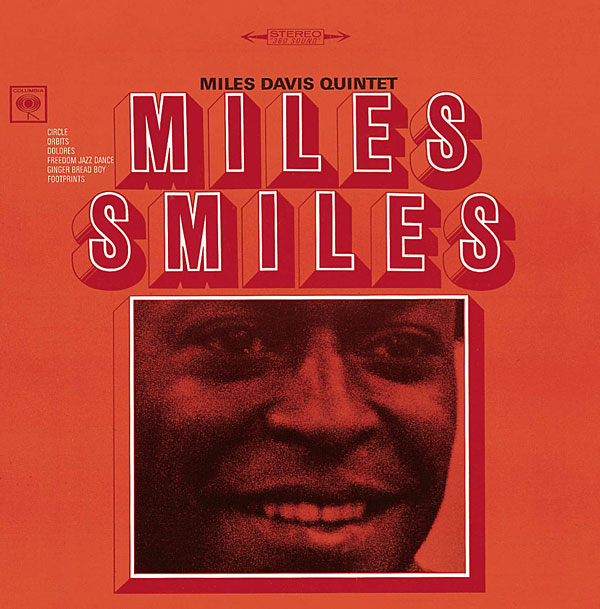 With all three cartridges, the Entity sounded neutral, extended, and transparent. Listening to "Footprints" from Miles Davis's Miles Smiles (Columbia CS 9401), I was bowled over by the portrayal of cymbals. Tony Williams is the Walt Whitman of the cymbals, and the Entity rendered his shimmering, impressionistic, primal playing with matter-of-fact presence. Some phono stages make cymbals into sheets of white noise, but through the Entity they sounded embodied, controlled, and starkly metallic, with no hardness. The delightful Te Kaitora Rua, which has the most extended and detailed top end of the cartridges I auditioned with the Entity, made this track sound thrilling.
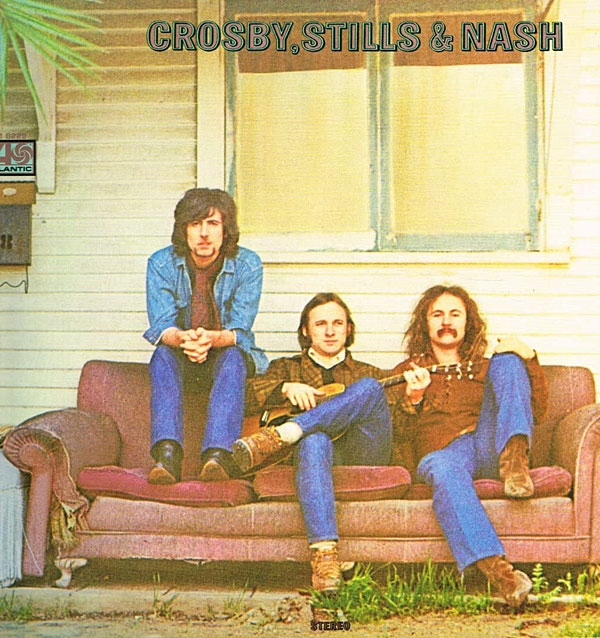 A lovely aspect of being a collector and appreciator of recorded music is coming late to classic records that others discovered decades earlier. For me, one of these is the eponymous first album by Crosby, Stills & Nash. When I encountered Déjà vu (by Crosby, Stills, Nash & Young) as a much younger listener, I admired Young's contributions, particularly "Helpless," but I judged the contributions from Stills and Nash to be dated white-bread anthems for privileged, flaxen-haired hippies.
What did I know? Today, I find the harmonies on Crosby, Stills & Nash to be mind-altering in their closeness and beauty. Listening through the Entity to "Helplessly Hoping" from a first pressing (Atlantic 8229) allowed me to hear the three vocalists spread across a soundfield that was unusually tall and wide, in which they were placed with remarkable specificity. The highly resolving Entity made even their intakes of breath audible, an effect I found oddly pleasurable.
A lovely aspect of being a collector and appreciator of recorded music is coming late to classic records that others discovered decades earlier. For me, one of these is the eponymous first album by Crosby, Stills & Nash. When I encountered Déjà vu (by Crosby, Stills, Nash & Young) as a much younger listener, I admired Young's contributions, particularly "Helpless," but I judged the contributions from Stills and Nash to be dated white-bread anthems for privileged, flaxen-haired hippies.
What did I know? Today, I find the harmonies on Crosby, Stills & Nash to be mind-altering in their closeness and beauty. Listening through the Entity to "Helplessly Hoping" from a first pressing (Atlantic 8229) allowed me to hear the three vocalists spread across a soundfield that was unusually tall and wide, in which they were placed with remarkable specificity. The highly resolving Entity made even their intakes of breath audible, an effect I found oddly pleasurable.
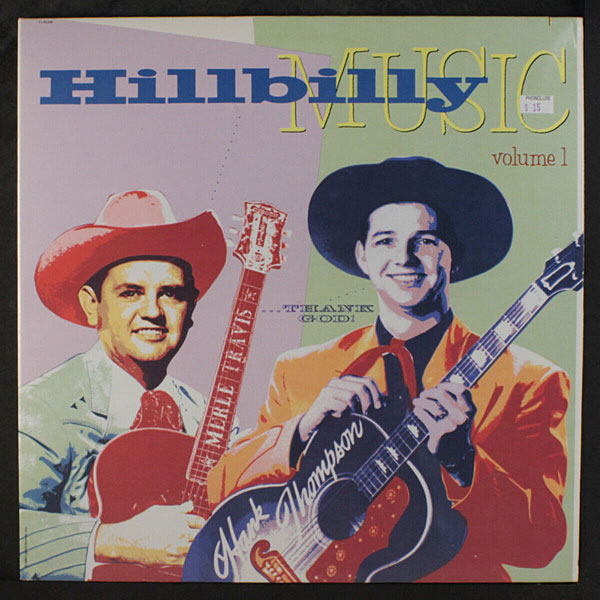 The Entity's most impressive quality was how exciting it made listening to records. This was largely a function of the Swedish phono stage's knack for pace, rhythm, and timing. Another way to say it is that it made the musicians sound like they were playing together with uncommon empathy; yet another is to observe that the notes coming through the Entity were more musically meaningful than with the other phono amps I had on hand (about which more in a moment). Fredrik Lejonklou's little box lent Jean Shepherd's "Twice the Lovin' (In Half the Time)" from Marshall Crenshaw's wonderful compilation Hillbilly Music...Thank God! Volume 1 (Bug/Capitol C1-91346) a downright amphetaminic edge; Speedy West's steel guitar, though not particularly speedy on this track, sounded like a piece of electrified taffy being pulled in all directions, while the bass and drums maintained the terrifically frantic beat.
When he sent me the Entity, O'Keefe told me to experiment with the loading settings, suggesting that the results might surprise me. I found the settings to affect the sound more than I expected, and not always in predictable ways. With the Zu and its 40-ohm impedance, I found the 180-ohm setting to sound most open and extended—not surprising. With the 6-ohm Dynavector, I expected to prefer the lowest, 90-ohm setting, but found it rolled off the treble and emphasized the bass too much for my liking, whereas the 120-ohm setting sounded just right. O'Keefe suggested that sometimes the sound of a particular resistor matters more than its value. Who am I to disagree?
Comparisons
The Entity's most impressive quality was how exciting it made listening to records. This was largely a function of the Swedish phono stage's knack for pace, rhythm, and timing. Another way to say it is that it made the musicians sound like they were playing together with uncommon empathy; yet another is to observe that the notes coming through the Entity were more musically meaningful than with the other phono amps I had on hand (about which more in a moment). Fredrik Lejonklou's little box lent Jean Shepherd's "Twice the Lovin' (In Half the Time)" from Marshall Crenshaw's wonderful compilation Hillbilly Music...Thank God! Volume 1 (Bug/Capitol C1-91346) a downright amphetaminic edge; Speedy West's steel guitar, though not particularly speedy on this track, sounded like a piece of electrified taffy being pulled in all directions, while the bass and drums maintained the terrifically frantic beat.
When he sent me the Entity, O'Keefe told me to experiment with the loading settings, suggesting that the results might surprise me. I found the settings to affect the sound more than I expected, and not always in predictable ways. With the Zu and its 40-ohm impedance, I found the 180-ohm setting to sound most open and extended—not surprising. With the 6-ohm Dynavector, I expected to prefer the lowest, 90-ohm setting, but found it rolled off the treble and emphasized the bass too much for my liking, whereas the 120-ohm setting sounded just right. O'Keefe suggested that sometimes the sound of a particular resistor matters more than its value. Who am I to disagree?
Comparisons
On a weeknight in March, Ken Micallef and Herb Reichert came over for some listening. Playing records on the Garrard 301 with the Dynavector cartridge mounted in the Schick arm, we decided to listen to the Lejonklou alongside the Sutherland Engineering Little Loco and the Tavish Audio Adagio, which Ken was kind enough to bring. The Adagio (which retails for $2190) can be used as a moving coil phono stage using its built-in Jensen transformer, but in this guise it was easily outclassed by the Entity, which sounded more energetic, detailed, and holographic. The Adagio's superb tubed moving magnet section made a much stronger case when paired with my Auditorium 23 SPU transformer. Listening to the Crosby, Stills & Nash track, the Adagio/A23 combination wasn't quite as fast, transparent, or resolving as the Entity, but it rendered the vocals with richer tonal colors and more texture and presence.
The Little Loco (which costs $3900) made the track seductively smooth, refined, and dimensional, making the Entity sound a bit brash, thin, and spatially flat in comparison. It was also marginally quieter. The more versatile Entity, though, had the upper hand in timing and excitement. When listening to the Little Loco, my first thought was "This sounds great"; with the Entity, it was "I love this record." The Entity's particular musical strengths were made obvious when I glanced around midsong and saw Herb and Ken bobbing their heads to the music, eyes closed.
New Cables
For weeks after, whenever I played a record, I felt torn between the Entity and the Little Loco. I loved the tunefulness and drama of the former but wanted the more refined sound of the latter. Just then, a large envelope from Thomas O'Keefe arrived in my mailbox. It contained two pairs of Linn Silver interconnects ($452 for a 1.2m pair), the cables Fredrik Lejonklou used when voicing the Entity. Cables are often considered an afterthought when reviewing a product, but with the work of certain obsessive audio designers who voice components by ear using a whole-system approach, that may not be a useful assumption. After all, you want to hear the component as close to the way the designer heard it. My Shindo Aurieges preamplifier, for example, sounds best with interconnects made by Shindo Laboratory and Auditorium 23, which are made specifically for Shindo gear. Besides, its delicate RCA jacks require ultralight cables, which rules out most of the audiophile competition. With this in mind, I replaced the Auditorium 23 interconnects I had been using between the Entity and my preamp with the slightly heavier Linn cables and (cursing those delicate RCA jacks) sat down to listen. The cable swap changed the sound of the Entity to a degree I was unprepared for. The Lejonklou Entity retained its remarkable timing and tunefulness but now sounded more refined, dimensional, controlled, and tonally richer. With the Linn cables in place, the sonic differences between the Little Loco and the Entity became vanishingly small, while the musical differences tilted my preference—slightly—toward the more affordable Swedish phono stage. I, too, remain gobsmacked by the transformation, but it is whatmI heard, and it was not even a little bit subtle. If you're thinking of buying the Entity, factor these Linn cables into the price.
Wrapping up
In some ways, the Lejonklou Entity is baffling: a diminutive box with a captive power cord that could pass for an external hard drive but makes listening to records more dramatic and enjoyable than larger, costlier, more established competitors. I suspect it measures better as well. How it does this I cannot tell you, but it surely is related to the designer's long hours of obsessive listening and tinkering and years of iterative improvement. The Entity excels at communicating the emotion and meaning of music—the very things most of us sit down in front of our speakers to experience—and it does this considerably better than phono stages I've heard anywhere near its $2695 price. Fredrik Lejonklou is someone who does things his own way and has supreme confidence in his ears. I cannot wait to hear more of his work
I listened to the Entity with three cartridges—the Ortofon SPU Classic G, the Zu/Denon 103, and the Dynavector Te Kaitora Rua—with my Garrard 301 turntable and its Schick 12" arm and also on a Technics SL-1200G. My favorite way to listen with the Entity was to route its output through my Shindo Aurieges preamplifier to the preamp inputs on the Line Magnetic LM-845IA integrated amplifier so the Line Magnetic was used as amplifier only. It sounded more impactful and exciting that way than it did connected directly to the Line Magnetic's line inputs. Out of the box, music played by the solid state Entity sounded bleached, but after about 50 hours of use, this tendency disappeared and the Entity began to sing with its authentic voice.
With all three cartridges, the Entity sounded neutral, extended, and transparent. Listening to "Footprints" from Miles Davis's Miles Smiles (Columbia CS 9401), I was bowled over by the portrayal of cymbals. Tony Williams is the Walt Whitman of the cymbals, and the Entity rendered his shimmering, impressionistic, primal playing with matter-of-fact presence. Some phono stages make cymbals into sheets of white noise, but through the Entity they sounded embodied, controlled, and starkly metallic, with no hardness. The delightful Te Kaitora Rua, which has the most extended and detailed top end of the cartridges I auditioned with the Entity, made this track sound thrilling.
A lovely aspect of being a collector and appreciator of recorded music is coming late to classic records that others discovered decades earlier. For me, one of these is the eponymous first album by Crosby, Stills & Nash. When I encountered Déjà vu (by Crosby, Stills, Nash & Young) as a much younger listener, I admired Young's contributions, particularly "Helpless," but I judged the contributions from Stills and Nash to be dated white-bread anthems for privileged, flaxen-haired hippies.
What did I know? Today, I find the harmonies on Crosby, Stills & Nash to be mind-altering in their closeness and beauty. Listening through the Entity to "Helplessly Hoping" from a first pressing (Atlantic 8229) allowed me to hear the three vocalists spread across a soundfield that was unusually tall and wide, in which they were placed with remarkable specificity. The highly resolving Entity made even their intakes of breath audible, an effect I found oddly pleasurable.
The Entity's most impressive quality was how exciting it made listening to records. This was largely a function of the Swedish phono stage's knack for pace, rhythm, and timing. Another way to say it is that it made the musicians sound like they were playing together with uncommon empathy; yet another is to observe that the notes coming through the Entity were more musically meaningful than with the other phono amps I had on hand (about which more in a moment). Fredrik Lejonklou's little box lent Jean Shepherd's "Twice the Lovin' (In Half the Time)" from Marshall Crenshaw's wonderful compilation Hillbilly Music...Thank God! Volume 1 (Bug/Capitol C1-91346) a downright amphetaminic edge; Speedy West's steel guitar, though not particularly speedy on this track, sounded like a piece of electrified taffy being pulled in all directions, while the bass and drums maintained the terrifically frantic beat.
On a weeknight in March, Ken Micallef and Herb Reichert came over for some listening. Playing records on the Garrard 301 with the Dynavector cartridge mounted in the Schick arm, we decided to listen to the Lejonklou alongside the Sutherland Engineering Little Loco and the Tavish Audio Adagio, which Ken was kind enough to bring. The Adagio (which retails for $2190) can be used as a moving coil phono stage using its built-in Jensen transformer, but in this guise it was easily outclassed by the Entity, which sounded more energetic, detailed, and holographic. The Adagio's superb tubed moving magnet section made a much stronger case when paired with my Auditorium 23 SPU transformer. Listening to the Crosby, Stills & Nash track, the Adagio/A23 combination wasn't quite as fast, transparent, or resolving as the Entity, but it rendered the vocals with richer tonal colors and more texture and presence.
For weeks after, whenever I played a record, I felt torn between the Entity and the Little Loco. I loved the tunefulness and drama of the former but wanted the more refined sound of the latter. Just then, a large envelope from Thomas O'Keefe arrived in my mailbox. It contained two pairs of Linn Silver interconnects ($452 for a 1.2m pair), the cables Fredrik Lejonklou used when voicing the Entity. Cables are often considered an afterthought when reviewing a product, but with the work of certain obsessive audio designers who voice components by ear using a whole-system approach, that may not be a useful assumption. After all, you want to hear the component as close to the way the designer heard it. My Shindo Aurieges preamplifier, for example, sounds best with interconnects made by Shindo Laboratory and Auditorium 23, which are made specifically for Shindo gear. Besides, its delicate RCA jacks require ultralight cables, which rules out most of the audiophile competition. With this in mind, I replaced the Auditorium 23 interconnects I had been using between the Entity and my preamp with the slightly heavier Linn cables and (cursing those delicate RCA jacks) sat down to listen. The cable swap changed the sound of the Entity to a degree I was unprepared for. The Lejonklou Entity retained its remarkable timing and tunefulness but now sounded more refined, dimensional, controlled, and tonally richer. With the Linn cables in place, the sonic differences between the Little Loco and the Entity became vanishingly small, while the musical differences tilted my preference—slightly—toward the more affordable Swedish phono stage. I, too, remain gobsmacked by the transformation, but it is whatmI heard, and it was not even a little bit subtle. If you're thinking of buying the Entity, factor these Linn cables into the price.
In some ways, the Lejonklou Entity is baffling: a diminutive box with a captive power cord that could pass for an external hard drive but makes listening to records more dramatic and enjoyable than larger, costlier, more established competitors. I suspect it measures better as well. How it does this I cannot tell you, but it surely is related to the designer's long hours of obsessive listening and tinkering and years of iterative improvement. The Entity excels at communicating the emotion and meaning of music—the very things most of us sit down in front of our speakers to experience—and it does this considerably better than phono stages I've heard anywhere near its $2695 price. Fredrik Lejonklou is someone who does things his own way and has supreme confidence in his ears. I cannot wait to hear more of his work