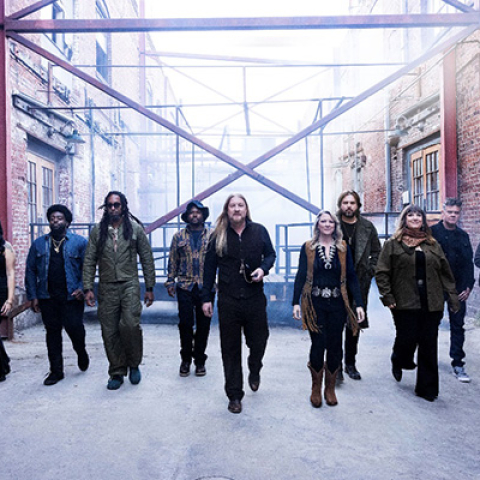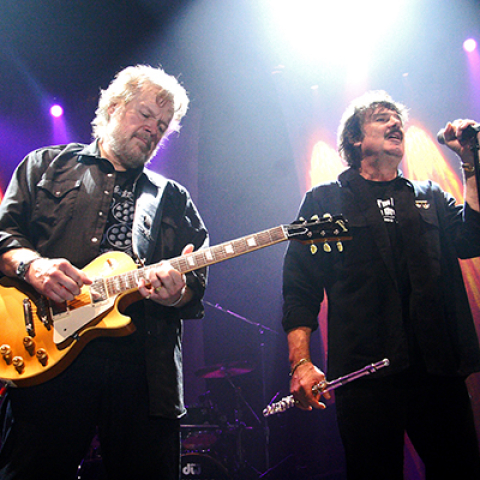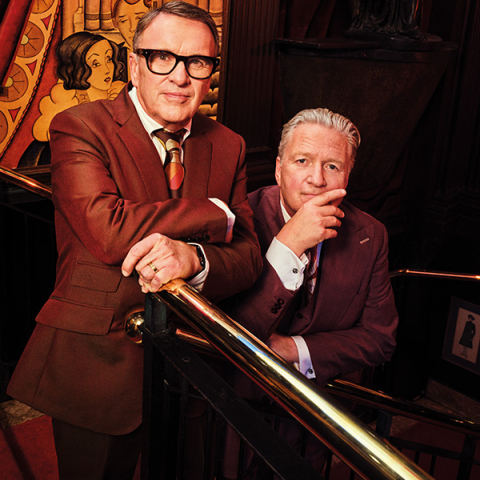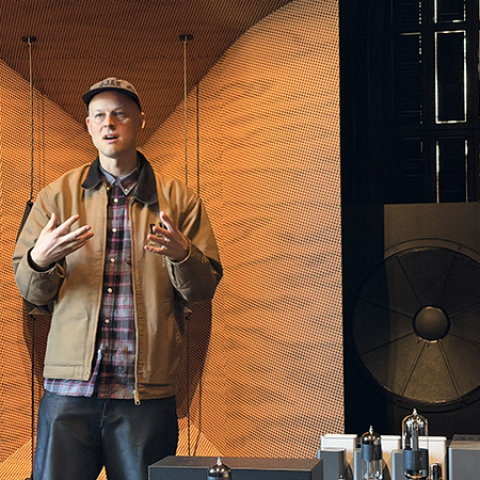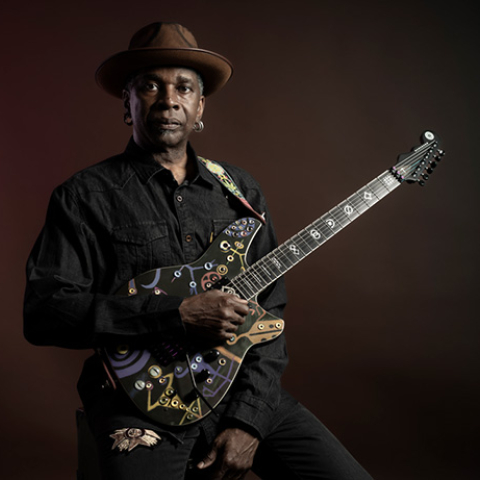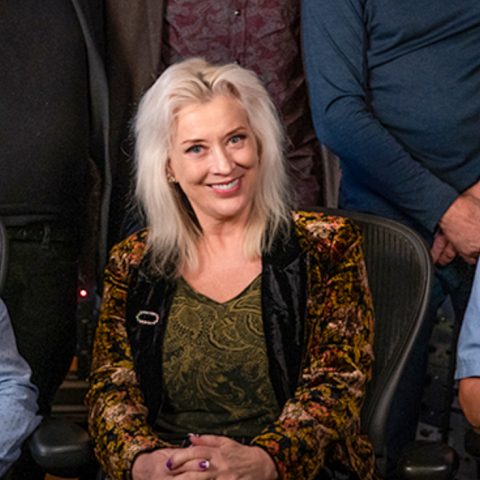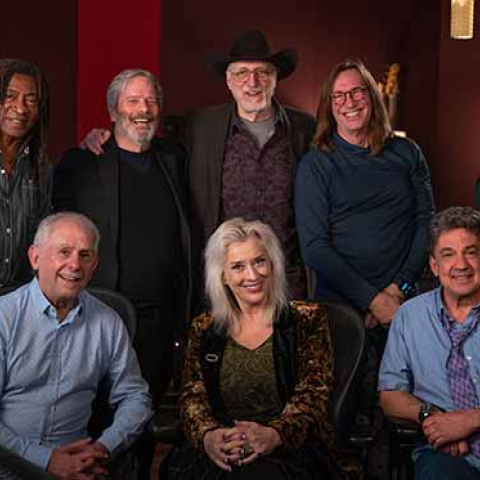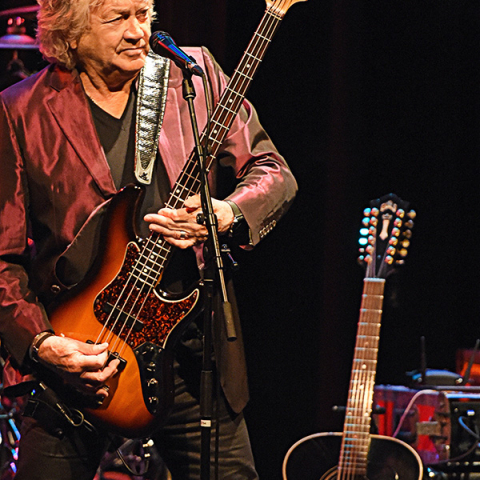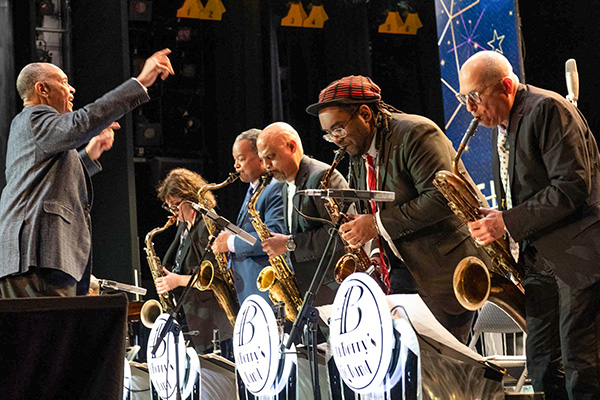
(L to R) John Clayton, Ada Rovatti, Victor Goines, Steve Wilson, Patrick Bartley, Gary Smulyan
Mark Turner's profile has never been higher. He is now an ECM recording artist, and he finished in the top 10 in the tenor saxophone category of the 2023 Downbeat Critics Poll. But he told me, "Most of my career has been as a sideman. It's how I make my living. I'm a hired gun. When I work as a leader, my income takes a hit. But my wife and I will be empty nesters soon, and I want to do more of my own projects and make more of my own records."
Turner's last two albums were extraordinary. Return from the Stars is a studio recording on ECM, released in 2022. Live at the Village Vanguard is a two-CD set that came out in 2023 on the small but meticulously produced label, Giant Step Arts. The personnel on the two recordings is identical, and all eight of Turner's original compositions on the studio album are played again on the live album. It is a rare opportunity to directly compare jazz captured in the controlled environment of a studio with jazz captured in its natural habitat of a jazz club. The live album wins. Return from the Stars is an impressive record, but the eight songs that the two albums share are looser, longer, freer, and deeper on the live recording. Asked about his decision to take such an unusual approach for these two back-to-back recording projects, Turner said, "I just wanted to do a kind of 'day and night.' People listen to a record and don't realize that it is one hour of a musician's life. But if you met someone for one hour, could you say you knew him? There's no way. So I gave them another encounter."
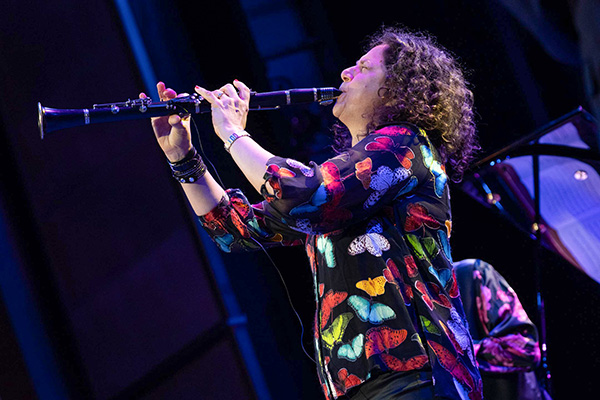
Anat Cohen
Anat Cohen was a hit on the cruise. She is a clarinet virtuoso who uses her chops to communicate emotion, primarily joy. At a Cohen concert, her vivid treble outpourings inundate an audience, sweeping over them in wave upon wave. On the cruise she performed with one of her current projects, Quartetinho, in the Sky Lounge on the 11th deck. It is a grand 416-seat space, encircled by windows that look out on the sea. The music of Quartetinho is tilted toward Brazil, although only one band member is from that country, brilliant pianist/accordionist Vitor Gonçalves. The other two players are Cohen's Israeli countryman Tal Mashiach on bass and guitar and American James Shipp on vibraphone and percussion. They are a seductive band. Most tunes started as a gentle flowing of alluring melody, then intensified and ascended when Cohen carried them aloft on pure streaming clarinet passion. A few songs stayed pensive and plaintive. Mashiach's "Vivi and Zaco," for his grandparents, was love and gratitude embodied in music. The most surprising song choice was "Going Home," from Antonin Dvorák's New World Symphony. Cohen switched to bass clarinet and darkened the atmosphere. In the times we live in, it was impossible not to think of all the displaced people in our present world, and all the people who will not be going home again.
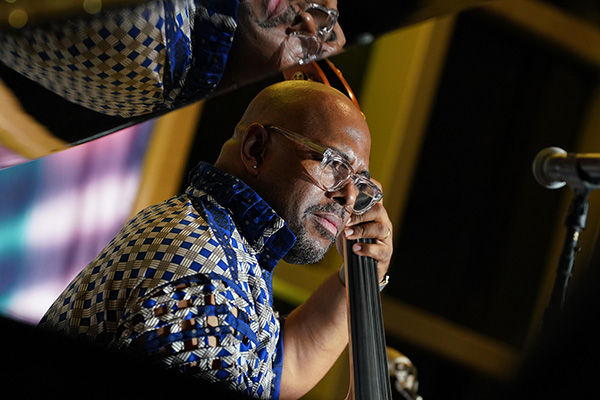
Christian McBride
1) John Clayton's orchestra played three times in a packed Celebrity Theater. The name of the ensemble was Anita's Big Band, for Anita Berry, the late mother of Michael Lazaroff. She was the original mastermind behind the Jazz Cruise, which has now been sailing since 2001, and is the only full-ship straight-ahead jazz cruise in the world. The personnel of the band rotated, but the talent pool on the boat was so deep that the chairs were always filled with A-list musicians. Drummers included Matt Wilson, Allison Miller, Herlin Riley, and Jeff Hamilton. Bass players included Christian McBride, John Patitucci, Marc Johnson, and Clayton himself, who also did many of the arrangements. Classic charts by arrangers like Marty Paich were also used. Paich's treatment of "Softly, as in a Morning Sunrise" was played hard by Anita's Big Band, but it was also svelte. All three big band concerts featured guest soloists. Ingrid Jensen was brought in for a haunting version of Miles Davis's "Blue in Green." The band murmured beneath Jensen's suspended, whispered cries on muted trumpet.
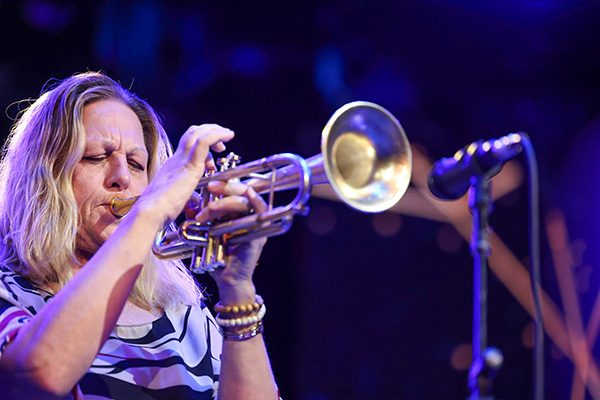
Ingrid Jensen
2) Jensen also appeared in the highly regarded collective Artemis (tenor saxophonist Nicole Glover, pianist Renee Rosnes, bassist Noriko Ueda, drummer Allison Miller). It is a quintet that stamps its signature on every song it plays, even very familiar ones like "A Flower is a Lovesome Thing," "Footprints" and "What the World Needs Now."
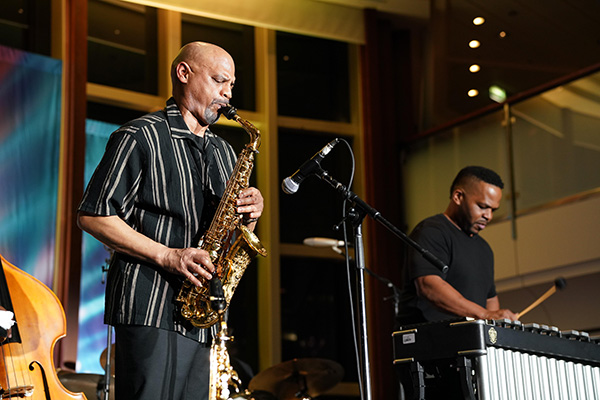
(L to R) Steve Wilson, Warren Wolf
3) The program contained many different all-star groups. There was even a very young band called the Jazz House All-Stars, who had all come through the Jazz House education project. All-star bands were often fun, but, not surprisingly, most of the finest moments on the cruise came from working bands like Artemis, Christian McBride's Inside Straight, the Kenny Barron Trio, the Billy Hart Quartet, and the Jeff Hamilton Trio.
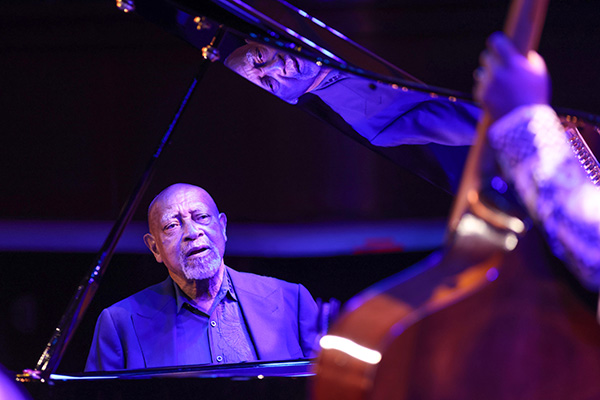
Kenny Barron
A strong argument can be made that Inside Straight contains the best bassist (the leader), the best vibraphonist (Warren Wolf), and the best alto/soprano saxophone multi-reed player (Steve Wilson) in jazz. On McBride's "Star Beam," Wilson (on soprano) was stunning. Every Wolf solo was a self-contained vibraphone tour de force. He is so fast and clear, as he spills multiple concurrent melodies. In the hands of McBride, the acoustic bass is as articulate as a guitar. Kenny Barron appeared three times with his trio, which contains two excellent accompanists, one still unsung (bassist Kiyoshi Kitagawa) and one already a star and leader in his own right (drummer Johnathan Blake). On the first night of the cruise Barron played the Sky Lounge. A hush descended when he played ballads like "The Very Thought of You." The hush felt contiguous with the silent nighttime sea beyond the windows. Jeff Hamilton played four times with his trio (pianist Tamir Hendelman, bassist Jon Hamar) and each time conducted a clinic on what it means for a piano trio to be led by a drummer.
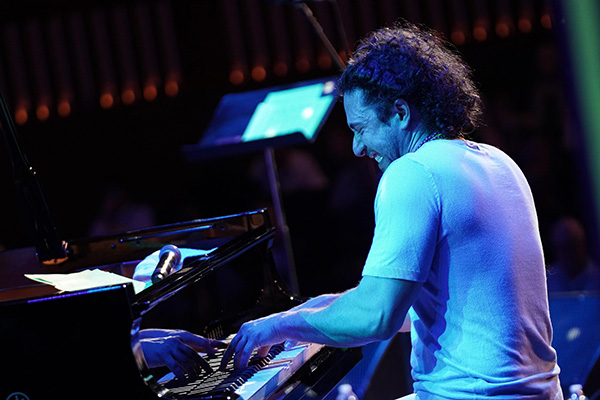
Emmet Cohen
4) The music never felt too narrowly mainstream because of all the young up-and-coming badasses on the boat. Emerging pianists were an especially strong category. Emmet Cohen, Julius Rodriguez, Taylor Eigsti, Isaiah J. Thompson, and Vitor Gonçalves all played often, in various ensembles. They all have the kind of technical proficiency that creates the momentary illusion that piano virtuosity comes easily to the gifted. (In fact, of course, for each of them, the acquisition of such expertise required a large percentage of the waking hours of their youth.) They all operate on the leading edges of 21st century jazz. But they all accommodated their lust for adventure to the tradition-based aesthetic of the Jazz Cruise. In the process, they revealed that the strength of the Great Jazz Tradition is its openness to intelligent experimentation.
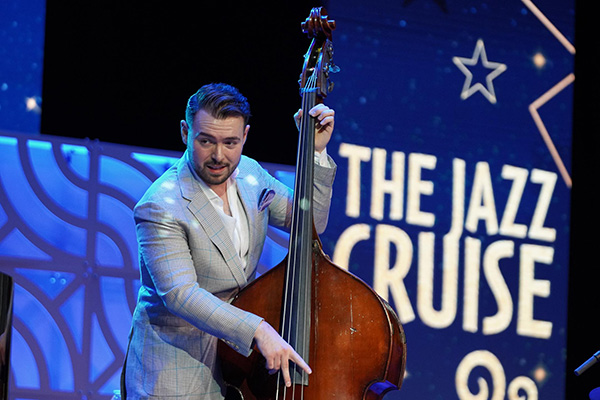
Philip Norris
Rodriguez, for example, performed a trio concert (with the volatile rhythm section of bassist Jason Clotter and drummer Michael Reed) dedicated to the music of George Gershwin and Cole Porter. Essentially, he tossed a piano equivalent of a hand grenade into both "Summertime" and "Love for Sale." Cohen is pure energy and charisma, an irresistible piano force. His quintet played music from its 2022 album, Uptown in Orbit. Two of Cohen's young sidemen also blew minds on the boat. They were alto saxophonist Patrick Bartley and bassist Philip Norris. They were the principle perpetrators on an outrageous, cacophonous, wildly improbable version of "Tea for Two."
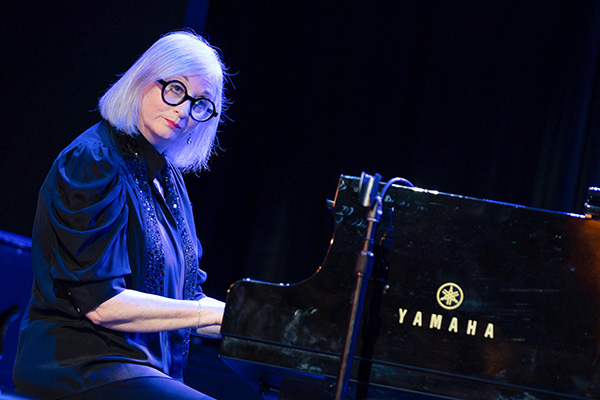
Renee Rosnes
5) There were two quartets, put together just for the cruise, with the superb rhythm section of Renee Rosnes, John Patitucci and drummer Carl Allen. One had Mark Turner and one had Steve Wilson. Both bands need to make a record. On the last day, when I was listening to the quartet with Wilson, I had a sudden insight. They were playing Duke Pearson's "You Know I Care." It is a ballad, but their version contained submerged intensity, like an underground fire. The music was powerful, but after seven days on the cruise, I realized that I was no longer thrilled by it. I had come to expect excellence. It just felt normal. Clearly, I was getting spoiled. But jazz without the poverty is not normal. The ship docked the next morning. I was deposited unceremoniously back into Miami, and the harsh realities of life on dry land. The Jazz Cruise was over.