 With HiFiMan HE R10P:
 When I played
Stravinsky: Histoire du soldat (version française) (24/96 FLAC, Harmonia Mundi/Qobuz) through the Lina, powering HiFiMan's $5499
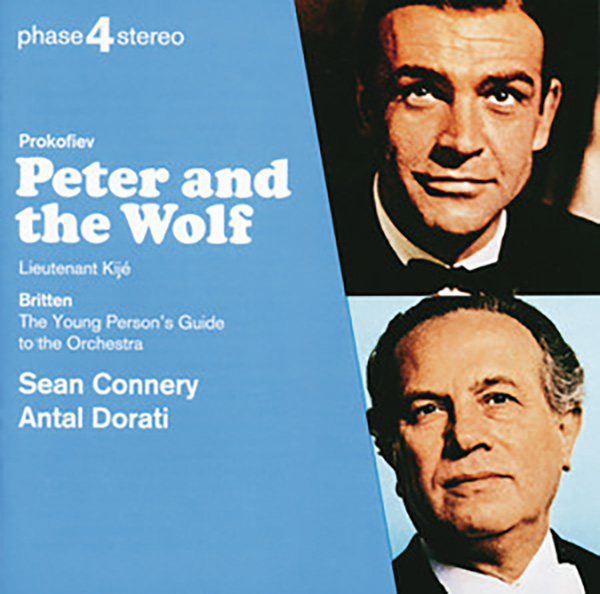
HE R10P closed-back headphones, I felt as though I was listening to a live French radio drama ca 1920. Isabelle Faust's violin, Alexander Melnikov's piano, and Dominique Horwitz's narration were presented as if each had their own recording track and those tracks were skillfully combined into an engrossing, faux-live mix, well-suited to headphones. The sound was sharp, lucid, and emotionally affecting in a way that made me want more spoken-voice radio drama. So I switched to Antal Doráti conducting the Royal Philharmonic in a 1965 performance of Prokofiev's
Peter and the Wolf (16/44.1 FLAC, Decca/Qobuz), with Sean Connery narrating. With the Lina driving the R10P, the crisp period sound from this Decca
Peter and the Wolf raised hairs on the back of my neck.
To every listener's glee,
Peter and the Wolf recordings anthropomorphize the sounds of oboes, flutes, clarinets, and bassoons in a way that gives them special powers that can last a lifetime. Listening through HiFiMan's 30 ohm, 100dB/mW–sensitive R10P headphones, those instruments' magic powers seemed greater than they did when I was a child. At any age, it's hard to have a bad day if you take time out for a big wolf, a little boy, a dumb duck, and cat sneaking through the grass.
With the Abyss AB-1266: Any claim to being a premium-level headphone amplifier must be backed up by an extraordinary listening experience with JPS Labs'
Abyss AB-1266 Phi TC. The Lina did a fine job with that—but only after I remembered the gain switch on the right bottom of the front panel. Moving that switch from Low to High woke up the Abyss's planar-magnetic diaphragms, allowing for more clean volume than I would ever need. Say Hallelujah!
Listening to that Sean Connery Decca through the Lina-Abyss combo, the sound was a touch dry compared to the tubed
Feliks Envy and
LTA Z10e amplifiers but well-formed, brisk, and super-transparent, with assertive beat-keeping and state-of-the-art vocal intelligibility. Plus! The Abyss and Lina were a hip, Bed-Stuylish combination. Recommendable.
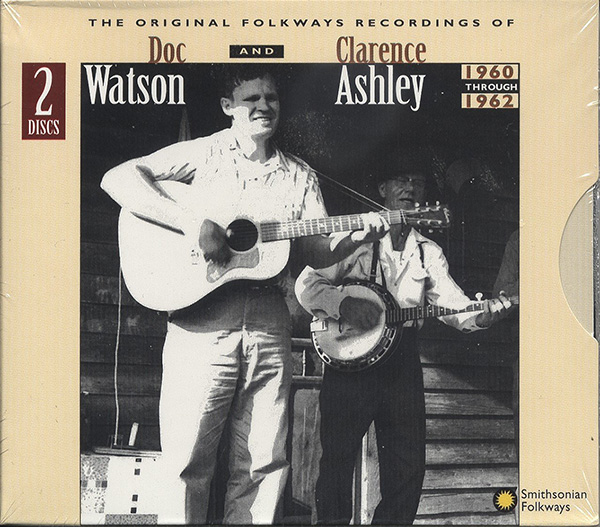
With the Susvara: I'm not sure when I first heard it, but the song "Sitting on Top of the World," written by Walter Vinson and Lonnie Chatmon of the Mississippi Sheiks, seems more perfect every time I encounter it. I sense infinite meaning hidden between its lines. It was first recorded in 1930 and has been covered by everybody from Bill Monroe and Cream, to Howlin' Wolf, Jack White, and The Grateful Dead. But the version that coddles my heart most is the one by Doc Watson and Clarence Ashley on
Original Folkways Recordings of Doc Watson and Clarence Ashley (16/44.1 FLAC, Smithsonian Folkways/Tidal).
This was the first track I tried with the Lina amplifier driving HiFiMan's renowned
Susvara open backs. Watson's vocals sounded incantatory, but before I start blathering about the Susvara's easy-flowing bell-clear sound, I am required to remind you that
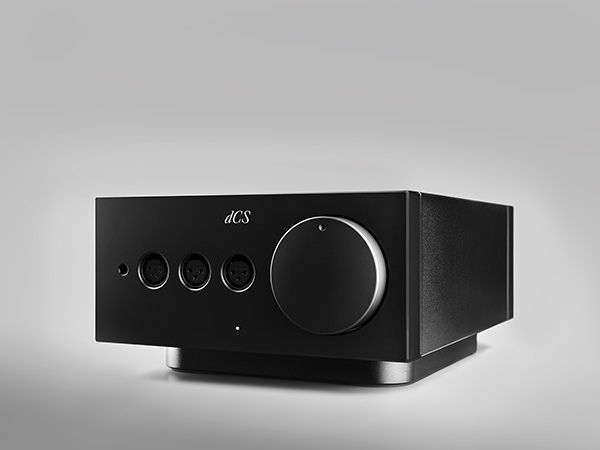
you could experience this Doc & Clarence performance through the Susvara headphones powered by this dCS amp at virtually any CanJam. So don't take my word for anything—go to a CanJam, sit by a Lina stack with your ears covered by Susvara's gold-deposited nano-membranes, and listen to any type of music. Then write in and tell me if you were sitting on top of the world.
The thing the Susvara does better than its peers is expose pulsing layers of finely rendered atmospheric energy, the kind large orchestras make to power large venues. Of course, the Susvara can do pop rock and reggae, but so can lots of less-pricy headphones. But only a few elite headphones can express the subtle densities, mood shifts, and enormous scale of works like Chausson's 1896 composition "Poème, Op. 25 I & II," from the album titled
Secret Love Letters, performed by The Philadelphia Orchestra under the direction of Yannick Nézet-Séguin with Lisa Batiashvili as violin soloist (24/96 FLAC, DG/Qobuz). With the Lina driving the Susvara, this surprise-filled Chausson unfolded with
smooth dreamy melodic ease, a feeling of poetic grandeur, and goosebump-level violin tone.
 With the Dan Clark Audio Stealth:
 While listening with the Susvara, I got this hunch the dCS Lina might be the exact right amp to power Dan Clark Audio's $3999
Stealth planar-magnetic closed-backs. I imagined that the Lina's strong drive and bright, sharp-focus clarity would bring out those same qualities in the 23 ohm, 86–87dB sensitive (not easy-to-drive) Stealth. It wasn't a hunch; it was a prophecy. The first recording I played,
Dock Boggs: Legendary Singer and Banjo Player (16/44.1 FLAC, Folkways/Qobuz), came through in a manner that made Boggs's voice and banjo unusually distinct and fully formed. The air and light surrounding Dock's words were clearer and lighter in mass than I remember it being with other amplifiers. More than once, in the middle of a recording, I smiled and nodded in happy appreciation of how effectively the Stealth and Lina complemented each other.
I like it when reviews have a high point, where some component pairing exceeds my expectations and shows both products in a new light. This was one of those moments. The Lina made the Stealth play brighter, better defined, and bolder, while the Stealth made the Lina more nuanced and painterly. A divine match.
vs the Feliks Envy: In the
February 2024 Gramophone Dreams, I described how unstressed the Susvara sounded when driven by Feliks's Envy 300B headphone amp. "With most amps, the Susvara's character leans towards dark and serious," I wrote, "but the Envy erased that melancholia, substituting clear skies, sunshine, and flowers."
Not surprisingly, when I switched from the dCS Lina to the 300B Feliks Envy (with the Susvara), I first found the Lina a little dry and overcontrolled. But the Lina didn't care what I thought: It knew its overt transparency made the Envy seem hazy by comparison.
Remembering how the component that played before has a strong effect on what I notice when the new component begins playing—that order is everything—I switched back to the Lina from the Envy, whereupon I noticed how grainless the Lina was and how the Lina sounded more relaxed and less overtly declarative than I had previously thought.
Both amps displayed the kind of transparency we pay extra for, but the Envy infused its clarity with a touch of warm breathiness and a slight glimmer of luminosity. Listening to
Ellipses, with Anastasia Kobekina on cello and Thibault Cauvin playing guitar (24/48 FLAC, Mirare/Qobuz), with Dan Clark Audio's Stealth powered by the Feliks Envy Performance Edition amplifier, I reveled in the artificial thrillingness of the recording's sound. With the Lina, my brain noticed more about the compositions and performances.
Neither the Lina nor the Envy had trouble powering the stubborn-to-drive Stealth. With both amplifiers, gain, volume, and dynamic headroom were more than sufficient. Playing
Ellipses, the chief sonic difference between the $8995 Envy and the $9100 Lina was in the force and solidity of the sound. The Lina presented performers' images with a sculpted mass that contrasted with the Envy's gentler, more holographic presentation.
vs LTA Z10e: Linear Tube Audio's 12W
Z10e integrated loudspeaker/headphone amplifier plays my
Heretic AD614 speakers with rich-toned EL84 tube finesse, but it can also play electrostatic, dynamic, and planar-magnetic headphones with high levels of resolve and naturalness. It retails for $6950 and is the epicenter of my everyday music listening. Typically, the Z10e sits at arm's reach on a shelf above my desk, but for this report I installed it in my floor system, driving my Heretics, receiving music from HoloAudio's overachieving Spring 3 DAC.
I was anxious to make this Z10e-to-Lina comparison, because there is no better way to describe the character of a new amplification product than to compare it to a well-known competing product.
For an amplifier with 10 tubes (that never seem to wear out), the Z10e does not sound noticeably tubey. The tube part of the Z10e's sound is peripheral and nonpervasive. I notice it only when it's putting a nice, slightly wet sheen on electrostatic headphone reproduction or enhancing the breathy parts of female vocals.
I noticed this vocal enhancement while enjoying Argentina's charismatic chanteuse Susana Rinaldi, who was born in 1935 and is famous for being the first woman to sing tangos. The album I'm stuck on is named after tango poet/lyricist Homero Manzi,
A Homero Manzi (16/44.1 FLAC, RP Music/Qobuz). I'm loving it, because Rinaldi's vocals make me feel under her spell in a sensuous, intimate way. Played through the LTA-Stealth combo, Rinaldi's frisson-rendering vocals effectively accented the poetics of Manzi's lyrics. The effect was mesmerizing.
When I switched to the Lina, its superior drive better presented the cabaret drama and rhythmic dynamism of Susana Rinaldi's performance. This album's intense pathos felt more accessible with the Lina.
The chief difference between the dCS Lina and LTA's Z10e was in how they presented rhythm and transients. I would describe the Z10e's sound as
relaxed resolution—presented with an easy flow and a touch of glow. In contrast, the dCS Lina presented detail and momentum in a more firmly structured way. Images in the soundspace were more conspicuously crystalline, and the space around them was emptier.
 Conclusions:
 None of the above-mentioned products are inexpensive. But they are all spectacular performers, mindfully engineered to extract extraordinary amounts of low-signal truth and make listening to recordings intense and pleasurable.
I encourage all readers to audition every headphone, amp, and wire I've discussed in this article. And while you're doing that, watch out for goosebumps, tears, and laughter, because that's how you'll know if they can please for the long haul.