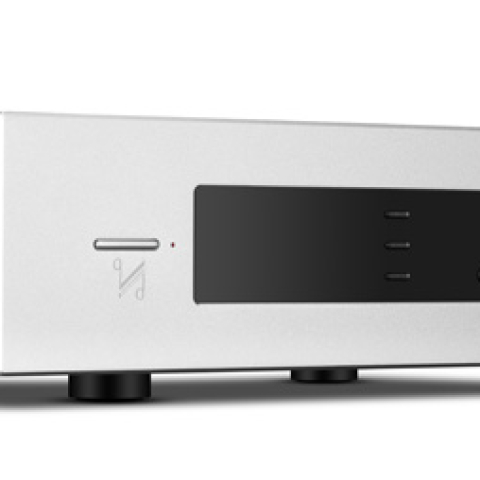
This Grado/J.Sikora/Parasound combo sounded conspicuously unmechanical, unnervingly dark, superquiet, noticeably dynamic, and unbelievably microdetailed. But it also—strangely—sounded like nothing I'd heard before. For more than a week, I could not decide on the something-right-or-something-wrongness of the Aeon3 + Initial's sound.
I invited friends over to make cartridge comparisons, and they also struggled to define the Aeon's "unusual" sound. To ground my auditions and focus more on the sound of the J.Sikora turntable, I exchanged the Aeon3 for the Koetsu Rosewood Signature Platinum ($7495). The Platinum is my daily-driver, love-it-till-death reference cartridge. On the J.Sikora, the Koetsu developed a greater-than-usual silence and a denser, finer-grained corporeality.
Next, I expanded my studies by playing a select group of high-quality recordings with a total of four cartridges: the Grado Aeon3, the Koetsu Rosewood Signature Platinum, the My Sonic Labs Ultra Eminent Ex ($6995), and the Etsuro Urushi Cobalt Blue ($5400).
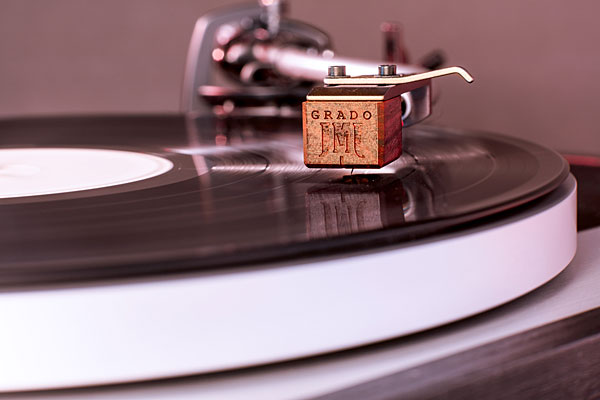 On the Initial, the Koetsu Platinum sounded like a higher-resolution, higher-jump-factor Rosewood Standard. True to its heritage (footnote 5), the Ultra Eminent Ex sounded super-corporeal, clear, and transparent. On the Initial, the Eminent Ex displayed an extraordinary authority that none of the other cartridges could match. Think solid. On the Initial, the Etsuro Urushi Cobalt Blue sounded more transparent and LSD-shroom-like than the classic vintage Koetsu Rosewood Signature—which, while I was still young, lured me away from my science-nerd obsession with Shure V15s. Now, surprisingly, on the Initial, the Grado Aeon3 was out-Koetsu-ing that psychedelic Rosewood Signature of my youth.
But I was still a little worried. When one component sounds conspicuously different than the other three, it is either doing something seriously wrong (which the others are all doing right), or something unusually right (which the others are not doing at all).
I used four recordings to help clarify my observations: Mobile Fidelity Sound Lab's stunning reissue of Miles Davis's In A Silent Way (MFSL 1-377), Evensong for Ascensiontide with George Guest directing The Choir of St. John's College Cambridge (Argo ZRG 511), Richard Wagner's Das Rheingold with Kirsten Flagstad and Georg Solti conducting the Vienna Philharmonic (London OSA 1309), and one of the most perfect recordings ever made, Todd Garfinkle's masterpiece Será una Noche (45 rpm, MA Recordings M 052A).
After playing all four recordings with all four cartridges on both the J.Sikora Initial and Dr. Feickert's $6995 Blackbird turntable, the only things I knew for sure were: a) the Grado was the quietist, with the blackest, deepest spaces, and b) the Grado's smallest details were smaller than the small details from the other three cartridges. The Grado's elliptical diamond (on a sapphire cantilever) and medium/highish 20µm/mN dynamic compliance seemed to favor the bottommost part of the grooves, where the tiniest notes and most delicate nuances lay.
After all that record-and-cartridge-changing work, it was obvious: The Grado Aeon3 sounded more alive, more brightly lit, and more kickdrum punchy on the Feickert Blackbird. On the J.Sikora Initial, the Aeon sounded darker, richer, more soft-spoken, with a more detailed "inner structure" and deeper, more powerful bass.
But no matter—in the end, it all comes down to: How does the Grado Aeon3 play piano? I let Claudio Arrau, one of the last Romantic pianists, show me if the Aeon3 could properly express the density of wood, the motions of little felt-headed hammers, and the taut metalness of steel strings. I also wondered, could the Aeon3 excavate the embedded pathos of Franz Liszt's Sonata in B minor (Philips LP 6500 043)? The Koetsu Rosewood Signature Platinum emphasized the overt drama and tonal contrasts of Liszt's 1853 Sonata, and made the Philips recording sound a bit cardboardy. I wondered what the Grado would do.
On the Initial, the Koetsu Platinum sounded like a higher-resolution, higher-jump-factor Rosewood Standard. True to its heritage (footnote 5), the Ultra Eminent Ex sounded super-corporeal, clear, and transparent. On the Initial, the Eminent Ex displayed an extraordinary authority that none of the other cartridges could match. Think solid. On the Initial, the Etsuro Urushi Cobalt Blue sounded more transparent and LSD-shroom-like than the classic vintage Koetsu Rosewood Signature—which, while I was still young, lured me away from my science-nerd obsession with Shure V15s. Now, surprisingly, on the Initial, the Grado Aeon3 was out-Koetsu-ing that psychedelic Rosewood Signature of my youth.
But I was still a little worried. When one component sounds conspicuously different than the other three, it is either doing something seriously wrong (which the others are all doing right), or something unusually right (which the others are not doing at all).
I used four recordings to help clarify my observations: Mobile Fidelity Sound Lab's stunning reissue of Miles Davis's In A Silent Way (MFSL 1-377), Evensong for Ascensiontide with George Guest directing The Choir of St. John's College Cambridge (Argo ZRG 511), Richard Wagner's Das Rheingold with Kirsten Flagstad and Georg Solti conducting the Vienna Philharmonic (London OSA 1309), and one of the most perfect recordings ever made, Todd Garfinkle's masterpiece Será una Noche (45 rpm, MA Recordings M 052A).
After playing all four recordings with all four cartridges on both the J.Sikora Initial and Dr. Feickert's $6995 Blackbird turntable, the only things I knew for sure were: a) the Grado was the quietist, with the blackest, deepest spaces, and b) the Grado's smallest details were smaller than the small details from the other three cartridges. The Grado's elliptical diamond (on a sapphire cantilever) and medium/highish 20µm/mN dynamic compliance seemed to favor the bottommost part of the grooves, where the tiniest notes and most delicate nuances lay.
After all that record-and-cartridge-changing work, it was obvious: The Grado Aeon3 sounded more alive, more brightly lit, and more kickdrum punchy on the Feickert Blackbird. On the J.Sikora Initial, the Aeon sounded darker, richer, more soft-spoken, with a more detailed "inner structure" and deeper, more powerful bass.
But no matter—in the end, it all comes down to: How does the Grado Aeon3 play piano? I let Claudio Arrau, one of the last Romantic pianists, show me if the Aeon3 could properly express the density of wood, the motions of little felt-headed hammers, and the taut metalness of steel strings. I also wondered, could the Aeon3 excavate the embedded pathos of Franz Liszt's Sonata in B minor (Philips LP 6500 043)? The Koetsu Rosewood Signature Platinum emphasized the overt drama and tonal contrasts of Liszt's 1853 Sonata, and made the Philips recording sound a bit cardboardy. I wondered what the Grado would do.
 On the Feickert Blackbird, the Grado added a very enjoyable growl and thunder in the copper-wound strings of the piano's lower registers, and showed me the nuance in Arrau's pianistic pyrotechnics. The recording seemed more fluid and supple.
In contrast, the Koetsu, on the Feickert, exposed the distinct, slightly muted "ping" of hammers on strings, especially the bare-wire strings in the upper registers. This right-handed hammers-on-strings quality made the Koetsu sound slightly brighter, punchier, and sprightlier—but not more full-power dynamic than the Aeon3, which was, unfortunately, less corporeal than the Koetsu in the upper registers.
After my eyes went blurry and my fingers got numb from all the cartridge swapping, I concluded: The Grado Aeon3 is doing something unusually right that the other cartridges are not doing at all. This $6k Grado appears to be uncovering new, previously buried deposits of recorded microdata. That trait alone is making LPs extra-engaging and more pleasurable. Bravo, John Grado! You showed all us moving-coilers what a state-of-the-art moving-iron cartridge can do.
J.Sikora meets Etsuro Urushi
On the Feickert Blackbird, the Grado added a very enjoyable growl and thunder in the copper-wound strings of the piano's lower registers, and showed me the nuance in Arrau's pianistic pyrotechnics. The recording seemed more fluid and supple.
In contrast, the Koetsu, on the Feickert, exposed the distinct, slightly muted "ping" of hammers on strings, especially the bare-wire strings in the upper registers. This right-handed hammers-on-strings quality made the Koetsu sound slightly brighter, punchier, and sprightlier—but not more full-power dynamic than the Aeon3, which was, unfortunately, less corporeal than the Koetsu in the upper registers.
After my eyes went blurry and my fingers got numb from all the cartridge swapping, I concluded: The Grado Aeon3 is doing something unusually right that the other cartridges are not doing at all. This $6k Grado appears to be uncovering new, previously buried deposits of recorded microdata. That trait alone is making LPs extra-engaging and more pleasurable. Bravo, John Grado! You showed all us moving-coilers what a state-of-the-art moving-iron cartridge can do.
J.Sikora meets Etsuro Urushi
I was using the J.Sikora turntable to compare the Aeon3 moving-iron to the low-output (0.25mV/1kHz), low-impedance (3 ohms/1kHz) Etsuro Urushi Cobalt Blue moving-coil. But soon the work of comparison became too subtle and boring, and I lost interest. Overall, though, the Grado played bigger and faster, with more jump factor, than the Cobalt Blue. On the album Résonance by viola da gamba player Nima Ben David (MA Recordings M088A-V), the Aeon3 gave Ben David's highly sensual playing a more forwardly expressive vigor than the Cobalt Blue. But, but, but! The Cobalt Blue played Le Sieur de Machy's "Suite in G Minor," also from Résonance, with a more serene, dream-like, swans-on-a-pond beauty, a quality I thought characterized the Cobalt Blue's overall sound and better suited Machy's composition. Analog is sensuous and tactile by nature, as is the character of the Etsuro Urushi Cobalt Blue. Disc after disc, it exhibited a subtle—but overtly sensuous—physicality that expressed a more restrained beauty than the Grado Aeon3. Obviously, every cartridge reveals something different. So . . .
 It's a shame how the only effective way for an audiophile to choose a phono cartridge is by trial and error, which is obviously difficult and expensive. Even I, with friends like Trei, Dudley, and Fremer (and the potential for a multitude of loaners), struggle to answer the question: "Herb, if you could choose only one . . ."
In the end
It's a shame how the only effective way for an audiophile to choose a phono cartridge is by trial and error, which is obviously difficult and expensive. Even I, with friends like Trei, Dudley, and Fremer (and the potential for a multitude of loaners), struggle to answer the question: "Herb, if you could choose only one . . ."
In the end
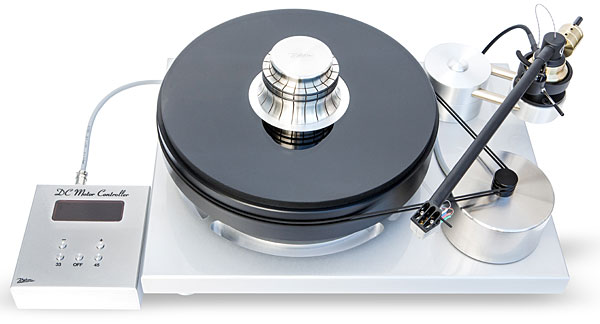
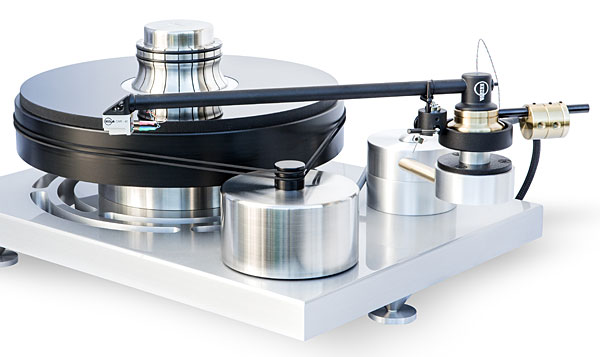
I believe I discovered that intangible something Michael Trei alluded to when he first told me about J.Sikora turntables. I have not auditioned the Standard or Reference models, but my Initial with the glass mat and two-piece weight delivered a more proactive, emotionally tangible silence than any turntable I have used since the Palmer 2.5 I reviewed in 2017. The Initial made my 1957 Thorens TD 124 sound like a barrel of bolts rolling down a hill. My 1984 Linn Sondek LP12 (Valhalla) is very silent, but its silence is more cerebral, less physically tangible than the Sikora's. The Dr. Feickert Blackbird is silent, too, but the Blackbird's silence does not noticeably affect the feeling of the music. In contrast, the Initial's silence has a distinct, almost subliminal presence that frames voices and instrumental sounds while exposing micro-textures. And—surprise, surprise!—the J.Sikora's weighty silence was happening despite the not-fancy Jelco knife-bearing tonearm, which I would never describe as superquiet or superprecise. The Jelco KT850M is not an SME V.
When I removed the Initial's crystal glass mat and reset the cartridge's VTF/VTA/SRA, I realized two things: Most of the Initial's silence is a byproduct of this reasonably priced option. Sans glass mat, the Initial's sound is brighter and more conspicuously dynamic—and a lot like the Dr. Feickert Blackbird I've been comparing it to.
And what about the Initial's optional two-part stainless-steel weight? Theoretically, the mass of the record weight lowers the LP's resonant frequencies and stabilizes the disc. The Initial's weight probably helps the disc keep from slipping or hesitating under the drag of the stylus. But I doubt it flattens the record much—or puts it in greater contact with the platter.
But! The slotted, rubber-band–bound weight did seem to affect sound quality. I used it all the time, and besides the comforting feeling of setting it on a record, its use appeared to clear up and tighten up deep bass reproduction—a lot! Midrange focus seemed sharper, also. The top three octaves seemed to get purer, more transparent.
On the mat-less Dr. Feickert Blackbird, when I fingernail-tapped a ruler-flat 180gm MA Recordings disc without the Feickert clamp, it emitted a noticeable high-pitched plastic- sounding tone. When the clamp was tightened down, the pitch of that tone lowered. On the Initial, with the glass platter mat but no weight, my nail-tapping sounded lower in pitch than the Feickert with its clamp. (I think this is an important observation.) With the weight on the record, the pitch went lower in frequency (but not by much).
On the Initial, without the glass mat, that difference in weight/no-weight tapping pitch was much greater. I imagine these changes in the vinyl's resonant frequency are also detectable by a cartridge's stylus-cantilever assembly. And I'm pretty sure some portion of what I have just described as the Initial turntable's sound character results from the glass mat and record weight options.
Unquestionably: the J.Sikora's magic is in the details of its design.
But then...
My $699 Pioneer PLX-1000 turntable with a rubber mat and a $475 Hana EL MC cartridge delivers excellent pitch, fine detail, natural textures, some boogie factor, and plenty of pleasure. But only modest magic. That Pioneer-Hana combo can only hint at the transparency, weight, silent spaces, rhythmic force, or overall sonic intensity of record players at the Initial's elevated level of price and engineering sophistication. During my auditions, J.Sikora's Initial gave me what I consider to be a majority portion of what the Porsche-Maserati turntables do at a Cadillac-Oldsmobile price.
Footnote 5: Previous to founding My Sonic Lab, Y. Matsudaira worked with Yoshiaki Sugano and played a major part in developing the original Koetsu Onyx and Supex 900 cartridges.
On the Initial, the Koetsu Platinum sounded like a higher-resolution, higher-jump-factor Rosewood Standard. True to its heritage (footnote 5), the Ultra Eminent Ex sounded super-corporeal, clear, and transparent. On the Initial, the Eminent Ex displayed an extraordinary authority that none of the other cartridges could match. Think solid. On the Initial, the Etsuro Urushi Cobalt Blue sounded more transparent and LSD-shroom-like than the classic vintage Koetsu Rosewood Signature—which, while I was still young, lured me away from my science-nerd obsession with Shure V15s. Now, surprisingly, on the Initial, the Grado Aeon3 was out-Koetsu-ing that psychedelic Rosewood Signature of my youth.
But I was still a little worried. When one component sounds conspicuously different than the other three, it is either doing something seriously wrong (which the others are all doing right), or something unusually right (which the others are not doing at all).
I used four recordings to help clarify my observations: Mobile Fidelity Sound Lab's stunning reissue of Miles Davis's In A Silent Way (MFSL 1-377), Evensong for Ascensiontide with George Guest directing The Choir of St. John's College Cambridge (Argo ZRG 511), Richard Wagner's Das Rheingold with Kirsten Flagstad and Georg Solti conducting the Vienna Philharmonic (London OSA 1309), and one of the most perfect recordings ever made, Todd Garfinkle's masterpiece Será una Noche (45 rpm, MA Recordings M 052A).
On the Feickert Blackbird, the Grado added a very enjoyable growl and thunder in the copper-wound strings of the piano's lower registers, and showed me the nuance in Arrau's pianistic pyrotechnics. The recording seemed more fluid and supple.
In contrast, the Koetsu, on the Feickert, exposed the distinct, slightly muted "ping" of hammers on strings, especially the bare-wire strings in the upper registers. This right-handed hammers-on-strings quality made the Koetsu sound slightly brighter, punchier, and sprightlier—but not more full-power dynamic than the Aeon3, which was, unfortunately, less corporeal than the Koetsu in the upper registers.
After my eyes went blurry and my fingers got numb from all the cartridge swapping, I concluded: The Grado Aeon3 is doing something unusually right that the other cartridges are not doing at all. This $6k Grado appears to be uncovering new, previously buried deposits of recorded microdata. That trait alone is making LPs extra-engaging and more pleasurable. Bravo, John Grado! You showed all us moving-coilers what a state-of-the-art moving-iron cartridge can do.
I was using the J.Sikora turntable to compare the Aeon3 moving-iron to the low-output (0.25mV/1kHz), low-impedance (3 ohms/1kHz) Etsuro Urushi Cobalt Blue moving-coil. But soon the work of comparison became too subtle and boring, and I lost interest. Overall, though, the Grado played bigger and faster, with more jump factor, than the Cobalt Blue. On the album Résonance by viola da gamba player Nima Ben David (MA Recordings M088A-V), the Aeon3 gave Ben David's highly sensual playing a more forwardly expressive vigor than the Cobalt Blue. But, but, but! The Cobalt Blue played Le Sieur de Machy's "Suite in G Minor," also from Résonance, with a more serene, dream-like, swans-on-a-pond beauty, a quality I thought characterized the Cobalt Blue's overall sound and better suited Machy's composition. Analog is sensuous and tactile by nature, as is the character of the Etsuro Urushi Cobalt Blue. Disc after disc, it exhibited a subtle—but overtly sensuous—physicality that expressed a more restrained beauty than the Grado Aeon3. Obviously, every cartridge reveals something different. So . . .
It's a shame how the only effective way for an audiophile to choose a phono cartridge is by trial and error, which is obviously difficult and expensive. Even I, with friends like Trei, Dudley, and Fremer (and the potential for a multitude of loaners), struggle to answer the question: "Herb, if you could choose only one . . ."
In the endI believe I discovered that intangible something Michael Trei alluded to when he first told me about J.Sikora turntables. I have not auditioned the Standard or Reference models, but my Initial with the glass mat and two-piece weight delivered a more proactive, emotionally tangible silence than any turntable I have used since the Palmer 2.5 I reviewed in 2017. The Initial made my 1957 Thorens TD 124 sound like a barrel of bolts rolling down a hill. My 1984 Linn Sondek LP12 (Valhalla) is very silent, but its silence is more cerebral, less physically tangible than the Sikora's. The Dr. Feickert Blackbird is silent, too, but the Blackbird's silence does not noticeably affect the feeling of the music. In contrast, the Initial's silence has a distinct, almost subliminal presence that frames voices and instrumental sounds while exposing micro-textures. And—surprise, surprise!—the J.Sikora's weighty silence was happening despite the not-fancy Jelco knife-bearing tonearm, which I would never describe as superquiet or superprecise. The Jelco KT850M is not an SME V.
My $699 Pioneer PLX-1000 turntable with a rubber mat and a $475 Hana EL MC cartridge delivers excellent pitch, fine detail, natural textures, some boogie factor, and plenty of pleasure. But only modest magic. That Pioneer-Hana combo can only hint at the transparency, weight, silent spaces, rhythmic force, or overall sonic intensity of record players at the Initial's elevated level of price and engineering sophistication. During my auditions, J.Sikora's Initial gave me what I consider to be a majority portion of what the Porsche-Maserati turntables do at a Cadillac-Oldsmobile price.
Footnote 5: Previous to founding My Sonic Lab, Y. Matsudaira worked with Yoshiaki Sugano and played a major part in developing the original Koetsu Onyx and Supex 900 cartridges.