The experience reminded me that the drama of playback lives in the potential of a sound to emerge suddenly from silence into full-throttle expression and ebb back just as quickly. The presence of this potential imbues even quiet passages with anticipation and excitement.
Every hit of the conga sounded faster than I'd heard it, too. The impulse behavior of the Fairchild was off the charts—transients came at me blindingly, realistically fast, with long decay and outstanding pace and drive. This breakneck speed compounded the liveness of the vastly dynamic presentation, at times making the music sound almost dangerous.
Also—the Tone Poet didn't sound like a Tone Poet. I promise I'm not being facetious in pointing out that what I sometimes miss when listening to vinyl reissues of midcentury records is the, um, rich tone of the original pressings. It's worth clarifying what I mean. I am not talking about a warm sound, with a prominent upper bass and a recessive treble, but rather the presence of appropriately rich tone colors, vivid textures, and a sense of palpable presence and what Art Dudley called "touch."
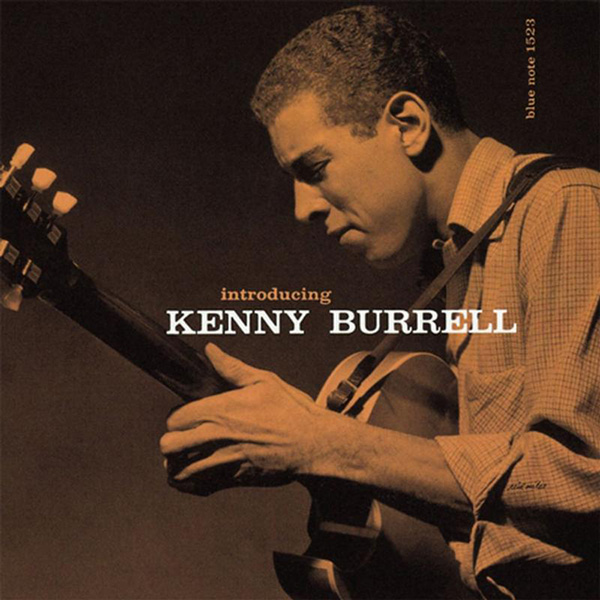
The Fairchild nails this part of the brief. It's not even remotely warm sounding, yet it makes recordings sound more materially solid and real than I thought possible. Forgive the cliché, but listening to the Burrell reissue made me feel not like I was listening to a recording made in 1956, but like I suddenly
existed in the 1950s, sitting in front of the band in Rudy Van Gelder's Hackensack studio.
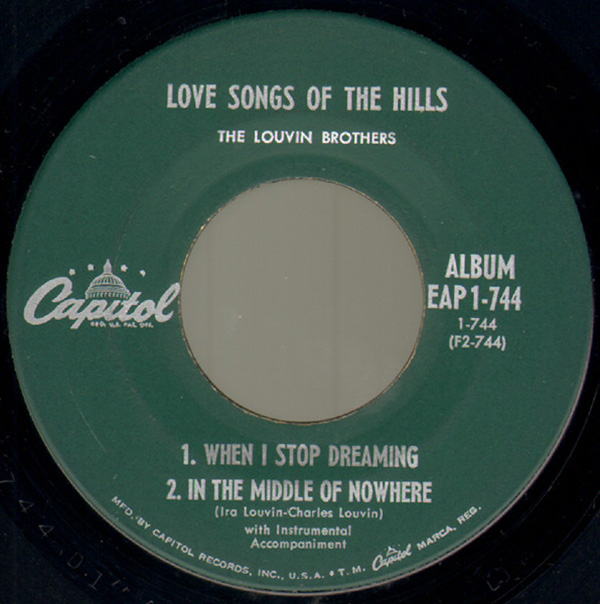
Yes, the brightness occasionally intruded. On Discogs, I'd recently bought a copy of the Louvin Brothers'
Love Songs of the Hills (Capitol EAP-1-744), a 7" 45rpm record containing my favorite of their originals, "When I Stop Dreaming." I'm not ashamed to admit that I paid about $40 for this near-mint artifact because the back of the sleeve was signed by both Ira and Charlie (and yes, it was also issued in 1956). The 225-A put the brothers' voices and instruments in between and about 10' above the
La Scalas, occupying an enormous space despite the absence of a lateral soundstage.
It was not a gentle rendition. Ira's sky-high tenor was piercing in a way that wasn't altogether pleasant, while the notes of his mandolin sounded like shards of ice. The Fairchild was contributing the treble emphasis, and I dislike brightness more than just about any other tonal error. Yet for me this remains the most compelling version of this familiar recording that I've heard, coming through the speakers with explosive dynamics and speed, reach-out-and-touch textures, Plymouth Barracuda–level drive—plus the Louvins were absolutely
planted in place. And it made the song's musical message—unrequited longing for someone you've lost—come through with all the operatic heartbreak gloriously intact.
Like the Miyajima Zero Mono I listened to for the
August Brilliant Corners, the Fairchild was supremely quiet in the groove and had a knack for excavating older recordings from their sonic murk and rendering them with full-contrast, high-fidelity verisimilitude.
Mabel Mercer Sings Cole Porter was recorded in 1955 at Atlantic Records on 56th Street in New York, right next to Patsy's Italian Restaurant. (Boasting the city's best neon sign and now in its 80th year, Patsy's is still in operation!)
The foremost cabaret performer of her time, Mercer was accustomed to nightclub audiences and balked at the idea of singing to a microphone in a bare studio. To make her feel at home, Atlantic's Ahmet Ertegun and Jerry Wexler moved the furniture in their office-studio against the walls, filled the room with tables and chairs they borrowed from a restaurant, lit candles, and invited dozens of Mercer's friends to the midnight session. The wife of the company's third partner, the notoriously dyspeptic Miriam Abramson, even walked around the studio dispensing champagne flutes from a tray. Tom Dowd, the engineer that night, told me that at about 4am a man in a fedora walked into the studio and stood silently against the wall, listening to Mercer sing. Shortly before the session wrapped up just after daybreak, he discreetly walked out. According to Dowd, the man was Frank Sinatra, a Patsy's regular who described Mercer as one of his main vocal influences. I hope that every word of Dowd's account is true.
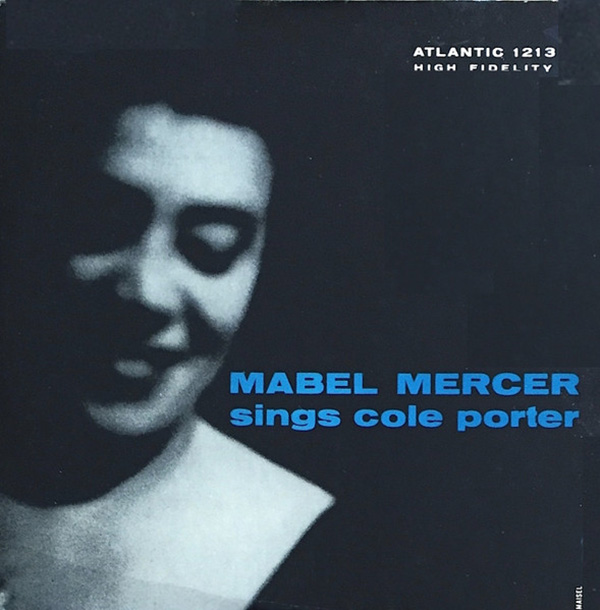
Listening to the first pressing of the Mercer album (Atlantic 1213), a fairly noisy disc of middling sound quality, I was struck by how vividly the 225-A replicated that nighttime performance. Mercer, who rolled her r's like an English governess, was one of the wittiest and most thoughtful interpreters of a lyric, Porter was one the wittiest songwriters to draw breath, and her renditions of some of his deepest cuts—like "Experiment" and "I Am Ashamed That Women Are So Simple"—are studies in charm and the drollest Tin Pan Alley humor. The Fairchild not only brought Mercer and her double-piano accompaniment to dimensional, embodied life and made her sound clearer and more forceful than I'd experienced, but it imbued her interpretations with heightened intention and delight.
What was I to make of this? Could a 70-year-old phono cartridge really make music sound this lifelike? To make sure I wasn't going deaf, I invited fellow monophiles Herb Reichert and Ken Micallef over for a listen. After a few hours of music, during which Ken's eyes were trained on the space between the speakers, he looked at me earnestly and said that the otherworldly vividness of listening through the Fairchild reminded him of being 18 and spending a night wandering around a Big Star supermarket in Charlotte, North Carolina, after having taken blotter acid.
We also listened to a side from Elvis Presley's first gospel album,
His Hand in Mine (RCA Victor LPM-2328). Though when he made the album in 1960 Presley was the living avatar of rock and roll, he sounds completely committed to the sacred material and free of vocal swagger and affectation, a reminder that as a teenager he dreamed of joining The Blackwood Brothers, a gospel quartet he heard on Sunday mornings at his Memphis church. The record was also intended as a tribute to his beloved mother Gladys, who'd died a year and a half earlier. "Known Only to Him," one of the highlights of the album and Presley's career, sounded riveting as portrayed by the Fairchild: The lead voice was sonically enormous and rapt with devotion, while the bass notes sung by the Jordanaires' Ray Walker were thrillingly tactile. Herb cocked his head and pronounced the rendition of the song "perfect." The listening session reminded me that "Known Only to Him" is among a handful of songs I'd like to be played at my funeral.
I suppose a comparison with the cartridge I've heard that sounds most like the Fairchild 225-A—the
Miyajima Zero Mono, which I enjoyed so much that I bought it—might be useful. While the two are similar in their remarkable de-emphasis of groove noise, dynamic freedom, and superb drive and scale, they also share important differences. The Miyajima's is voiced a bit warm, while the Fairchild can sound bright. The Miyajima is smoother, more neutral, and less likely to sound aggressive or otherwise offend. And unlike the Fairchild, it's not a project. On the other hand, an optimized 225-A will show you presence, tone, transient speed, and lifelike dynamics in a manner unequaled by any cartridge I've heard.
Oh, and about those three 225-As that J brought over: The differences between them weren't vast. Compared to my favorite of the Fairchildren, I found the unit retipped with a MicroRidge stylus to sound more detailed but also to lose some of the magical presence and color. And the stock 225-A sounded a bit slow and hazy, lacking the last measure of insight, drive, and excitement. Perhaps one reason is that the stock suspension was made for the heavier tonearms of the time and might sound better at a VTF of 6gm, something I didn't dare attempt out of concern for my records. Or perhaps after seven decades the suspension has simply dried out. It's true that the 225-A I enjoyed most was a
modified 225-A, a mixture of the old and the new, but anyone looking to buy a phono cartridge this old should expect to have some work done on it by a qualified expert. It's also worth noting that the back of the Fairchild has two terminal pins instead of four, so the cartridge clips on a conventional stereo tonearm or headshell have to be mounted end to end.
If the above sparks your curiosity, getting your own Fairchild requires buying a secondhand unit and then paying a gifted artisan like Aidas Svazas to make it sound its best. The 225-A has been selling for around $400 online. There's much I don't know about the wider world of Fairchild mono cartridges—which include such highly regarded models as the 220XP, the 230, and the XP-2—to say nothing of the stereo models. If you happen to know more of their story, please drop me an email at
stletters@stereophile.com. In the meantime, this fascinating little device is here to remind us that our cultural ancestors knew many things we've forgotten. Like prewar Martin mandolins, 100-year-old bottles of Madeira, and Cézanne's drawings, some things are not so easy to improve.

















