Silence of the Equilock
A test of whether you've purchased an ordinary hi-fi component or a special one is how many of your favorite recordings it makes sound new—how many favorite albums seem freshly imagined when experienced through the component. No component is entirely transparent; each reproduces recordings in its own image. The VX-8 made familiar records new again. It wasn't so much casting recordings in a new light as digging deeper to reveal more of a recording's sonic architecture; a different kind of light induces a different reflection. What's more, the VX-8 made all the vinyl records I played sound more listenable, regardless of era or genre; none suffered from the experience (footnote 1). It didn't make a bruised '50s Columbia classical LP shiny and new, but it did cast it in the correct musical milieu. I spent hours pulling out and playing my usual test records to gauge scale, tone, texture, and the like through the VX-8's sonic lens. Whenever I was sated, I moved on to something new: Francis Bebey's African organ gems (African Electronic Music 1975-1982, LP, Born Bad Records BB039); Paulo Vanzolini's '70s Brazilian jazz (Onze Sambas e Uma Capoeira, LP, RGE XRLP-5.321); FSOL's '90s-era British morph-tronica (Dead Cities, LP, Virgin Records 7243 8 4206819); Don Cherry's avant jazz ("Mu" First Part, BYG/ Actuel 529.301). In all these genres, the Ayre unearthed fresh sonic details and ambient information, doing it in organic, wholistic fashion, with more than a little drive and spot-on color. The VX-8's frequency and dynamic ranges were so uniformly sleek and seamless that I didn't dare dissect each recording's sonic elements, lest it lose its beauty. That isn't how we experience music—not when it's good—so why should I report it that way?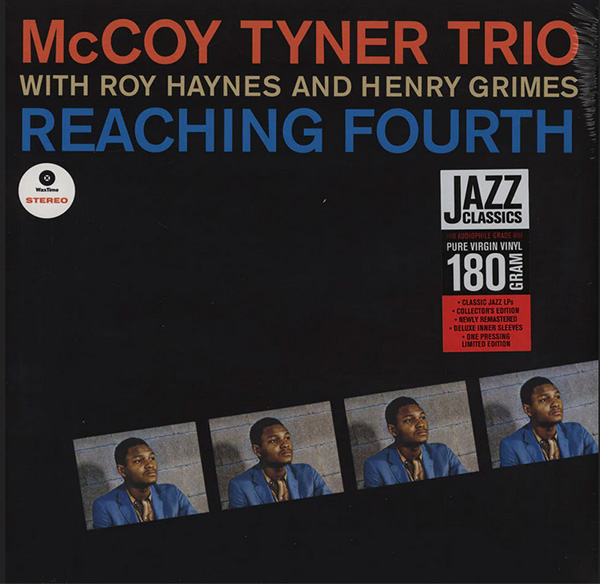 The Ayre's detailed sonic panoramas offered frequent surprise and excitement. Its rhythm, even-keeled pacing, and toe-tapping sonority paired well with the Sugden LA-4 preamp, transmitting its crispness and acuity while bringing corporeal images, a sense of ease, and a deep black background to the listening party.
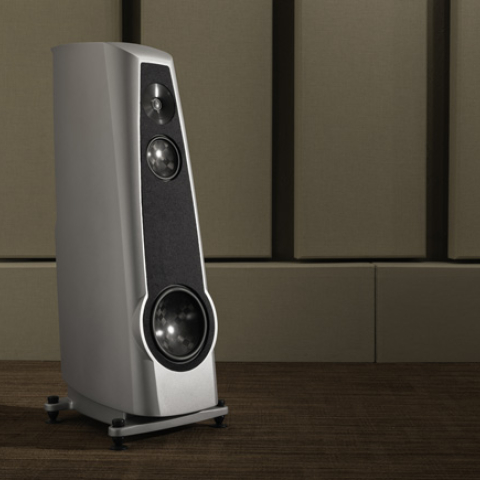
Driven by the VX-8, McCoy Tyner's Reaching Fourth (Impulse! A33)—Tyner's second album as a leader—burst out of the Volti Audio Razz SE speakers with tremendous briskness, the Sugden/Ayre combo working in perfect tandem. Roy Haynes's drums stung; Henry Grimes's bass sounded soft but tonally true. The VX-8 had a sweet spot for jazz.
Carmen McRae's Alfie (Mainstream 56084) won me over through the Ayre, the singer's eloquent vocals framed as tonally rich, liquid, with sharply defined leading edges via the Ayre, as the orchestra practically sighed Don Sebesky's arrangements behind her in a superscaled studio presentation. The Ayre paired microfocused images with broad spatial information; McRae's voice was like a north star atop the orchestra's deep-space spell.
A favorite setup tool of Mike Trei, Shelly Manne & His Men At the Blackhawk 3 (Contemporary S7578), positioned the instruments in "I Am in Love" hard right and left—it's recorded that way—but the sound was utterly natural, the Ayre, Hana, Goldnote, VPI, Sugden, and Volti components collectively disappearing.
The Ayre's detailed sonic panoramas offered frequent surprise and excitement. Its rhythm, even-keeled pacing, and toe-tapping sonority paired well with the Sugden LA-4 preamp, transmitting its crispness and acuity while bringing corporeal images, a sense of ease, and a deep black background to the listening party.
Driven by the VX-8, McCoy Tyner's Reaching Fourth (Impulse! A33)—Tyner's second album as a leader—burst out of the Volti Audio Razz SE speakers with tremendous briskness, the Sugden/Ayre combo working in perfect tandem. Roy Haynes's drums stung; Henry Grimes's bass sounded soft but tonally true. The VX-8 had a sweet spot for jazz.
Carmen McRae's Alfie (Mainstream 56084) won me over through the Ayre, the singer's eloquent vocals framed as tonally rich, liquid, with sharply defined leading edges via the Ayre, as the orchestra practically sighed Don Sebesky's arrangements behind her in a superscaled studio presentation. The Ayre paired microfocused images with broad spatial information; McRae's voice was like a north star atop the orchestra's deep-space spell.
A favorite setup tool of Mike Trei, Shelly Manne & His Men At the Blackhawk 3 (Contemporary S7578), positioned the instruments in "I Am in Love" hard right and left—it's recorded that way—but the sound was utterly natural, the Ayre, Hana, Goldnote, VPI, Sugden, and Volti components collectively disappearing.
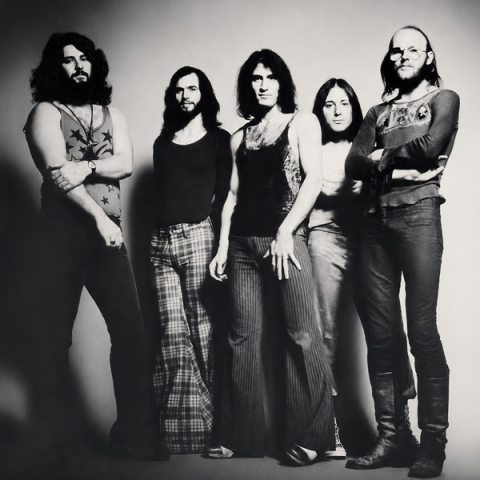
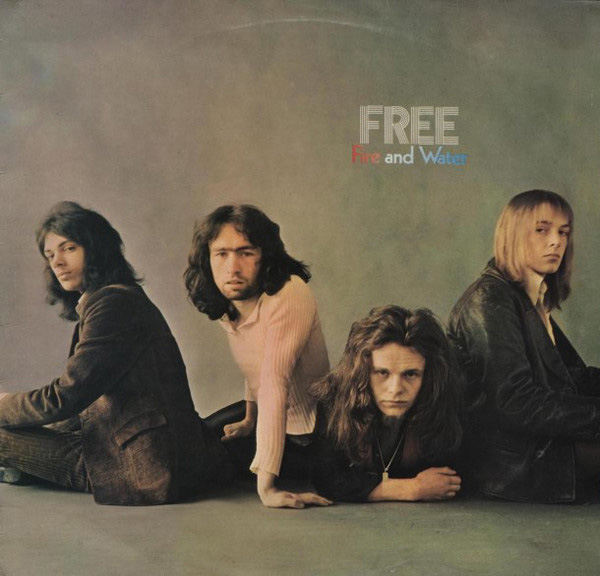 The Ayre VX-8 also conquered the volume and intensity of rock. On Free's Fire and Water (A&M SP 4268), Simon Kirke's deep-pitched, rumbling toms were reproduced with more rigid physicality than I've heard on any hi-fi in recent memory. It recalled—called back—the sound of Fire & Water buried in my "mystic chords of memory," delivering chills I recalled from my misspent youth. On the emotional chart, this music via the VX-8 was an easy 10. The Ayre captured the essence of these recordings with pellucid transparency and that shimmering, golden trademark sound.
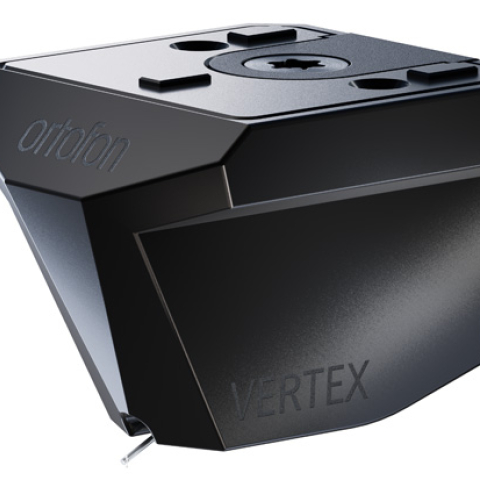
Through the Sugden/Ayre combo, images were stable. The VX-8's low end was equally satisfying, though on some older jazz records a mite soft compared to other solid state amps. But it reproduced Bernard Purdie's bass drum, in Steely Dan's "Babylon Sisters," from Gaucho (LP, MCA/VIM 6243), with tautness and smack-to-the-skull clarity; meanwhile, the tonal color was practically wet. The VX-8 reproduced the whole of Gaucho with an immaculate meticulousness that mirrored Becker and Fagen's own, rendering a squeaky-clean soundstage that managed to sound both clinical (the recording's contribution) and true (the Ayre's). The VX-8 repeated that feat in the subbass-in-deep-black-space of J.S. Zeiter's Magnetic North EP (Mosae Records MR001). A measure of the resolution, punch, and liquidity I heard came from a recently installed Hana Umami Blue MC cart, but the Ayre let the Umami sing, leaving nothing to the imagination.
The Ayre VX-8 also conquered the volume and intensity of rock. On Free's Fire and Water (A&M SP 4268), Simon Kirke's deep-pitched, rumbling toms were reproduced with more rigid physicality than I've heard on any hi-fi in recent memory. It recalled—called back—the sound of Fire & Water buried in my "mystic chords of memory," delivering chills I recalled from my misspent youth. On the emotional chart, this music via the VX-8 was an easy 10. The Ayre captured the essence of these recordings with pellucid transparency and that shimmering, golden trademark sound.
Through the Sugden/Ayre combo, images were stable. The VX-8's low end was equally satisfying, though on some older jazz records a mite soft compared to other solid state amps. But it reproduced Bernard Purdie's bass drum, in Steely Dan's "Babylon Sisters," from Gaucho (LP, MCA/VIM 6243), with tautness and smack-to-the-skull clarity; meanwhile, the tonal color was practically wet. The VX-8 reproduced the whole of Gaucho with an immaculate meticulousness that mirrored Becker and Fagen's own, rendering a squeaky-clean soundstage that managed to sound both clinical (the recording's contribution) and true (the Ayre's). The VX-8 repeated that feat in the subbass-in-deep-black-space of J.S. Zeiter's Magnetic North EP (Mosae Records MR001). A measure of the resolution, punch, and liquidity I heard came from a recently installed Hana Umami Blue MC cart, but the Ayre let the Umami sing, leaving nothing to the imagination.
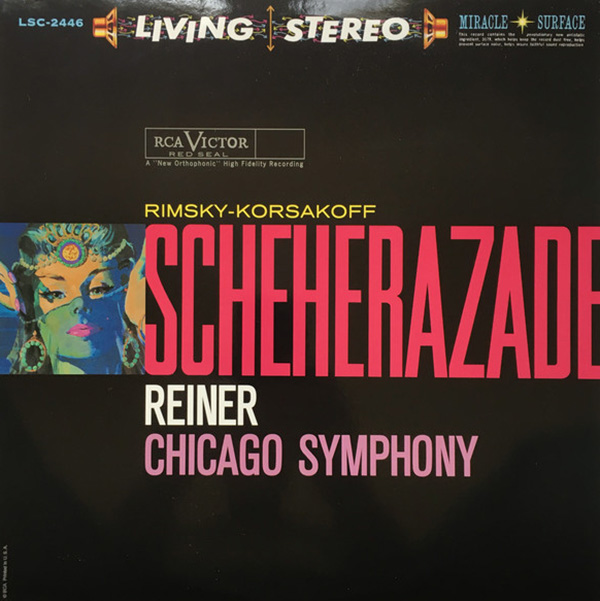 In my system, the Ayre VX-8 glistened, reproducing soundwave-ingrained discs with intimacy and presence. It proved graceful, even lithesome, exuding a sense of elan that few solid state amps have matched in my NYC hobo harem. It made Ella Fitzgerald sound even more playful and soulful; Steely Dan extra fusspot and perfectionist; the German pressing of the Beatles' Magical Mystery Tour (EMI Electrola 1C 062-04 449) it rendered uber surreal. And when extra firepower was required, as in the opening salvos of Rimsky-Korsakoff's Scheherazade (Classic Records LSC-2446), the Ayre punched me with its power and voluminous soundstage, from the music's gentle flute and violin to shuddering brass and bowel-rupturing strings. Revealing microdetails set in large sonic panoramas, the VX-8 created a signature similar to the Ayre EX-8 2.0 integrated but with improvements in spaciousness, physicality, and overall refinement. The two amps are equally textural, a standout trait of all Ayre amplification.
Sudgen meets Ayre
In my system, the Ayre VX-8 glistened, reproducing soundwave-ingrained discs with intimacy and presence. It proved graceful, even lithesome, exuding a sense of elan that few solid state amps have matched in my NYC hobo harem. It made Ella Fitzgerald sound even more playful and soulful; Steely Dan extra fusspot and perfectionist; the German pressing of the Beatles' Magical Mystery Tour (EMI Electrola 1C 062-04 449) it rendered uber surreal. And when extra firepower was required, as in the opening salvos of Rimsky-Korsakoff's Scheherazade (Classic Records LSC-2446), the Ayre punched me with its power and voluminous soundstage, from the music's gentle flute and violin to shuddering brass and bowel-rupturing strings. Revealing microdetails set in large sonic panoramas, the VX-8 created a signature similar to the Ayre EX-8 2.0 integrated but with improvements in spaciousness, physicality, and overall refinement. The two amps are equally textural, a standout trait of all Ayre amplification.
Sudgen meets Ayre
Charles de Gaulle may have said "silence is the ultimate weapon of power," but when I exchanged the Sugden LA-4 preamp for the Ayre K-5xeMP, the difference in how the two machines depicted the character of power left me anything but silent. I sensed an overall loss in crispness and upper frequency extension, yet the K-5xeMP created a bigger soundstage with larger images, like going from a school auditorium to the Roman Colosseum. Music gained weight and got more immediate. A downside: Previously unheard vinyl surface noise became evident. Tone benefited from greater saturation, while congestion in the lower mids made me realize the deficiencies of my listening space when a system outputs more low-frequency information than my room can manage. The Ayre K-5xeMP preamplifier was a natural fit for the Ayre VX-8, though the Sugden's upper-tier brilliance and liquid specificity made it an equal contender. Curious as to further sonic changes, I left the K-5xeMP inline and swapped the VX-8 for the Pass Labs XA-25 power amp. Rated at 25Wpc into 8 ohms, 50Wpc into 4 ohms, I wondered if the Pass Labs would equal the muscle, much less the sleekness and smooth-flowing personality, of the Ayre. There was far more difference between the Sugden and Ayre preamps than between the Pass Labs and Ayre power amps. The Pass Labs XA-25 amp presented greater note attack than the Ayre VX-8, as heard in Philly Joe Jones's bass drum accents in Miles Davis's "Oleo" (Relaxin', Prestige PRLP 7129), and in the steelier, leading-edge tone of John Coltrane's tenor saxophone. The Ayre depicted a sweeter top end on this recording and a fuller, rounder representation of Paul Chambers's acoustic bass. Generally speaking, the Pass Labs asserted a more forthright version of musical truth than the Ayre, whose silkier but equally transparent interpretation I found equally fascinating. The Ayre's purity and seamlessness was its sonic signature; the Pass Labs' was its boldness, attack, and slightly larger soundstage.
Conclusion
For current owners of Ayre Acoustics amplification and those hoping to bring the brand's sound to their system, the VX-8 would be a worthwhile, relatively affordable purchase. The amplifier worked seamlessly with older components including its sibling Ayre K-5xeMP (which sells for $2000–$3000 used), as well as the current Sugden LA-4, and I bet it would sound fantastic with my Shindo Allegro two-box preamp. (Ankle surgery prevented me from extracting the Shindo from its secure space.) With ample power and even sound, the VX-8 gelled easily with the highly efficient Volti Audio Razz loudspeaker. It satisfied my inner music jones while spinning vinyl or streaming digital. The VX-8 extends Ayre's reputation for refined amplification that commendably reproduces music of all genres while asserting its singular, special sound, as unique today, under the guiding hand of Ariel Brown, as with its originator, Charley Hansen. A heartfelt, shout-it-from-the-rooftops recommendation.
Footnote 1: This is a point that Charley often emphasized: A good piece of hi-fi equipment should always make music sound better.
A test of whether you've purchased an ordinary hi-fi component or a special one is how many of your favorite recordings it makes sound new—how many favorite albums seem freshly imagined when experienced through the component. No component is entirely transparent; each reproduces recordings in its own image. The VX-8 made familiar records new again. It wasn't so much casting recordings in a new light as digging deeper to reveal more of a recording's sonic architecture; a different kind of light induces a different reflection. What's more, the VX-8 made all the vinyl records I played sound more listenable, regardless of era or genre; none suffered from the experience (footnote 1). It didn't make a bruised '50s Columbia classical LP shiny and new, but it did cast it in the correct musical milieu. I spent hours pulling out and playing my usual test records to gauge scale, tone, texture, and the like through the VX-8's sonic lens. Whenever I was sated, I moved on to something new: Francis Bebey's African organ gems (African Electronic Music 1975-1982, LP, Born Bad Records BB039); Paulo Vanzolini's '70s Brazilian jazz (Onze Sambas e Uma Capoeira, LP, RGE XRLP-5.321); FSOL's '90s-era British morph-tronica (Dead Cities, LP, Virgin Records 7243 8 4206819); Don Cherry's avant jazz ("Mu" First Part, BYG/ Actuel 529.301). In all these genres, the Ayre unearthed fresh sonic details and ambient information, doing it in organic, wholistic fashion, with more than a little drive and spot-on color. The VX-8's frequency and dynamic ranges were so uniformly sleek and seamless that I didn't dare dissect each recording's sonic elements, lest it lose its beauty. That isn't how we experience music—not when it's good—so why should I report it that way?
The Ayre's detailed sonic panoramas offered frequent surprise and excitement. Its rhythm, even-keeled pacing, and toe-tapping sonority paired well with the Sugden LA-4 preamp, transmitting its crispness and acuity while bringing corporeal images, a sense of ease, and a deep black background to the listening party.
The Ayre VX-8 also conquered the volume and intensity of rock. On Free's Fire and Water (A&M SP 4268), Simon Kirke's deep-pitched, rumbling toms were reproduced with more rigid physicality than I've heard on any hi-fi in recent memory. It recalled—called back—the sound of Fire & Water buried in my "mystic chords of memory," delivering chills I recalled from my misspent youth. On the emotional chart, this music via the VX-8 was an easy 10. The Ayre captured the essence of these recordings with pellucid transparency and that shimmering, golden trademark sound.
Through the Sugden/Ayre combo, images were stable. The VX-8's low end was equally satisfying, though on some older jazz records a mite soft compared to other solid state amps. But it reproduced Bernard Purdie's bass drum, in Steely Dan's "Babylon Sisters," from Gaucho (LP, MCA/VIM 6243), with tautness and smack-to-the-skull clarity; meanwhile, the tonal color was practically wet. The VX-8 reproduced the whole of Gaucho with an immaculate meticulousness that mirrored Becker and Fagen's own, rendering a squeaky-clean soundstage that managed to sound both clinical (the recording's contribution) and true (the Ayre's). The VX-8 repeated that feat in the subbass-in-deep-black-space of J.S. Zeiter's Magnetic North EP (Mosae Records MR001). A measure of the resolution, punch, and liquidity I heard came from a recently installed Hana Umami Blue MC cart, but the Ayre let the Umami sing, leaving nothing to the imagination.
In my system, the Ayre VX-8 glistened, reproducing soundwave-ingrained discs with intimacy and presence. It proved graceful, even lithesome, exuding a sense of elan that few solid state amps have matched in my NYC hobo harem. It made Ella Fitzgerald sound even more playful and soulful; Steely Dan extra fusspot and perfectionist; the German pressing of the Beatles' Magical Mystery Tour (EMI Electrola 1C 062-04 449) it rendered uber surreal. And when extra firepower was required, as in the opening salvos of Rimsky-Korsakoff's Scheherazade (Classic Records LSC-2446), the Ayre punched me with its power and voluminous soundstage, from the music's gentle flute and violin to shuddering brass and bowel-rupturing strings. Revealing microdetails set in large sonic panoramas, the VX-8 created a signature similar to the Ayre EX-8 2.0 integrated but with improvements in spaciousness, physicality, and overall refinement. The two amps are equally textural, a standout trait of all Ayre amplification.
Charles de Gaulle may have said "silence is the ultimate weapon of power," but when I exchanged the Sugden LA-4 preamp for the Ayre K-5xeMP, the difference in how the two machines depicted the character of power left me anything but silent. I sensed an overall loss in crispness and upper frequency extension, yet the K-5xeMP created a bigger soundstage with larger images, like going from a school auditorium to the Roman Colosseum. Music gained weight and got more immediate. A downside: Previously unheard vinyl surface noise became evident. Tone benefited from greater saturation, while congestion in the lower mids made me realize the deficiencies of my listening space when a system outputs more low-frequency information than my room can manage. The Ayre K-5xeMP preamplifier was a natural fit for the Ayre VX-8, though the Sugden's upper-tier brilliance and liquid specificity made it an equal contender. Curious as to further sonic changes, I left the K-5xeMP inline and swapped the VX-8 for the Pass Labs XA-25 power amp. Rated at 25Wpc into 8 ohms, 50Wpc into 4 ohms, I wondered if the Pass Labs would equal the muscle, much less the sleekness and smooth-flowing personality, of the Ayre. There was far more difference between the Sugden and Ayre preamps than between the Pass Labs and Ayre power amps. The Pass Labs XA-25 amp presented greater note attack than the Ayre VX-8, as heard in Philly Joe Jones's bass drum accents in Miles Davis's "Oleo" (Relaxin', Prestige PRLP 7129), and in the steelier, leading-edge tone of John Coltrane's tenor saxophone. The Ayre depicted a sweeter top end on this recording and a fuller, rounder representation of Paul Chambers's acoustic bass. Generally speaking, the Pass Labs asserted a more forthright version of musical truth than the Ayre, whose silkier but equally transparent interpretation I found equally fascinating. The Ayre's purity and seamlessness was its sonic signature; the Pass Labs' was its boldness, attack, and slightly larger soundstage.
For current owners of Ayre Acoustics amplification and those hoping to bring the brand's sound to their system, the VX-8 would be a worthwhile, relatively affordable purchase. The amplifier worked seamlessly with older components including its sibling Ayre K-5xeMP (which sells for $2000–$3000 used), as well as the current Sugden LA-4, and I bet it would sound fantastic with my Shindo Allegro two-box preamp. (Ankle surgery prevented me from extracting the Shindo from its secure space.) With ample power and even sound, the VX-8 gelled easily with the highly efficient Volti Audio Razz loudspeaker. It satisfied my inner music jones while spinning vinyl or streaming digital. The VX-8 extends Ayre's reputation for refined amplification that commendably reproduces music of all genres while asserting its singular, special sound, as unique today, under the guiding hand of Ariel Brown, as with its originator, Charley Hansen. A heartfelt, shout-it-from-the-rooftops recommendation.
Footnote 1: This is a point that Charley often emphasized: A good piece of hi-fi equipment should always make music sound better.