 Setup and rocking
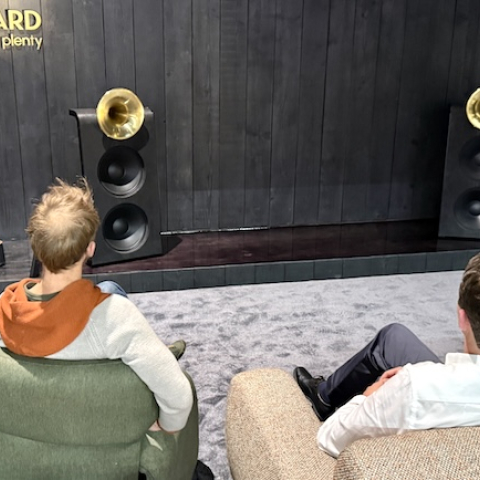
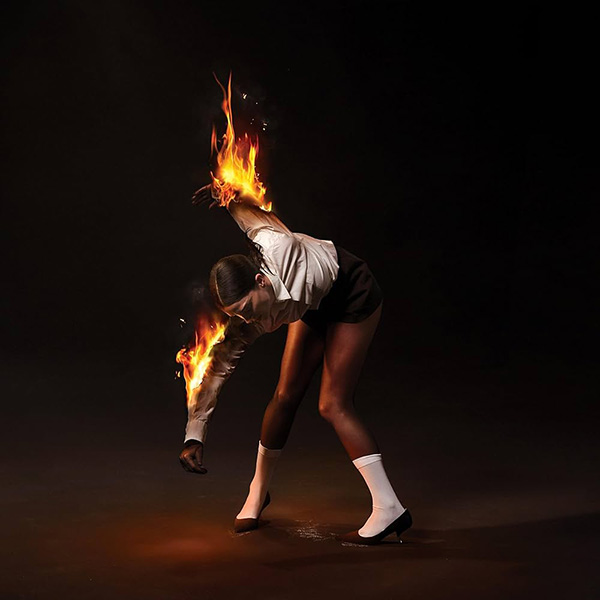
These big, heavy speakers are packed in wooden crates. Two adults in good physical shape, with strong backs, are required to move them around. They're not on wheels and thus need to be "herc'd" into place. I set them up on rugs for easier shifting to their final places and toeing in. From the start, the Krypton3Xs sounded familiar. They presented the same sharp-focused images and fast dynamics as my smaller studio monitors, and they did it on a room-filling scale. In fact, I ended up moving them farther back and apart after my initial, instinctive setup. They ended up sounding best with their rears 32" from the back wall, their sides more than 4' from the nearest sidewall, their centers 111" apart and the front of my face about 109" from the center point between them. That is about how my reference Bowers & Wilkins 808 speakers are usually set up, but the Amphions were a few inches closer to the rear wall and a few inches farther from the listening seat. After initial setup, I started playing familiar music, figuring they'd need some break-in time. Since I recognized the fast and clear sound quality right away, I knew my Burn in Metal Hell playlist would sound good and perhaps get better as they settled in (footnote 5). This playlist is a re-creation, with recordings that don't stream replaced by other tunes in the same spirit, of my college mixtape cassettes, Metal Hell Volumes 1–5. Nowadays, in my late prime years, I don't bang my head nearly as hard as I did in my 20s, but when it was presented on a grand scale by the Krypton3Xs streaming from Qobuz via my dCS Bartók, the music still raised my animal spirits. After about 6 hours producing room-filling sound, the speakers loosened up and got faster and deeper. I confirmed this with my Qobuz Bass Test playlist (footnote 6), especially the punchy bottom of St. Vincent's "Flea" from All Born Screaming (24/48 FLAC, St. Vincent/Qobuz), which recently won the Grammy Award for Best Alternative Music Performance. Also extra-big fun, from the same playlist, was Yello's "Electrified II" from Toy (24/48 FLAC, Polydor/Qobuz).
 Beyond the rocking low end
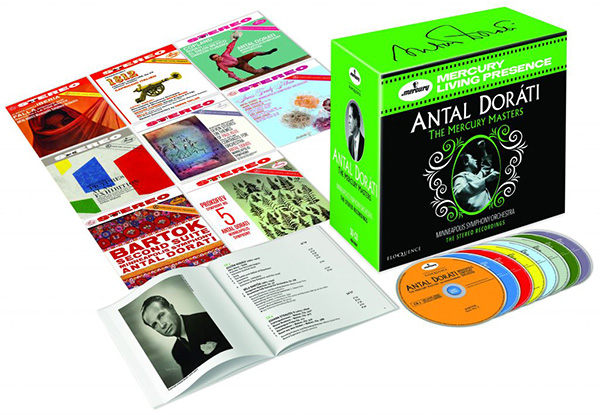
The big Amphions weren't just solid party-'til-dawn rockers. They also played "serious" music seriously well (footnote 7). By the time this review is in print, Eloquence Classics will have released two limited-edition CD box sets I produced encompassing Antal Dorati's recordings in London for Mercury Living Presence. (The recordings will also go to streaming when the CD sets are released, as individual albums with their original LP sequences and cover art.) Dorati recorded mostly with the London Symphony Orchestra, but also included are sessions with the BBC Symphony, the Bath Festival Chamber Orchestra, and the New Philharmonia. I remixed and remastered many albums from the first-generation three-track edited master tapes. One of my favorites is a coupling of Bartók's Music for Strings, Percussion and Celesta and Sonata for Two Pianos and Percussion, recorded with the musicians arrayed as Bartók instructed in his original scores. Strings, Percussion and Celesta has separate string ensembles on the left and right and percussion in the middle, with the celesta and piano forward of the other instruments. For the sonata, the two pianos are at opposite ends of the stage, percussion arrayed between and behind. The Krypton3Xs reproduced these unusual setups full-scale and realistically. The recordings' extreme dynamics were intact. The sound image was deep and wide and seemed higher than the speakers. I was impressed by how close the sound was to what I heard when I mixed and mastered the pieces on my Amphion Two18s—but now blown up on the sonic equivalent of a 70" 4K screen, to the scale of the music. Another recording I remastered was Dorati and the LSO's snappy, authoritative recording of Beethoven's 5th Symphony. While giving LVB due respect, Dorati and the LSO's crack musicians bring forth the fun, lilt, and joy. The performance is life-affirming, and the big sound out of the Krypton3Xs put me in Watford Town Hall.
 Some jazz from grooves
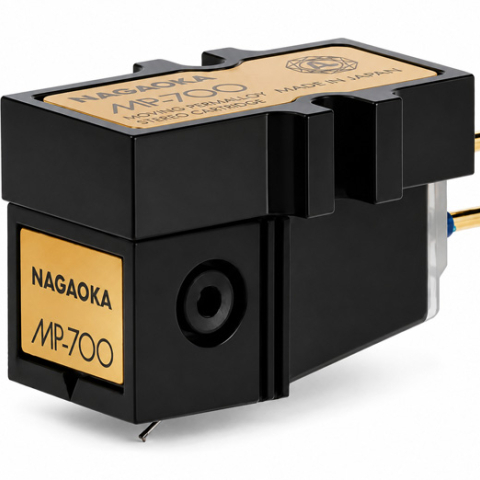
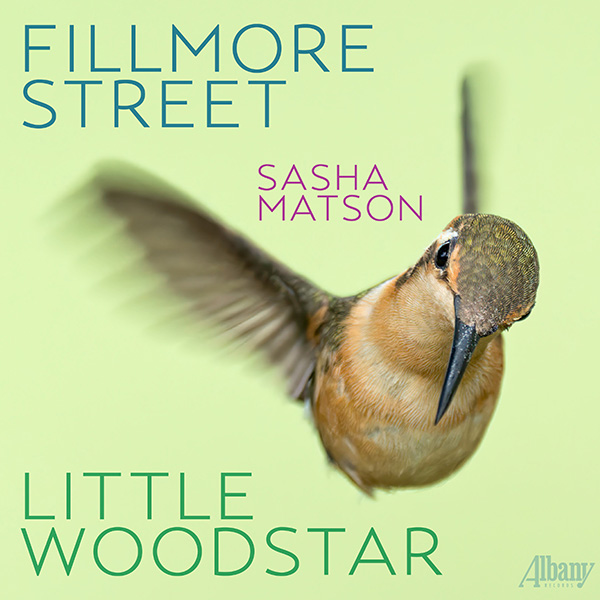
I recently upgraded my LP playback system, acquiring a Hana SL MKII moving coil cartridge. I also moved my Technics SL-1200MK7 down to the studio and brought upstairs my Technics SL-1200MKV with KAB fluid damping, tonearm rewiring, and three-speed mods (footnote 8). Even though it has the older DC direct-drive motor, the SL-1200MKV sounds a little better playing records; I suspect that the improved tonearm wiring and the fluid damping are the main contributors. Also, the older SL-1200 has a hinged, removable dustcover; the SL-1200MK7 has a "plop in place" dustcover, which I don't prefer. Just as I got the Hana cartridge dialed in to where I'm convinced it was a big sonic improvement, my colleague Sasha Matson was kind enough to send me an LP of his latest album, Fillmore Street/Little Woodstar (Albany Records TROY1985, footnote 9). Co-produced by our own John Atkinson and Blue Note Records' Joe Harley, its two works are quite different from each other. Side A, "Fillmore Street," is a trio of large-ensemble jazz pieces, which Matson says in his notes were inspired by "three locations in California that have meant much to me over the years." Along with the 16-piece "jazz orchestra," Matson included sounds from the vintage full-sized Moog synthesizer at Sear Sound studio. The sonic textures are thick and varied, with smooth brass sounds one moment, guttural low woodwinds the next, and then out-of-this-world Moog sounds. The pieces are made to be heard at life-size volume on big speakers, and they don't disappoint. The flipside, "Little Woodstar," is a vocal/instrumental piece for a small orchestra and five vocalists. The theme is endangered species. The piece covers 47 of the thousands of animals, plants, and fungi currently on the Red List of Threatened species published by the International Union for Conservation of Nature. This piece is ethereal, and the focused and clear reproduction from the Krypton3Xs allowed me to decipher the names as they were sung.
 Large-as-life sound
I liked the sound of the Amphion Krypton3Xs from first listen. In my two months with them, my appreciation grew. They were similar enough to my studio monitors to be in my frame of reference, yet they offered more: bigger, faster, clearer. There was no music or streaming radio that they didn't honestly reproduce, on the large scale I expect from near full-range floorstanders. Because of their speed and clarity, I didn't have to listen at fatiguing or uncomfortable volume to get the full experience. They didn't need to be pushed to achieve a fulsome low end. Nor did the precise upper mid and high end annoy at live-music listening levels unless the source music was overly bright. They were well-balanced through the frequency range and always quick afoot. Like their studio monitor cousins, these big Amphions are, in a word, honest. What they play is how it sounds: the recording, the delivery medium, and the playback system. They need a bit of amplifier power to shine their brightest, but they don't require a megawatt behemoth or anything bespoke or exotic—though they will reveal subtle differences, between amplifiers and anything else. A modern, high-current class-AB amp will be their friend. They probably can be driven well by a high-watt tube amplifier with enough power to not sag when the bass goes big and an output impedance that's not too high. In my opinion, they sound best in a large space with some room to breathe around the speakers and between the speakers and listener. And those side-firing woofers may be a consideration with some rooms and decor.
Footnote 5: See open.qobuz.com/playlist/5676397. Footnote 6: See open.qobuz.com/playlist/21395182. Footnote 7: For the record, I love many kinds of music and do not judge the "seriousness" of what I love, regardless of genre or how large (or small) a body of academic criticism may exist about it. Footnote 8: See tinyurl.com/3vzt5twm. Footnote 9: Sasha's new album also streams, on Qobuz and other services—see, eg, open.qobuz.com/album/sywou677w323b.