Stand Loudspeaker Reviews

Sort By:  Post Date TitlePublish Date

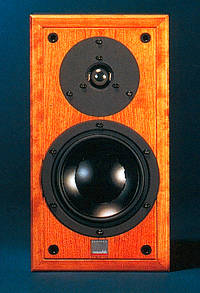
Dynaudio Contour 1.3 Mk.II loudspeaker

Dynaudio's $2399/pair Contour 1.3 Mk.II follows on from the Mk.I, which grabbed Russ Novak's enthusiastic attention in November 1996 (Vol.19 No.11). Because a full description was included in the original review, I will only touch briefly on the differences between the original version and the sample reviewed this month. A Special Edition of the Contour 1.3 is also available for $3499/pair. Sam Tellig's comments on the sound of this loudspeaker appeared in the December 1999 Stereophile and are included at the end of this review.

Thiel PCS loudspeaker

Although Kentucky loudspeaker manufacturer Thiel has produced some standmounted models for home-theater use, all of their serious music speakers have been floorstanders. Enter the PCS: even though styled to match every Thiel speaker since the groundbreaking CS5 of 1989, the 19"-high PCS sits on a stand, not the floor.

Mirage MRM-1 loudspeaker

The Mirage OM-6 loudspeaker, from Canadian manufacturer Audio Products International, mightily impressed Stereophile's Tom Norton when he reviewed it back in November 1997. But with its "omnipolar" design and powered woofer, the OM-6 wasn't a speaker for those of us with more conventional tastes in speaker design. So when I heard that Mirage's Ian Paisley was working on a high-performance two-way minimonitor based on the OM-6's drive-unit technology, I asked API's affable PR man, Jeff Percy, for review samples.

Acoustic Energy Aegis One loudspeaker

In this issue's "Letters" column, you will find comments from readers who are bothered by what they perceive to be this magazine's emphasis on reviewing very expensive technology. Yes, we do cover a lot of cutting-edge technology, and it is, of necessity, expensive. But our experience has been that that technology invariably trickles down to products that real people can actually afford.

PSB Alpha A/V loudspeaker

The original PSB Alpha was reviewed for Stereophile by Jack English in July 1992 (Vol.15 No.7). A modest-looking two-way priced at just $199/pair, it combined a reflex-loaded 6.5" woofer using a plastic-doped paper cone with a 0.5" plastic-dome tweeter. JE summed up the Alpha by saying it "is simply one of the best buys in audio, providing a musically satisfying sound...a sensational audio bargain." It went on to become one of the best-selling audiophile speakers ever, with over 50,000 pairs sold.

B&W Nautilus 805 loudspeaker

Unless you've recently returned from a five-year tour of Tibetan monasteries, the odds are pretty good you've heard about the Nautilus revision of B&W's classic three-way floorstanding monitor, the 801. Having sold 30,000 of the earlier 801, the Matrix, B&W recently revised this classic to incorporate some design features of its $40,000, four-way concept speaker, the Nautilus. Wes Phillips reviewed the new Nautilus 801 in the January 1999 Stereophile (p.107) and found it "incredibly dynamic, images and soundstages like crazy, and has that special magic that marks it as one of the great loudspeakers."

Revel Ultima Gem loudspeaker & Ultima Sub-15 subwoofer

A dream I have had since I discovered the pleasures of music is to possess a time machine. Not a fancy one, just a small device that would allow me to escape modern music-making and drop in to hear what must have been some of the greatest musical experiences of all time. Classical music presents no problems: Off to 18th-century Leipzig on Sunday, of course, to hear J.S. Bach play the organ in church, after an early 19th-century Saturday evening spent in Vienna listening to Beethoven improvising at the pianoforte. During the week it would still be Vienna, but forward 80 years or so to hear Brahms premiere one of his chamber works after afternoon cocktails at the Wittgensteins', with perhaps a trip to England's Three Choirs Festival just before the Great War to hear the first performance of Elgar's Dream of Gerontius. And the time machine would have to have transatlantic range—I couldn't miss Mahler conducting the New York Philharmonic around the same time. But with jazz and rock—music that is reborn every time in performance to a greater extent than in classical—there is a bewildering choice of live events from which to choose.

KEF RDM Two loudspeaker

Stereophile is, in one sense, like a family—us younguns have to make do sometimes because the house is straining at the seams. When I first arrived in Santa Fe, for instance, I was told not to come to the office for a few days—the good news, John Atkinson informed me, was that I had a desk; the bad news was that nobody had a clue where to put it. The dilemma was solved in Solomon-like fashion by shoehorning my desk into the "listening room," which was already serving double-duty as audition space and speaker-measurement lab. If manufacturers visited, we'd sweep up all the acoustic damping from the floor and stash it in JA's office; and if JA needed to take measurements, I would be asked to work at home. It was a manifestly fair solution: inconvenient for everyone involved.

Spica TC-50 loudspeaker

High-quality, low-cost loudspeaker systems are not an everyday blessing. The Rogers LS3/5a has survived for more than a decade precisely because so few US manufacturers sought musical accuracy as distinguished from high output and powerful bass. The economics of loudspeaker manufacture also don't lend themselves to economy. The cost of woodwork is driving the price of speakers up almost as fast as the cost of sheet-metal work is escalating the price of electronics.
Advertisement
Advertisement
Advertisement