Spin Doctor

Sort By:  Post Date TitlePublish Date

Spin Doctor #4: Platter Mats, Clamps, Weights & the Timerette
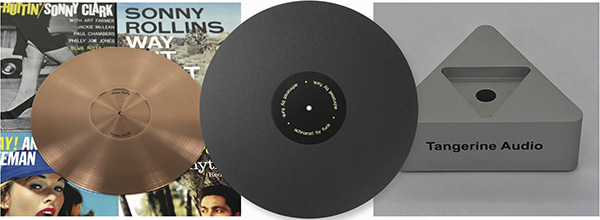
The next time you're preparing to play a record, try doing a little experiment. Once you have the record mounted and spinning but before you lower the stylus into the groove, lower your gaze to just below record level and look for a gap between the platter and the record. It helps if there's a light source or a brightly colored wall behind the platter. You may discover a gap—that very little of the record's playing area is making true contact with the platter mat or (if there is no mat) the platter. Another way to test this is to take a record you don't care much about, put it on the platter, then tap with your finger in the groove area listening for a click as your finger pushes the record down and it contacts the platter surface.

Warps obviously lead to such problems, but even records that appear flat make scant contact with the supporting surface. Turntable and aftermarket accessory designers have recognized this problem for decades.
Spin Doctor #3: Visiting Acoustic Signature

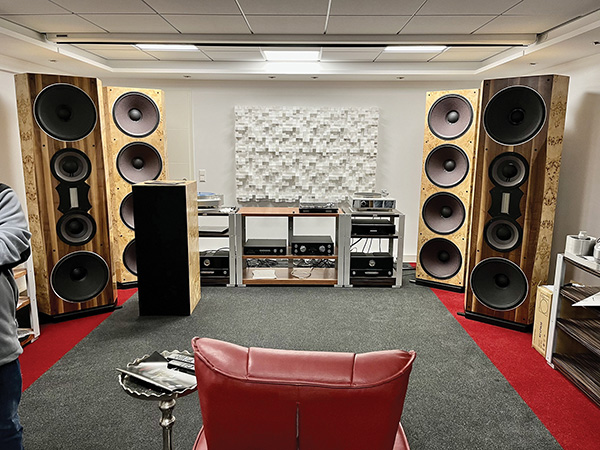
10. Acoustic Signature's listening room with its massive PBN loudspeaker system.

May has long been one of my favorite months of the year, mostly because it means it's time for the Munich show, the annual gathering of the high-end audio tribe in the Bavarian capital. High End Munich 2023 marked my return to the biggest audio show in the Western world following three years of lockdowns and travel restrictions, so I was eager to get back to the land of Wiener schnitzel and bratwurst.

This year, as an added bonus, I was invited to visit the production facilities of turntable and tonearm manufacturer Acoustic Signature, which is based about 110 miles west of Munich, near Stuttgart.

Spin Doctor 2: CH Precision P1 phono preamplifier

In 1928, Swiss engineer and inventor Jean-Léon Reutter created a clock that could run for years without human interaction or any type of external power source. The Atmos Clock required no AC power, batteries, solar panels, or hand-winding. It was able to wind itself by leveraging subtle changes in atmospheric pressure and temperature.

The design was so energy efficient that a single degree of temperature change provided enough power for two days of operation; it would take an incredible 60 million Atmos clocks to equal the power demands of a single 15W light bulb. 95 years later, the Atmos Clock is still being manufactured in Switzerland by Jaeger-LeCoultre, but like most high-precision, Swiss-made instruments, it isn't cheap. Prices start around $7500.

Spin Doctor #1: Shaknspin2 & Miyajima Kotetu Mono Phono Cartridge

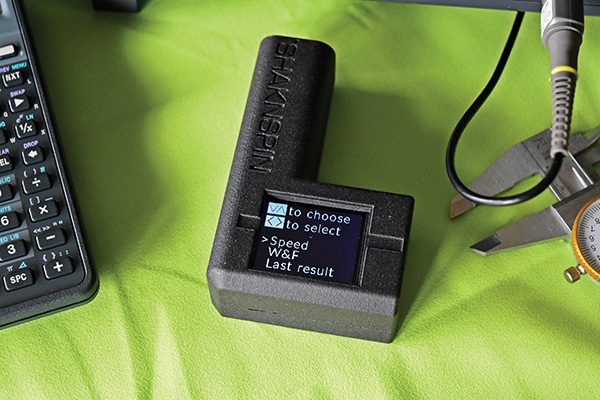
Over the last 40 years, I have set up or serviced literally thousands of turntables, and during that time I have seen a lot of increasingly sophisticated tools become available to help in getting your turntable optimized. I've had my eye on the Shaknspin speed analyzer since it was launched a couple of years ago, and now there's a new Shaknspin2, which promises more accurate results.
Advertisement
Advertisement
Advertisement