Music and Recording Features

Sort By:  Post Date TitlePublish Date

Listening #70

Stereo Review, the world's most popular audio magazine during most of its time on Earth, was a common target of derision from the hobby's so-called high-end press, not least of all from me. We criticized its nerdy, boring prose, its uniformly positive reviews, and, most of all, its shameless pimping of the notions that measurements reveal all there is to know about a component, and that all competently engineered components sound equally fine.

The Fifth Element #47

US composer Morten Lauridsen's Lux Aeterna is one of the indisputable masterpieces of the 20th century. John Atkinson has recorded the male vocal group Cantus's performances of Lauridsen's O Magnum Mysterium (on Comfort">http://www.stereophile.com/musicrecordings/1105cantus">Comfort and Joy: Volume One, Cantus CTS-1204) and Ave Maria Dulcissima (on Cantushttp://www.stereophile.com/news/121007cantus">Cantus;, Cantus CTS-1207). (And great recordings they are—one engineer chum thinks JA's Cantus recording of OMM is the single best-engineered choral recording he's ever heard.)

Willie Nile: Places He Has Never Been

Before I even turn on the recorder, Willie Nile is telling me his theory of how the granite under Manhattan Island conducts electricity, which accounts for the perceptible charge that many people feel makes New York City so special. It's also what draws artists like flies, none more passionate than singer-songwriter Nile, who's personally contributed a few volts during his years in NYC.

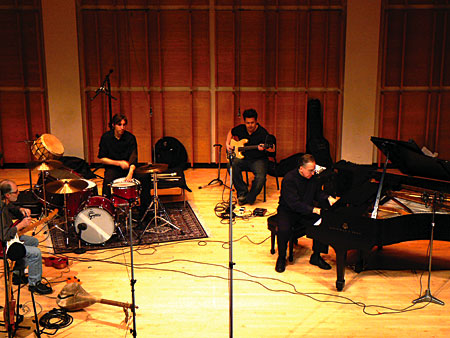
Attention Screen: The Making of Live at Merkin Hall

John Atkinson: Making It Live


The e-mail from Stereophile reviewer Bob Reina was straightforward: "I want to make a demo of my new jazz group. I plan to record the session in my living room by getting my old four-channel Teac 3440 out of mothballs and sticking one or two mikes on each instrument. I'd like your view on which mikes would be most appropriate for the four instruments . . . "

The Final Word: Yo Yo Ma Live

I sometimes do crazy things to experience live music. In my late teens I met a woman—a friend of a friend of my girlfriend—who was a flautist attending the Mannes School of Music in New York City. She was a classic New Yorker, from a classic New York family. Though apparently demure and retiring, she had fearlessly ridden the city subways since childhood, taking the Broadway line at any hour of day or night (her stop was Dyckman Street, above 200th). All of her parents' money and energy, such as it was, had gone into their daughter's musical career, and I was so inspired by this level of focus and devotion that I hitchhiked from Boston to New York and back in order to attend her first concert, a performance of the two Mozart flute concerti. My presence was remarked upon as the act of a true friend, but I was the beneficiary: It was a great concert, and a good start to a life of experiencing the "call" of live music.

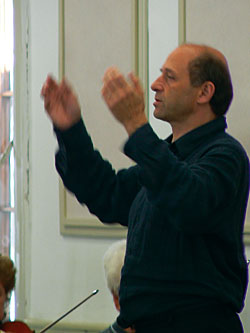
Iván Fischer: The Maestro on Multichannel

Iván Fischer, founder and conductor of the Budapest Festival Orchestra, has performed with many major orchestras and recorded for a number of major labels, most significantly with Philips, from 1995 to 2004. Fischer/BFO made the first multichannel orchestral recording for SACD, which Philips used as a demonstration disc for their first SACD players. I still treasure that disc—it demonstrates many of the advantages of the medium with a wide and varied program—but it has never been commercially released.

Advertisement
Advertisement
Advertisement