J. Gordon Holt

Sort By:  Post Date TitlePublish Date

Directional Questions

As I write this, I am recuperating from four days of frenzy at the 1986 Winter CES in Las Vegas, Nevada. I am also pondering why I was so unexcited by most of what I saw and heard of the high-end exhibits; high-end audio may have reached a developmental plateau of sorts.

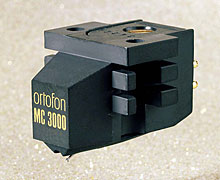
Ortofon MC-3000 MC phono cartridge

The Ortofon">http://www.stereophile.com/phonocartridges/ortofon_mc-2000_mc_phono_car… MC-2000 may just have been the most impractical cartridge to be unleashed upon the audio community for some years. With a high compliance (20cu) that made it ill-suited for most tonearms, it also had a preposterously low signal output of 50 microvolts, which gave new meaning to the terms hum and noise. Few MC preamps had enough gain to deliver adequate driving voltage to a system, and none of those that did had low enough noise to be usable with the 2000. If the problem wasn't hum, it was hiss; if hiss was acceptably low, there would be too much hum. At least Ortofon had the sense to be aware of the problem and to do something about it, in the form of their T-2000 step-up transformer, which is the only device I ever found that would allow the cartridge to be operated without a constant background of hum or hiss. Despite all this, I have used the MC-2000 as my reference cartridge for the last two years. Why? Because of all the cartridges I've tried, it is by far the most accurate.

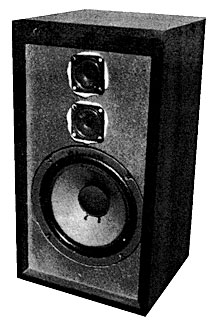
Infinity RS-4.5 loudspeaker system

There are certain manufacturers for whom every new product implies the promise of countless modifications, Usually a month or so apart, culminating inevitably in a version so far removed from the original that it must be assigned a new model designation—usually a letter suffix ranging from A, to D. By the time E is envisioned, another CE Show is approaching, so the decision is made to give the unit an exterior facelift and a brand-new model number. Presto! A new product for CES.

Bill Firebaugh: The Well-Tempered Innovator

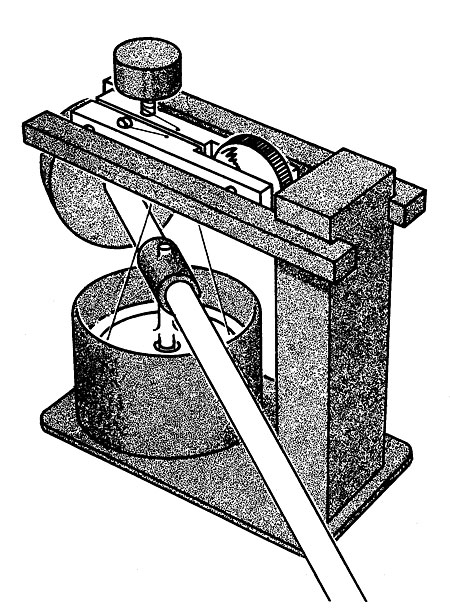
Bill Firebaugh's first product, the outrageous-looking Well-Tempered">http://www.stereophile.com/tonearms/485well">Well-Tempered (tone) Arm, established him as one of audio's most innovative designers. At the 1985 Winter CES, he showed a prototype companion product—the Well-Tempered Turntable—and was producing production units by January 1987. He discusses here the WTT's unusual design features. (Readers should note that, since we have not yet tested the new turntable, this interview is not to be interpreted as an endorsement of the product.)

Threshold SA-1 monoblock power amplifier

Eleven years ago, Threshold Corporation entered the high-end audio market with the first amplifier ever to use sliding bias (footnote 1) in its output stages. Some 10 years later, Threshold spawned another innovation: their so-called Stasis circuitry, which yielded the S-series amplifiers. The SA-1 and its lower-powered sister SA-2 are the latest from Threshold, and are the first Threshold amps to abandon sliding bias for straight class-A operation. Both use the Stasis circuit.

The Well-Tempered Arm

Remember Rube Goldberg? He was a cartoonist during the late 1920s to early 1950s who specialized in devising the most outlandish and ingenious devices ever conceived by man, before or since. A Rube Goldberg mousetrap, for example, would occupy an entire small room. In taking the bait, the mouse would tip a balance beam, dropping a steel ball into a gutter, down which the ball would roll to strike a paddle whose spin would wind up a string that hoisted a weight into the air until it reached a trigger at the top, which would then release the weight to drop onto the unsuspecting mouse. Splat!

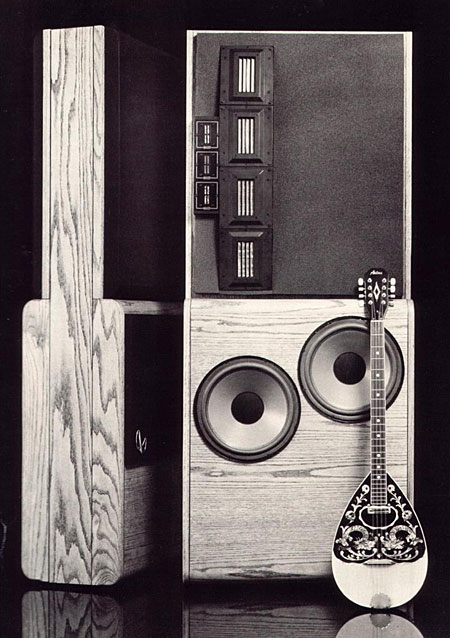
Fulton Musical Industries Model 80 & "J-Modular" loudspeakers

In the last issue we published a rather enthusiastic "Quickie" report on a small, $190/pair speaker system from a new company—the FMI Model 80. It was virtually devoid of low end, even as a stereo pair (pairing effectively doubles bass output), and slightly rough as well as a shade soft at the high end, but it had a quality of "aliveness" to it that almost defied belief. Was it a breakthrough in design? A new transducing principle? No, it was neither. In fact, the Model 80 looks like any one of those hundreds of little bookshelf systems that clutter, the pages of Stereo Review's "Hi-Fi Directory" in tedious profusion.

The Sound of Transistors

Editor's Note: Those of us who cut our engineering teeth on tubes still remember the advent of the solid-state amplifier with mixed feelings. Yes, they were lighter and cheaper per watt than the thermionic hulks we loved so much, but they broke all the time (thanks to the germanium transistor) and sounded like—well, let J. Gordon Holt tell us what they sounded like in an "As We See It" article from Vol.1 No.10, first published in May 1965. We also develop the theme with a JGH review of an early transistorized amp, as well as a selection of readers' letters from the early days of Stereophile. Enjoy.John Atkinson
Advertisement
Advertisement
Advertisement