J. Gordon Holt

Sort By:  Post Date TitlePublish Date

The Last Word on Fidelity

Last October, in Vol.11 No.10, Stereophile's Founder and Chief Tester J">http://www.stereophile.com/interviews/66">J. Gordon Holt stated, in his acerbic editorial "The">http://www.stereophile.com/asweseeit/111">The Acoustical Standard," that, in his opinion, only recordings for which there is an original acoustic reference—ie, typically those of classical music—should be used to evaluate hi-fi components. And that in the absence of a consensus over such a policy, high-end component manufacturers were losing their way over what does and does not represent good sound quality.
45 Years of Stereophile

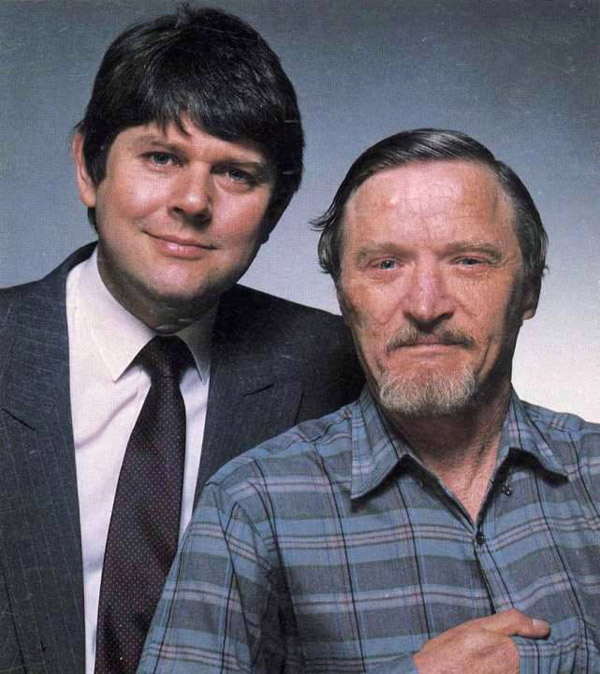
It was 45 years ago this month that the first issue of Stereophile, just 20 pages in length, went in the mail. It had been founded by one J. Gordon Holt. Gordon had been technical editor of High Fidelity magazine in the 1950s, and was tired of being asked to pander to the demands of advertisers. "I watched, first with incredulity and then with growing disgust, how the purchase of a year's advertising contract could virtually insure a manufacturer against publication of an unfavorable report," he said in a 1974 article looking back at those dark times. And if a company didn't buy advertising, they didn't get reviewed at all. The Stereophile, as it was then called, was Gordon's answer to audiophiles' need for an honest, reliable source of information. "Okay, if no one else will publish a magazine that calls the shots as it sees them, I'll do it myself," he later wrote.

Digital Revenge

Many audiophiles will look back on the summer of 1982 as the year the creeping cruds invaded their hallowed halls of hi-fi. In the Conrad Hilton hotel, where most of the high-end contingent gathered at the June 1982 Consumer Electronics Show, one exhibitor was featuring a videodisc presentation with wide-range audio and insisting that this was the way of the future. And at least three others had managed to smuggle in digital tape recorders (all Sony PCM-F1s), and were giving many CES visitors their first taste of real, unadulterated, digital reproduction.

The Truth About High End

The October 1982 issue of Stereo Review published what must be hailed (or derided) as the first reasoned assessment of high-end audio ever presented in a mass-circulation hi-fi publication. We disagreed with a few of the author's points, but our main gripe about the piece prompted a letter to Stereo Review. This is what we wrote:

Transparent, My Dear Watson

Much of the descriptive">http://www.stereophile.com/reference/50">descriptive terminology used in subjective reporting describes things we hear in live music, and expect—or, rather, hope—to hear from reproduced music, too. I'm referring to terms like width, depth, perspective, spectral balance, and tonal accuracy. If you read our reports, you know these terms as well as I do, and since they are (for most people) self-explanatory, I will devote no more time to them.

Threshold FET 10 preamplifier

This product is a pre-trol. What, you may well ask, is a "pre-trol?" Well, Threshold Corp. calls its FET-10 a preamplifier, but it isn't, really. In fact, it isn't an It at all; it's a Them. Only half of Them is a preamp, and you can buy each half separately. If that sounds a little confusing, maybe it's because some of the old, familiar language of audio is starting to lose its relevance.

Klyne Audio Arts SK-5A preamplifier

Klyne Audio Arts has an almost Zen-like approach to the design of its products. Like the best Japanese designs, Klyne's preamps are aesthetically pleasing in appearance, do exactly what they're supposed to, and their controls are not only where you would expect them to be, but have an almost sensually smooth action. Internal construction, too, is a work of art—the kind of design which, transferred to a tapestry, would grace the wall of any listening room. You have to see the insides of a Klyne preamp to appreciate how attractive-looking an audio component can be. But physical beauty is only one aspect of Stan Klyne's designs; of all the electronics manufacturers I know of, Klyne Audio Arts also makes products more adjustable than any others, so as to appeal to the needs of what I call compulsive tweaks.

Advertisement
Advertisement
Advertisement