J. Gordon Holt

Sort By:  Post Date TitlePublish Date

Recordings of December 1986: Two Out-of-Character Recordings

REFLECTIONS
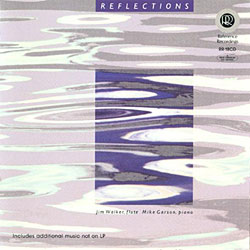
666rotm.reflections.jpgJim Walker, flute, Mike Garson, piano
Reference Recordings CD RR-18CD.

DEBUSSY: Quartet in g
RAVEL: Quartet in F

The Cleveland Quartet
Telarc CD-80111.

What do you listen to when you've heard Reference Recordings' Symphonie Fantastique, Telarc's 1812 Overture, and Sheffield's Firebird, the last of your audiophile guests have gone home, and tomorrow's a workday but you're too hyped up to go to bed?

These.

Both are from record companies whose reputations were built on sonic blockbusters, but the subjects of this review are about as true to expectation as Mr. T flouncing about with a limp wrist.

Reflections is a program of short works for flute and piano. It's quiet, restful, and, in an age when it seems that nothing is worth listening to unless it's high-powered or "significant," this laidback program is a delightful change of pace.
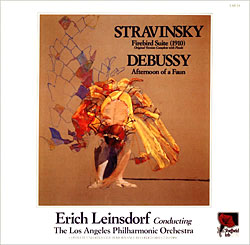
Recording of August 1986: Sheffield Lab's Orchestral Direct-to-Disc LP

886rotmjgh.1.jpgStravinsky: The Firebird (1910 Suite)
Debussy: Prelude to the Afternoon of a Faun
Los Angeles Philharmonic, conducted by Erich Leinsdorf
Sheffield Lab Direct-to-Disc Lab 24 (LP). Lincoln Mayorga, prod.; Doug Sax, James Boyk, engs.

For some reason, Stereophile didn't receive an early pressing of Sheffield's latest orchestral recording, their first since the Wagner and Prokofiev discs back in 1977. So, guess where my review copy of this finally came from? From Harry Pearson, that's who. How did this come about? Well, I had seen a passing comment in The Absolute Sound to the effect that HP didn't like the recording, and since I was favorably impressed with what I'd heard of it at the last two Consumer Electronics Shows, I phoned HP to ask what he didn't like about it. "Dull high end, closed-in sound, not enough spaciousness" was the reply. Thank you, I said. Several days later, a copy of the disc arrived, postmarked Sea Cliff, NY.

Thank you Harry, but I must disagree with you about this recording.

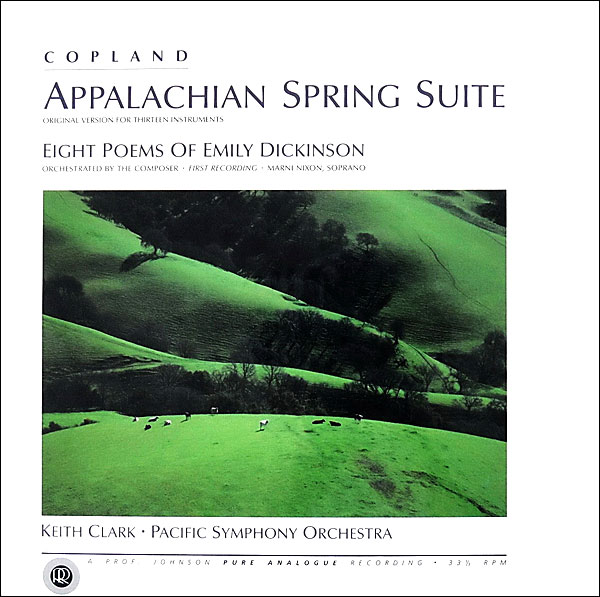
Recording of June 1987: Copland: Appalachian Spring, etc.

Copland: Appalachian Spring (Suite), Eight Poems of Emily Dickinson, An Outdoor Overture (CD only)
Pacific Symphony Orchestra/Clark/Marni Nixon (soprano)
Reference Recordings LP RR-2 and CD RR-22CD. Tam Henderson, prod.; Keith Johnson, eng.

This is unquestionably one of the best recordings Reference Recordings has done. The sound of the LP is up-front and quite bright, giving the orchestra that peculiarly nasal quality I usually associate with small French orchestras. There is truly remarkable detail and naturalness here; I was about to write that the recording makes the orchestra sound very small and pinched in Appalachian Spring when I noticed on the record jacket that this is the "Original version for 13 instruments." Okay, so I know what it costs to hire musicians in the US, but I still prefer the version of this work scored for full, bombastic, overblown 108-piece symphony orchestra. The 13 instruments are superbly balanced, though—even the piano, which is usually (and wrongfully) relegated to behind the orchestra. About a half a block behind it.

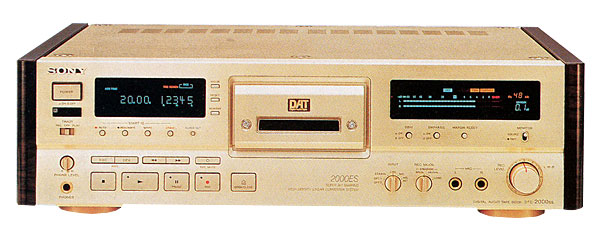
Sony DTC-2000ES DAT recorder

Introduced nearly eight years ago as the first recordable digital format for consumers, DAT both failed to appeal to its target market and was blocked from formally entering the USA for four years by the RIAA, who feared for the copyright of its members' recordings. However, the DAT medium was enthusiastically snapped up by professionals and semiprofessionals, who found its combination of reliability, CD-compatible signal format, and editing ease ideal for mastering. Sony currently offers a small range of consumer models, from the diminutive Walkman-sized TCD-D-7 DATMan to four-head cassette-deck–sized machines for the so-called "prosumer": amateur recordists who make pin money taping local concerts. The DTC-2000ES is Sony's latest entry (footnote 1).

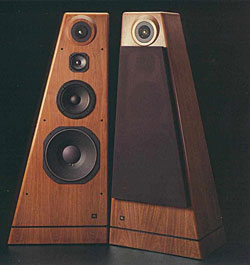
JBL 250Ti loudspeaker

685jbl.jpgOnce upon a time, in audio's infancy, anyone who wanted better than average sound—average sound during the 1940s being rich, boomy and dull—had no choice but to buy professional loudspeakers. In those days, "professional" meant one of two things: movie-theater speakers or recording-studio speakers. Both were designed, first and foremost, to produce high sound levels, and used horn loading to increase their efficiency and project the sound forwards. They sounded shockingly raw and harsh in the confines of the typical living room.
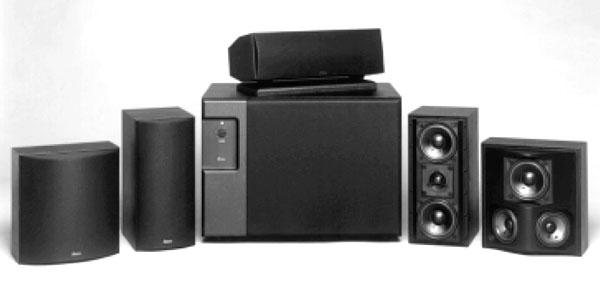
Atlantic Technology System 250 home theater loudspeaker system

When something called "high fidelity" assumed fad status during the 1950s, many manufacturers climbed on board by the simple expedient of adorning their last year's product with a high fidelity label. The Home Theater bandwagon is a little harder to jump on, because loudspeakers for use with television sets require something "ordinary" stereo speakers don't: magnetic shielding (or, more accurately, magnetic cancellation). Without it, placing the speakers within a few feet of a large-screen set does psychedelic-type things to the color (footnote 1). However, adding magnetic shielding, usually in the form of a second magnet glued to the rear of each loudspeaker's motor magnet, is the only thing that some loudspeaker manufacturers change before slapping a Home Theater label on last year's stereo speakers.

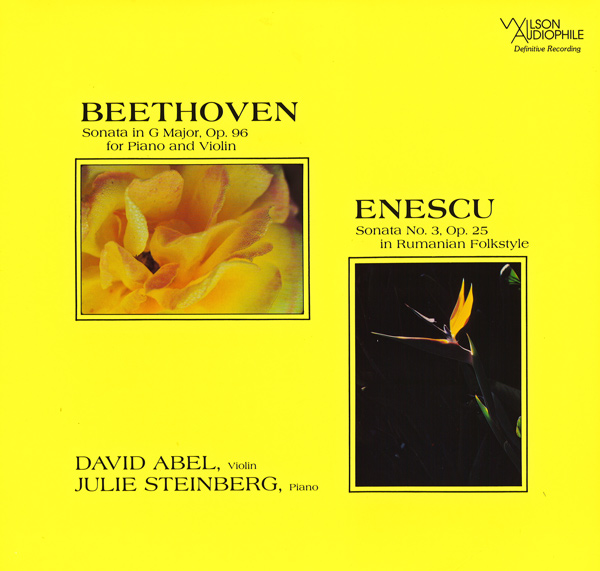
Recording of February 1984: Beethoven/Enescu Violin Sonatas

BEETHOVEN: Violin Sonata in G, Op.96
ENESCU: Violin Sonata No.3, Op.25 (In Rumanian Style)

David Abel, violin, Julie Steinberg, piano
Wilson Audio W-8315 (LP). David Wilson, prod., eng. AAA.

Oh, what a breath of fresh air this is! An audiophile recording of real music that isn't bombastic, overblown, or high-powered.

Imagine, if you can, a private recital in your own home by two consummate artists who play these works for their own delight as much as for yours. Imagine sound so completely and disarmingly natural that after 30 seconds you're unaware it's reproduced. That's what this record is all about.

I could rhapsodize endlessly about this record, but I won't. Suffice it to say that if you think there's even a remote chance you'll like this music, you will be positively mesmerized by this recording of it . . .

Altec Lansing 301 loudspeaker

One of the oldest names in US audio, Altec Lansing was building speakers for theaters and recording studios long before the introduction of the microgroove LP in 1948 (which date many see as marking the inception of high fidelity). Started in 1931 under the name All-Technical Services ~Corp., the firm later purchased another audio firm called Lansing Engineering, and merged the names. Altec's Model 604, one of the first true coaxial speakers, was adopted for home use by many early hi-fi buffs and, several permutations later, is still widely used for monitoring in disc-cutting rooms.
Advertisement
Advertisement
Advertisement