Fred Kaplan

Sort By:  Post Date TitlePublish Date

Best Jazz Albums Of 2010

My column on the best jazz albums of 2010 is in today’s edition of Slate, replete with strategically selected 30-second sound clips, illustrating my points (to the extent—very limited—that 30-second clips can do that). Here’s the list, minus the mini-essays and the sound clips, but I’ve written about all of these albums over the past year in this blog.

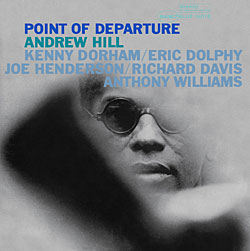
Andrew Hill’s Point of Departure on 45 rpm vinyl

Music Matters Jazz—the L.A.-based audiophile label that reissues classic Blue Note titles, each on twin slabs of thick, quiet vinyl, mastered at 45 rpm and eased into gorgeous gatefold packages—keeps churning them out.

One of their latest, and greatest, is Andrew Hill’s Point of Departure, a jaw-dropper from 1964 that sounds as fresh as tomorrow.

Hill, 33 at the time (he died in 2007, active till the end), was a precisely adventurous pianist and one of the most inventive composers of that transition era, pushing metric rhythms and chord-based harmonies right up to the edge dividing structure from freedom (he received informal lessons from Hindemith in his youth). Every player in his band—Eric Dolphy on reeds, Joe Henderson on tenor sax, Kenny Dorham on trumpet, Richard Davis on bass, Tony Williams on drums—was top-notch and hitting their peaks.

Dave Douglas' Spark of Being

Those who follow this space know of my enthusiasm for the music of trumpeter Dave Douglas: his plangent tone, his spine-tingling way with minor-chord intervals, his knack for evoking joy, melancholy, romance, and a host of other emotions—sometimes all at once—without dipping so much as a toe into sentimentalism.

Henry Threadgill, old and (perpetually) new

Henry Threadgill should be better known than he is. A topnotch musician on alto sax and flute, one of the more innovative composers in jazz, a veteran of the Chicago avant-garde and a revivalist of ragtime improvisational styles (the two are not so contradictory, as he was the first to demonstrate), Threadgill started out on small labels, briefly landed contracts at RCA Novus and Columbia during their brief flirtations with experimentalists (in the late ‘80s and mid ‘90s, respectively), then went back to the indies—all the while retaining, even advancing, his spirit of adventure and his restless but disciplined innovation.

Anat Fort's And If

The Israeli pianist Anat Fort’s second CD, And If (on the ECM label), is an album that I like a lot, though it’s hard to explain why or even to describe. Her music is rhapsodic but spare, tender but propulsive, flush with melodic hooks that loop in sinuous, unpredictable shapes.

John Carter & Bobby Bradford

The latest 3-CD box in Mosaic Records’ Select series, John Carter & Bobby Bradford, is something of a revelation. I’ve heard several albums over the years by the two musicians separately, but never their collaborations of 1969 (as the New Art Jazz Ensemble) and ’71 (as John Carter & Bobby Bradford, though playing with much the same quartet), both recorded on the obscure Revelation label. Now here they are, reissued with unreleased takes and a whole unissued (unknown) duet session that was laid down in ’79.

Bitches Brew straight up

Sony/Legacy’s 40th anniversary, deluxe reissue of Bitches Brew, Miles Davis’ landmark fusion double-album, is everything that the company’s 50th anniversary reissue of Kind of Blue tried to be but wasn’t: a fitting commemoration, handsomely packaged, with liner notes by a scribe (Greg Tate) who fully grasps the music and its cultural significance, and—a remarkable achievement—a boxed set that warrants tossing the original out.

Advertisement
Advertisement
Advertisement