Floor Loudspeaker Reviews

Sort By:  Post Date TitlePublish Date

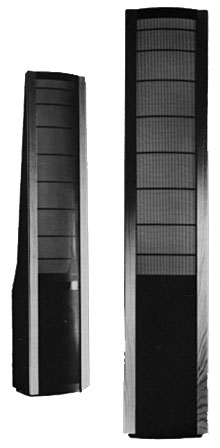
B&W Matrix 800 loudspeaker

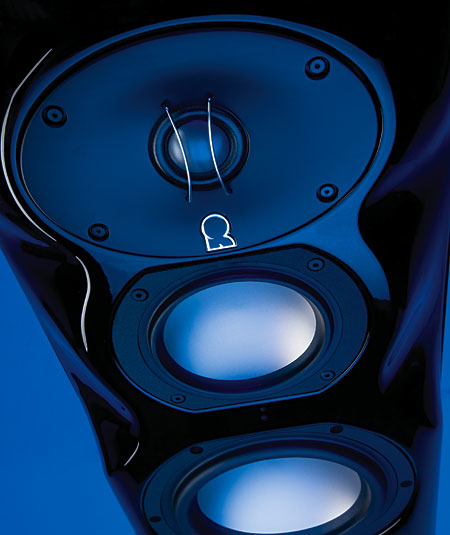
We all know it's impossible to reproduce live music. An obvious statement, no doubt, and one that holds every audiophile hostage to the never-ending search. As a musician, I find the situation especially frustrating. The constant reminder of live vs reproduced makes living with an audio system a serious compromise, regardless of price or quality. About three and a half years ago, however, I reviewed a product which I felt, and still feel, offers the first real glimpse of that impossible dream: the B&W">http://www.stereophile.com/floorloudspeakers/506">B&W 801 Matrix Monitor (footnote 1). Although it wasn't perfect, I found this speaker provided more musical honesty than anything I had heard before. In this respect, it established a new standard by which others would be judged.

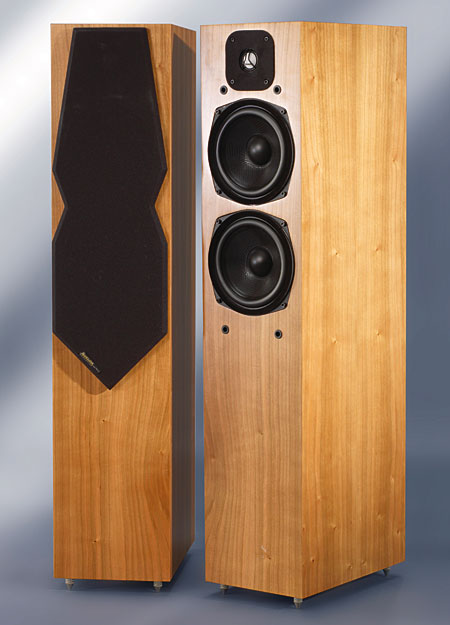
Epos M16i loudspeaker

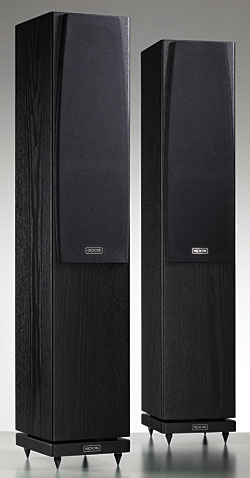
Last year, when Epos importer Music Hall contacted me about reviewing the then-new M16 floorstanding loudspeaker, I hesitated. I had been very impressed with the M16's little bookshelf brother, the M5 (see my">http://www.stereophile.com/standloudspeakers/405epos">my review in the April 2005 Stereophile, Vol.28 No.4), which I found uncolored, detailed, and a great value. Most of all, the M5 had an incredible balance of performance. But several times in the past, having been seduced by a wonderfully balanced bookshelf speaker, I've then been disappointed by one of its costlier, floorstanding brethren. The larger speaker might share the bookshelf's overall character, have deeper bass, and play louder with less strain, but too often that magical sense of balance that I had so enjoyed in the smaller speaker would be absent.

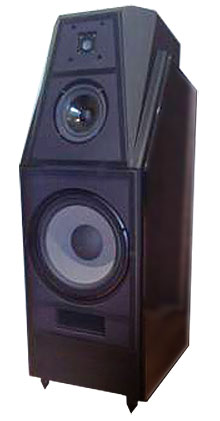
Revel Ultima Salon2 loudspeaker

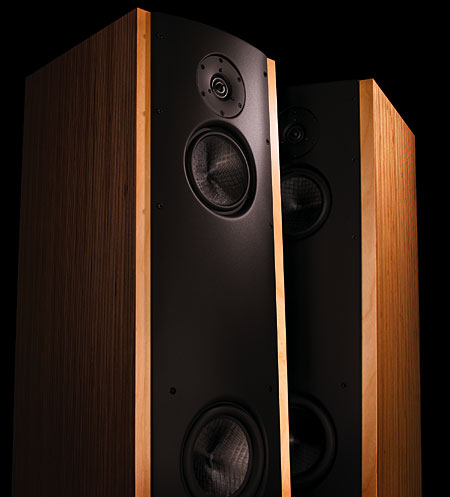
Back in March 1998, Revel's Ultima Salon1 floorstanding loudspeaker generated quite a stir at Stereophile (Vol.22">http://www.stereophile.com/floorloudspeakers/96">Vol.22 No.3). Our reviewers were impressed by its seven designed-from-scratch drive-units, its ultramodern enclosure with curved rosewood side panels, exposed front tweeter and midrange, rear-facing reflex port and tweeter, and a flying grille over the mid-woofer and woofers. In the December issue (Vol.22 No.12), the Ultima Salon1 ($16,000/pair) was named Stereophile's "Joint">http://www.stereophile.com/features/178/index1.html">Joint Speaker of 1999" for its "big bass, timbral accuracy, low distortion, dynamics, lack of compression, and best fit'n'finish."

Monitor Audio R952MD loudspeaker

So far, as part of my quest to find good affordable box loudspeakers, I have reviewed 16 models, in the August, October, and November 1987 issues of Stereophile (Vol.10 Nos.5, 7, & 8). This fourth group of loudspeakers expands the price range covered, down to $329/pair and up to $1349/pair, and includes one model from California (Nelson-Reed), one from Canada (Paradigm), and one, Monitor Audio's "flagship," the R952MD, from the UK.

Magico V3 loudspeaker

The conventional wisdom in publishing is that magazines are dependent on scoops—that getting the news out to the readers first is of primary importance. Yes, being timely with what it has to say is important for any publication. But soon after I joined Stereophile in 1986, a series of negative experiences with review samples that were little better than prototypes led me to rethink the need for scoops. As a result, I decided to impose restrictions on what we chose to review; this would allow us to focus the magazine's review resources on products that were out of beta testing and were ready for prime time, and, most important, would be representative of what our readers could audition for themselves at specialty retailers, confident in the knowledge that what they heard would be what we had reviewed.

Snell Type E/III loudspeaker

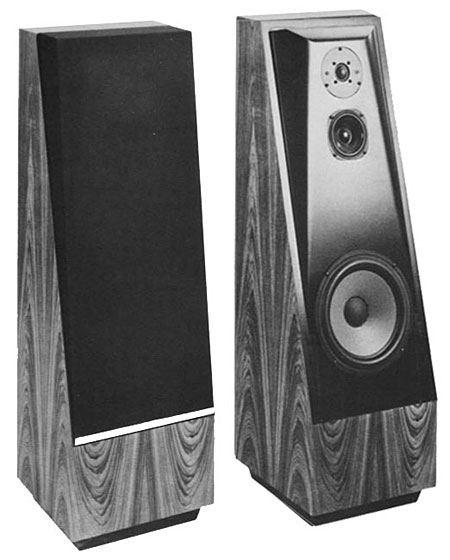
One question posed by John Atkinson at the July 1991 Stereophile Writers">http://www.stereophile.com/features/109">Writers Conference had to do with the ease of reviewing: Is it harder to write a bad review of an expensive product than a good review? I find it hardest to write a good review of an inexpensive product. If I admire a less expensive loudspeaker, for example, it may become a recommended component, and can displace a more expensive speaker (that received mixed comments) from our twice-yearly rankings. This can be a big responsibility; even a conditional rave of a low-cost product means that JA may assign another Stereophile reviewer to do an immediate follow-up report. The Snell Type E/III loudspeaker may be a good case in point.

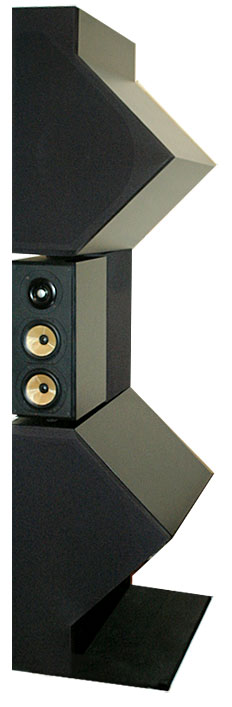
Apogee Centaurus Slant 6 loudspeaker

The idea of mating a dynamic woofer to a ribbon midrange/tweeter is appealing on paper. Such a "hybrid" loudspeaker would have the many advantages of a dipole ribbon transducer, yet be more practical and affordable than full-range ribbon designs. Among the ribbon's great strengths is its narrow vertical dispersion (reducing the ceiling and floor reflections), contributing to the ribbon driver's well-deserved reputation for transparency, terrific soundstaging, transient zip, and excellent resolution of detail. By adding a dynamic woofer to a ribbon midrange/tweeter, the system cost can be contained compared to a full-range design.

Advertisement
Advertisement
Advertisement