Genius Loves Company Soars
Ray Charles's last album has taken off like a rocket, according to Nielsen SoundScan.


Ray Charles's last album has taken off like a rocket, according to Nielsen SoundScan.
Ashland, OR cable maker, TARA Labs, was raided by a combined force of federal agents and local police, acting on a warrant issued after investigators found sufficient evidence that the company may have mislabeled some of its products as "Made in USA."
The annual CEDIA show is mostly about home theater and whole-house entertainment systems, but high-performance audio often gets a share of the limelight, too.
There are a myriad surefire ways to get audiophiles riled. Just bring up $350,000 tube amps, iPods as serious audio devices, or SACD versus DVD-Audio versus DualDisc versus iTunes.
From the September 2004 issue, John Atkinson revs up the <A HREF="http://www.stereophile.com/digitalsourcereviews/904simaudio">Simaudio Moon Equinox CD player</A>, explaining, "When Simaudio's Lionel Goodfield offered me their $2000 Moon Equinox player for inclusion in my irregular series of CD-player reviews, I didn't need to be asked twice."
Retail has changed a lot over the years, and many high-end audio lines are now represented by dealers working out of their homes. Does this work for you?

<B>MOZART: <I>Requiem</I></B><BR>
Christine Schafer, soprano; Bernarda Fink, alto; Kurt Streit, tenor; Gerald Finley, bass; Arnold Schoenberg Choir, Concentus Musicus Wien; Nikolaus Harnoncourt<BR>
Deutsche Harmonia Mundi 82876 58705 2 (SACD/CD). 2004. Friedemann Engelbrecht, prod.; Michael Brammann, Josef Schutz, engs. DDD. TT: 50:23<BR>Performance <B>****</B><BR>
Sonics <B>*****</B>
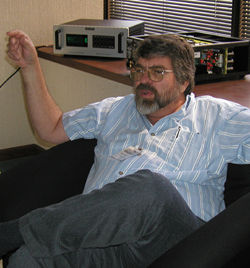
Conventional wisdom has it that you should listen to an audio component, preferably in your own system, before you decide to buy it. But who, these days, has the opportunity to do this consistently? Even an audition in the store isn't guaranteed; I have to drive two hours to get to the nearest dealer with decent customer service and a good inventory of interesting gear. And though he generally stocks a fairly wide range of components, like any dealer, he carries only a small sample of all the hi-fi gear that's currently, in principle, available.
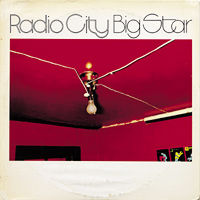
"How could there be a bad song called 'Iron Man,' or 'War Pigs,' or—my cup runneth over—'Rat Salad'?"—<I>Nick Hornby, explaining his youthful fondness for Black Sabbath</I>
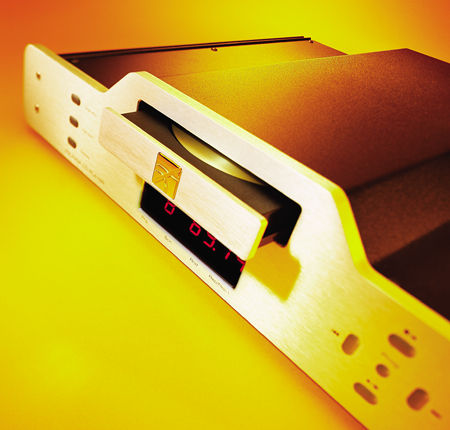
Simaudio has been doing well in the middle of the high-end market, providing products such as their Moon i-5 integrated amplifier (<A HREF="http://www.stereophile.com/amplificationreviews/620">reviewed by Chip Stern</A> in July 2002), which offers a glimpse of high-quality sound at an affordable price. That's not to say that the Canadian manufacturer neglects the cost-no-object market: the two-box, $5700, Simaudio Moon Eclipse CD player impressed the heck out of Brian Damkroger when <A HREF="http://www.stereophile.com/digitalsourcereviews/343">he reviewed it</A> for <I>Stereophile</I> in April 2001 (with a Follow-Up in April 2003). So when Simaudio's Lionel Goodfield offered me their Moon Equinox player ($2000) for inclusion in my irregular series of CD-player reviews (footnote 1), I didn't need to be asked twice.