From Bright Eyes to Sibelius
We don’t get together as often as we’d like.


We don’t get together as often as we’d like.
In the conference room, where I have lunch each day with two of my favorite people in the world (I am very lucky), I found myself tapping my fingers in constant rhythm against the long, veneered table. Why was I doing this?
Melissa is safe inside now. I just walked her home.
<a href="http://www.lisawhiteman.com/">Lisa Whiteman</a> keeps a blog. I discovered it on May 12, 2003, and I have enjoyed it everyday since. How many days is that?
As we reported <A HREF="http://stereophile.com/news/082905recording/"> August 29</A>, Sony BMG and the Warner Music Group, among others, have begun questioning the now defacto per song price of 99¢ set by Apple's iTunes Music Store.
<I>Rocky Mountain Audio High:</I> The Rocky Mountain Audio Fest will be held at the Denver Marriott Tech Center Hotel (4900 South Syracuse; Denver, CO) from September 30 through October 2. In addition to over 70 demo rooms, there will be seminars and musical entertainment. Details and pre-registration can be found <A HREF="http://www.audiofest.net/ShowInfo.htm">here</A>.
As big a shock as it was to see the Halloween candy and decorations in the stores by mid-September, the real sign that the year is drawing to an end has been the flurry of news concerning the 2006 Consumer Electronics Show (CES) in Las Vegas. This year, CES guarantees that it will refund the registration price of anyone who attends "any of the 2006 International CES conference sessions and fail[s] to gain even one new insight, tip, or piece of information you can use when returning to your place of business."

I received a voicemail from Eileen on Friday night, which said something like: "You missed my phone call again, and I’m here with Sean and Omar and Allison and Justin and Lauren and Scott and Cheryn, and we’re all waiting for you, and you’re lame."
It appears that a lot of respondents to last week's Vote! must not listen actively
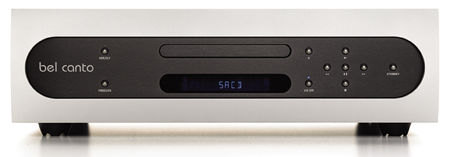
I recently had a house guest who is a music lover and amateur pianist but who had never heard of the SACD or DVD-Audio formats. I explained what they were and demonstrated examples of both, to his amazement. He then blew them off, saying that my system <I>always</I> sounds great and that the average person couldn't or wouldn't afford the kind of equipment I have. But when I told him that there were universal players available for less than $200 at retail and that, in fact, the player I was using was based on a transport drawn from a similar mass-market product, his interest was piqued. Of course, I didn't emphasize that one's expectations may not be the same, or that the boys designing the high-end stuff do make it sound different and, usually, much better. Heck, I'll do whatever I can to hook a music lover on these new formats, even if their future is uncertain. Once he's hooked, audiophilia will have him forever.