SXSW Part I
Although the brain pall caused by four solid days and nights of music has yet to lift entirely, I will attempt to begin to dissect South by Southwest 2008.


Although the brain pall caused by four solid days and nights of music has yet to lift entirely, I will attempt to begin to dissect South by Southwest 2008.

The sun is almost all gone now and the streetlamps along Newark Avenue are just beginning to take on a sort of greenish glow. The sky has become a shadowy mess. We're trying to postpone something. Who would want the day to end like this?
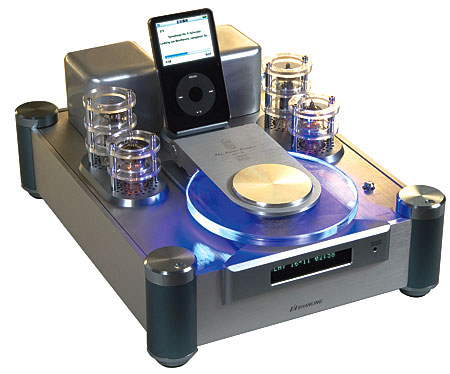
My first one-piece stereo—I think I paid $60 for it, including a pair of speakers with pegboard backs—gave me a lot of pleasure when I was young, and I loved it. Everything that came after has been better in every way but one: None has inspired that kind of love. And most have left me wondering if there might be something just a little bit better.
Sanford "Sandy" Berlin died on March 11 at his home in Santa Monica, California. He was 80 and had suffered from cancer. Born in 1927, he would have been 81 on April 10. During a long and highly successful career in audio management, Berlin held top positions at companies ranging from Harman/Kardon and JBL to Madrigal and Revel. He entered the industry in the 1960s, after brokering Harman/Kardon, then owned by General Instruments, back to its founder, Sidney Harman, who subsequently hired him and put him in charge of H/K. When Harman's firm, then called Jervis Corporation, acquired JBL in 1969, Berlin moved to Los Angeles to reshape it. He later set up German and French distribution units for Harman-group products and, after negotiating Harman's purchase of Tannoy, moved to England to serve as Tannoy's chairman. When Harman set out to create a new speaker brand, Bolivar, Berlin took the reins of that Tennessee-based operation (which ultimately proved unsuccessful).
They're opening a Starbucks and a Duane Reade directly across from the Grove Street PATH station, where I catch the train to work each morning. This will certainly bring more people to my growing neighborhood. This morning, the train was so crowded that I couldn't read my book, Murakami's colorful <i>Blind Willow, Sleeping Woman</i>. So, instead, I did what I always do when there's no room to read:
Reader Samuel Figueroa says, "Judging from the advertisements I get through email, it would appear that most people who buy LPs listen to jazz." <P> Is this true? If you currently buy vinyl, what genre of music do you purchase most?
The Home Entertainment Show, promoted by <I>Stereophile</I>, <I>Ultimate AV</I>, and <I>Home Theater</I> magazines, successfully showed off the best in high-end audio and home theater to enthusiasts from 2001 through 2007. However, following its acquisition of the magazines in August 2007, Source Interlink Media decided not to promote the Home Entertainment Show in 2008. Instead, <I>Stereophile</I> is partnering with the Festival Son & Image, to be held in Montreal, Canada, Thursday April 3 through Sunday, April 6. (The first day is for trade and press only.)
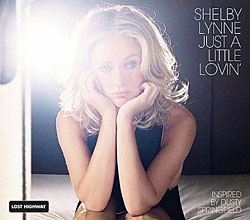
<B>SHELBY LYNNE <I>Just a Little Lovin'</I></B><BR>
Lost Highways B0009789-02 (CD). 2008. Phil Ramone, prod.; Al Schmitt, eng.; Steve Genewick, asst. eng. AAD? TT: 39:21<BR>
Performance ****<BR>
Sonics ****
<B>We get letters department:</B> Here at <I>Stereophile</I>, we talk to people in the high-end audio industry all the time, and we frequently get fascinating emails from movers and shakers within the industry. This week we received one that got us thinking about outsourcing manufacturing and how it could affect high-end consumers.
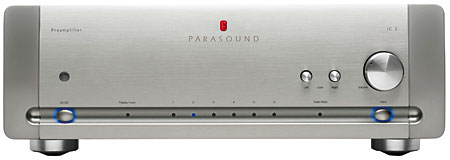
My very first review of a preamplifier, for British magazine <I>Hi-Fi News & Record Review</I> in May 1984, was of the Audio Research SP-10. In my opening to that review, I wrote that, "more than any other component," a preamplifier "should approximate to the late <A HREF="http://www.stereophile.com/news/121503walker">Peter Walker</A>'s 'Straight Wire with Gain.'" By this I meant that a preamplifier should not be in the business of effecting dramatic changes, and in any case, dramatic changes are not the kind that prove to be of lasting value. However, I also wrote back then that what I became increasingly aware of while using the SP-10 "was the fact that 'neutrality' is a positive virtue rather than just an absence of aberration."