What was your favorite release this year from a music perspective?
Forget about the sound quality this time. What was your favorite disc this year on musical merit alone?


Forget about the sound quality this time. What was your favorite disc this year on musical merit alone?
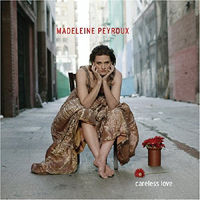
<B>MADELEINE PEYROUX: <I>Careless Love</I></B><BR>
Madeleine Peyroux, vocals, acoustic guitar; Lee Thornburg, trumpet; Dean Parks, guitars; Larry Goldings, piano; David Piltch, bass; Jay Bellerose, drums; Scott Amendola, brushes.<BR>
Rounder 11661 3192-2 (CD). 2004. Larry Klein, prod.; Helik Hadar, eng.; Ricky Chao, Nicolas Fournier, asst. engs. AAD. TT: 42:56<BR>
Performance <B>****</B><BR>
Sonics <B>****</B>
In August, I <A HREF="http://www.stereophile.com/amplificationreviews/804mcintosh">reviewed</…; McIntosh's MC501 monoblock power amplifier. In terms of what I'd thought was possible from Mac, this was a revelation. Once memories and lurking preconceptions had been set aside and the amps installed in my system, the MC501 easily established itself as among the finest overall performers I have ever reviewed.
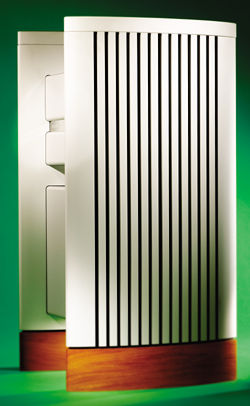
One of the highlights of recent Consumer Electronics and Home Entertainment shows has been the demonstrations of sound quality put on by Australian amplifier manufacturer Halcro with Wilson Audio loudspeakers. At my first exposure to one of these demos—described in my April 2002 "<A HREF="http://www.stereophile.com/asweseeit/557">As We See It</A>"—enormous dynamic range was coupled with a grain-free presentation and almost holographic stereo imaging to produce a breathtaking sweep of sound. Paul Bolin reviewed Halcro's <A HREF="http://www.stereophile.com/amplificationreviews/683">dm58 monoblock</A> in October 2002, and that amplifier was subsequently voted this magazine's "<A HREF="http://www.stereophile.com/features/724/index2.html">Amplification Component of 2002</A>" by our reviewers.
Back in April 2001, Jonathan Scull got his hands on the <A HREF="http://www.stereophile.com/digitalsourcereviews/401sony">Sony SCD-C333ES SACD/CD player</A>—a carousel model no less—and filed his report. "So I loaded up five discs for the evening—a process quite different from choosing and playing one disc at a time—and imagined the angle on the bumper shot I'd have to line up for <I>this</I> review!"
The entertainment industry is going the last mile in its war against file sharing. On Friday, October 8, the Motion Picture Association of America (<A HREF="http://www.mpaa.org">MPAA</A>), the Recording Industry Association of America (<A HREF="http://www.riaa.com">RIAA</A>), and the National Music Publishers Association (<A HREF="http://www.nmpa.org">NMPA</A>) appealed to the US Supreme Court to overturn a lower court's ruling earlier this year that peer-to-peer (P2P) file-trading networks can't be held liable for copyright infringement.
Tyll Hertsens is on a mission. He strives to transform the ugly duckling bleat of portable audio into music that sings to an audiophile's heart.
Anyone who has experimented with wireless local area networks for audio—feeding rear/side speakers in a multichannel system, for example—can attest that the technology is far from ready for prime time. Prone to noise, interference, and dropouts, wireless audio systems require a tremendous amount of refinement before they'll meet audiophile standards.
Forget about the music for a second, and let's concentrate on the art of reproduction. What is the best <I>sounding</I> disc you've heard so far this year?