$2900 Extension Cord
No, that's a $2900 <I>painting</I> of an extension cord—and, God help me, I <I>want</I> it.


No, that's a $2900 <I>painting</I> of an extension cord—and, God help me, I <I>want</I> it.
I'm covering CES in Las Vegas this week, so posting will be sporadic. Check out <I>Stereophile</I>'s <A HREF="http://blog.stereophile.com/ces2007/">2007 CES Report</A> blog for the latest on high-end audio and the people who make it.
With another act of blatant scoopage (I'm writing this as my colleagues are meeting for breakfast), I must let you know that, while ripping through the Venetian halls, late yesterday evening, making some final preparations before today's morning activities, I nearly fell on my face at the sound of such sublime elfin wonder coming from the Audes Room (suite 29-324, conveniently close to where Primedia's Home Tech Group resides, which is to say: I'll be back, again and again.)
It's easy for an audiophile to fall in love with grand, state-of-the-art speakers, but when it comes to high performance in a small space, fewer jewels stand out. Reader Gus Kund wants to know: What is your favorite bookshelf speaker?
On December 13, 2006, the US Federal Circuit Court of Appeals upheld the August 8, 2005 grant of summary judgment in favor of AudioQuest, finding that the district court had correctly terminated Monster Cable's January 5, 2004 assertion that AudioQuest's Dielectric-Bias System (DBS) willfully infringed upon Monster's Bias Circuit System (BCS) patent (US Patent No.5,307,416 for Audio Interconnect & Speaker Cable, "Bias Circuit System").
We've written frequently about the lawsuits brought by the recording industry against alleged downloaders, but here's an interesting fact: None of the cases has actually gone to trial yet. Many have been dropped by the labels when it appeared they had targeted the wrong defendants; even more have been settled by defendants intimidated by the $750-per-song damages claimed by the labels. Now an attorney is vigorously seeking a trial—and one of his big arguments is that the labels' math doesn't add up.
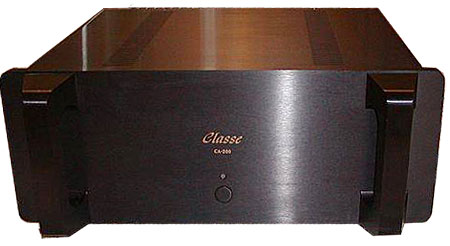
Canadian manufacturers enjoy a special relationship with the US market. Though technically their products are "imports," a high level of trade harmony, plus a common continental location, mean that Canadian designs tend to be equably priced in contrast to those exported to the States from overseas.
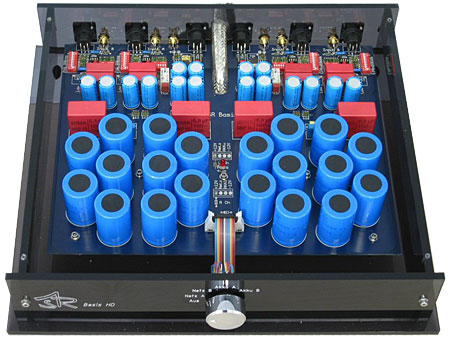
"Everybody's gotta get into the act!" Jimmy Durante used to say. That's what's happening with phono preamplifiers—they just keep being built, and I keep getting them for review. Up for evaluation in next month's column are new models from Perreaux, Musical Fidelity, Graham Slee, and a Chinese one, Ming Da. You can bet there'll be more.
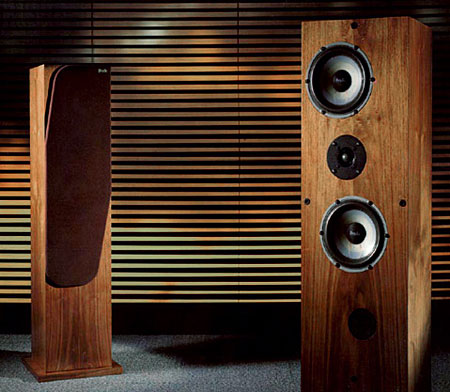
Let's see—should I start with a discussion of conflict? Or maybe indecision? No, let's be more psychological and talk about approach/avoidance dilemmas...No, I'm supposed to be entertaining. How about a joke? Nah, that won't do. Well how about the framework for a joke? Yeah, that's the ticket!
One of the things endured by engineers and journalists involved in the design and discussion of high-end components is the seemingly endless attacks from those who, for whatever reason, feel that there is something unhealthy, even vaguely immoral, in the whole idea of wanting to listen to music with as high a quality as possible. The Listening Studio's Clark Johnsen reminded me recently of a letter from Daniel Shanefield that I published in the January 1984 issue of <I>Hi-Fi News & Record Review</I> that illustrates the whole genre: "It is utterly useless to write an amplifier review based on listening tests. If there were anything other than mere frequency response variation, it might be interesting...most hi-fi magazines will...forswear attempts to review amplifiers for their 'inherent sounds.' There are still plenty of interesting things to talk about in reviewing amplifiers, such as features, power, cost effectiveness, beauty, etc." (Of course, Daniel Shanefield is not quite as authoritative a published amplifier reviewer as, say, <A HREF="http://www.stereophile.com/interviews/66">J. Gordon Holt</A> or Harry Pearson of <I>The Abso!ute Sound</I>.)