The Good News Is
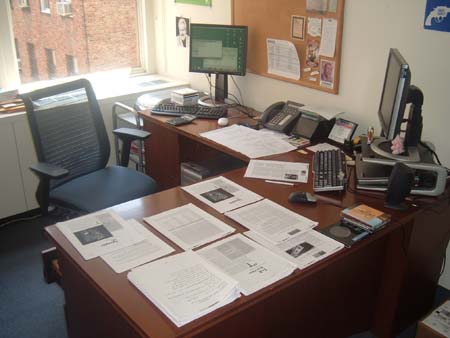
Last week, we moved—from the sixth floor of 261 Madison Avenue to the fifth floor of 261 Madison Avenue. The good news is abundant:


Last week, we moved—from the sixth floor of 261 Madison Avenue to the fifth floor of 261 Madison Avenue. The good news is abundant:
With good news to share about new downloads, let's dispense with the downer first. As <A HREF="http://www.twice.com/article/CA6661607.html?nid=2402&">reported by Twice.com</A>, HDGiants, aka MusicGiants, filed for Chapter 11 bankruptcy in US Bankruptcy Court on May 18. Although the site, often praised by <I>Stereophile</I> as a leader in CD-quality and high-resolution music and video downloads, still appears to be operating, the layoff of its sales and marketing staff raises serious questions about its future.
Joe Lovano’s <I>Folk Art</I>, his 22nd album on the Blue Note label, is an odd, sometimes jarring record—it took a few hearings before I found my bearings—but once the fragments snap into place, it’s a rousing pleaser, bursting with indigo moods, heart-skipped romance, and free-flow funk riffs. Lovano plays all kinds of reeds—tenor sax, straight alto sax, clarinet, and, on one song, the aulochrome, a Hungarian-built horn that’s a double soprano sax (attached to one reed), each side tuned to a different key, so that you blow melody and harmony simultaneously. He plays with a somewhat hardened tone, reminiscent of Sonny Rollins, but with a more soulful sensibility, stemming from his Midwestern roots (his father was a tenor blues saxophonist in Cleveland), though over the past couple decades, he’s played with, and gleaned ideas from, a wide variety of masters, including Hank Jones, Gunther Schuller, and Mel Lewis, to name a few.
I've been reading Daniel Levitan's <I>The World in Six Songs: How the Musical Brain Created Human Nature</I>, which makes pretty strong claims for the importance of those tones in time. (Neil McCormick conducted an interesting <A HREF="http://blogs.telegraph.co.uk/neil_mccormick/blog/2009/04/09/evolution_o…; with Levitan in <I>The Telegraph</I>.)
Sure, there is a ton of information about new music available online, but sometimes holding it in your hand is better still. Do you subscribe to any music magazines? If so, what do you subscribe to, and if not, why not?
Audiophiles constantly seek ways to improve the experience of hearing reproduced music. Preamps are upgraded, digital processors are compared, turntables are tweaked, loudspeaker cables are auditioned, dealers are visited, and, yes, magazines are read—all in the quest to get just a little closer to the music.
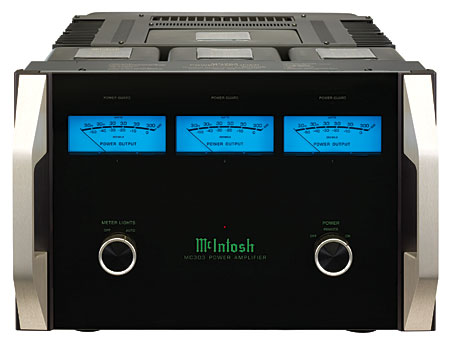
The first time I ever heard stereo sound, it was in a shop on Manhattan's Radio Row. In addition to the Studer staggered-head tape deck, the system consisted of pairs of McIntosh C8 preamps, MC60 power amps, and monster Bozak B-310 speakers. I can still picture the room and almost hear the sound. I was then an impecunious high-schooler, and while I always strived to buy the best equipment I could afford, I unfortunately was never able to own any of these iconic products. However, when I saw McIntosh's new MC303 three-channel power amp glowing brightly on silent display at the 2008 CEDIA Expo, a light bulb went on over my head: I'd been assessing a series of three-channel and monoblock amps, and the MC303 would fit nicely into my New York City system.
I’ve just found out about a new, and unlikely, place to go hear jazz in New York City: the Cacao Bar at the Chocolate Factory, a.k.a. MarieBelle. Most of the time, it’s a chi-chi caf—on the 2nd floor of 762 Madison Avenue, between E. 65th and 66th Streets—that serves hyper-rich chocolates, exotic drinks, and (so I’m told) killer short ribs. But on Wednesday nights, from 7:30 to 10, jazz musicians—a pianist and usually just one or two others (there’s no room for more)—come in and play.