Have you ever had your audiophile heart broken?
Sometimes we fall in love with the idea or potential of a product, only to be disappointed with the real thing. Have you ever had your audiophile heart broken?


Sometimes we fall in love with the idea or potential of a product, only to be disappointed with the real thing. Have you ever had your audiophile heart broken?
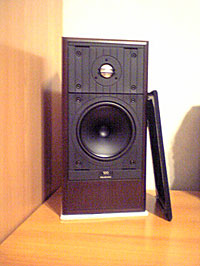
I believe <A HREF="http://www.stereophile.com/interviews/232">Ken Kantor</A> said it first: a couple of years ago, in his September 1990 interview with Robert Harley (Vol.13 No.9), he remarked that "there's no reason why a two-way 6" loudspeaker can't be the equal of almost the best speaker out there from a certain frequency point upward, with the possible exception of dynamic range." When I read those words, they rang true. If you put to one side the need to reproduce low bass frequencies and can accept less-than-live playback levels, a small speaker can be as good as the best, and allow its owner to enjoy the benefits of its size—visual appeal, ease of placement in the room, and the often excellent imaging afforded by the use of a small front baffle.

The wind rushed hard and cold as I emerged from the Columbus Circle station.

I sat at the bar and ordered a Brooklyn Winter.

I loved the way the band worked together—how each member lifted every other, and how each member excelled during solos—but I was most impressed by the locked-in rhythm section, and especially Pedro Martinez on congas. His hands turned into light, racing across the conga heads, speeding away from everything else—the stage, the room, the cold night—while remaining right on time.
According to the conventional wisdom, companies selling consumer products fall into two categories: those whose sales are "marketing-led" and those whose sales are "product-led." Marketing-led companies tend to sell mature products into a mature market where there are no real differences between competing products—soap powder, mass-market beer, or cigarettes, for example—whereas product-led companies tend to sell new technologies, such as personal computers and high-end hi-fi components. In the audio separates market, conventional wisdom would have a hard time categorizing any individual company: no matter which you choose, it would be simplistic to say that it is either product- or marketing-led. No matter how good the product, without good marketing the manufacturer stands little chance of success; a poor product superbly marketed may make a company successful overnight, but that success will have hit the end stops by the following night.
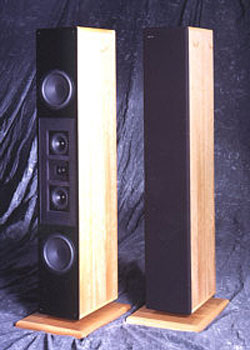
<I>"DAL firmly believes that a full set of credible measurements, made by qualified engineering staff using state-of-the-art equipment and facilities, can reliably predict the potential of a loudspeaker to accurately reproduce the complex sounds of music."</I>—Dunlavy Audio Labs
The consumer and retail tracking NPD Group released the results of a study on how people acquired music in 2007. NPD's data show a marketplace undergoing transition—although, depending on who's parsing the numbers, that could be read either as great news or the end of the world as we know it.
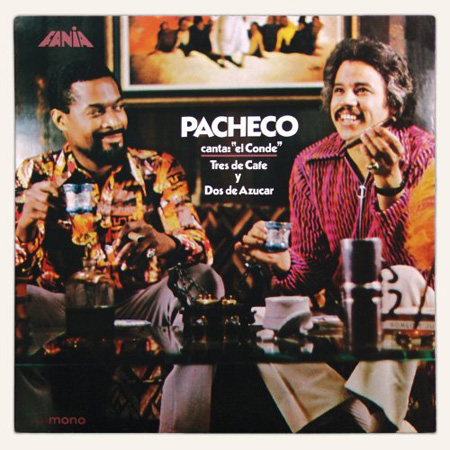
Two founding fathers of salsa, Johnny Pacheco and Eddie Palmieri, discuss the history of their wonderful musical style and the birth of the Fania record label in this interesting and entertaining interview with <i>Latino USA</i>'s Maria Hinojosa.

Shaking his head and smiling, he says: