Eminent Technology LFT-VIII loudspeaker
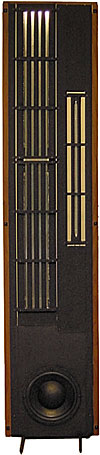
"And <I>I</I> say panel speakers can't rock'n'roll—"


"And <I>I</I> say panel speakers can't rock'n'roll—"
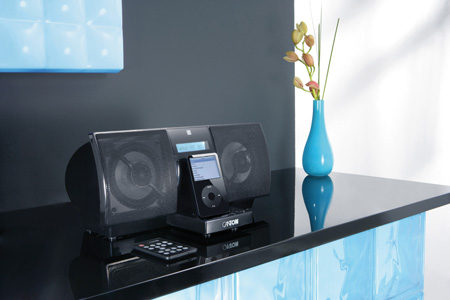
Was it really only yesterday? It feels like it was a hundred years ago.
Jason Victor Serinus <a href="http://stereophile.com/news/031308amex/">reported on it</a> a couple of weeks ago, but in case you still haven't seen that American Express ad featuring hi-fi retailer <a href="http://www.musicdirect.com/">MusicDirect</a>, here it is.
A few months ago, I <A HREF= "http://blog.stereophile.com/fredkaplan/111007jazz/">reviewed</A> Carla Bley’s wonderful CD, <I>The Lost Chords Find Paolo Fresu</I>, a deceptively Dada title that referred simply to the nature of the session—Bley’s quartet, called the Lost Chords, joined by the Sardinian trumpeter, Paolo Fresu. I praised Fresu’s “appealing” sound, its “clarion tone with a slight huff of breathiness,” but confessed that I’d never heard him before. Now comes a trio album, <I>Mare Nostrum</I> (on the German label, ACT), with Fresu as co-leader—along with the French-Italian accordionist, Richard Galliano, and the Swedish pianist, Jan Lundgen—and, though it’s not as quirkily magical as the Bley, it’s a charmer. There’s at once a twilight intimacy and a panoramic insouciance to this music. Imagine a gentler Nina Rota, as if he’d scored the soundtracks for early Truffaut instead of boisterous Fellini; toss in some Argentine spice (Galliano, who also plays bandoneon, was close to Astor Piazzolla); and you get a sense of the mood. It’s a bit fluffy and sentimental, but in a good, lively way (though there’s also a spirited arrangement of Ravel’s “Ma Mere L’Oye” and a darkly stirring piece, a Fresu composition, inspired by the Turkish poet Nazim Hikmet). The sound quality is quite good, though I wish there’d been less reverb on the trumpet.
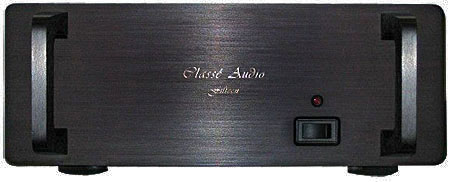
I think every audio reviewer hopes for a surprise—when a good, but not outstanding, product is refined by the manufacturer into something special. The review then becomes an exciting discovery, reaffirming the pleasure one takes in good audio, and in listening to music being reproduced as it should be. It makes the listening exciting and the writing easier. The Classé Fifteen solid-state stereo amplifier is just such a surprise.
Have you guys seen those <a href="http://www.wsdistributing.com/">Vincent Audio</a> ads? (See page 128 of the April issue, or page 130 of the March issue or, even better, page 183 of the January issue.) I love them all.
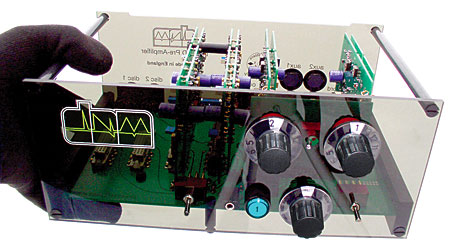
I'm old enough to remember my family's first table radio that was made out of plastic. It was cream-colored, and it sat on the rearmost edge of our kitchen table: a less-than-timeless design in its own right, destined to be discarded at the end of one era and treasured again at the dawn of another, for more or less the same reason. But in 1958, a cream-colored plastic radio looked fresh, clean, and right, and its cheap wooden predecessor seemed dowdy and sad by comparison. That would all change in later years, of course. Then it would all change again.
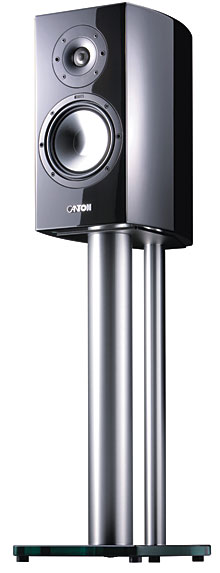
For years, I have espoused the use of the same speakers (except subwoofer) in all positions for multichannel music. To have no speaker in the system contributing a different voice to the choir seems as intuitive as having the room acoustics not color the sound. Of course, this still doesn't guarantee perfect timbral match—positioning and room acoustics usually impose some unique characteristics under all but the most perfect and symmetrical conditions. You can hear tonal imbalances even between the left and right speakers of most <I>two</I>-channel systems simply by switching pink noise between them. On the other hand, there's no reason to superimpose on these unavoidable differences the additional imbalances inevitable with using different speakers in a multichannel array.
On March 24, the Department of Justice's Antitrust Division stated that, "after thorough and careful review" (<I>translation:</I> more than one year) Sirius Satellite Radio's $5 billion offer to purchase XM Satellite Radio "is not likely to harm consumers."
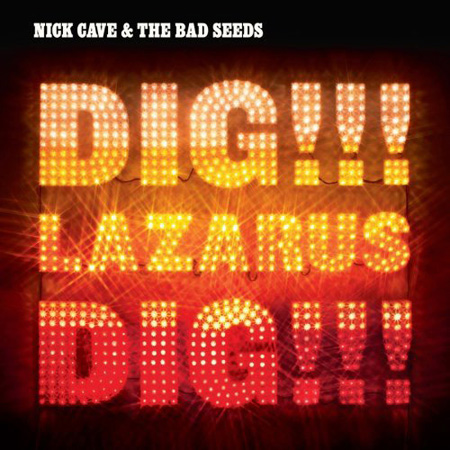
I still sometimes forget that the year is 2008. It'll take me a few more months to get used to it. No doubt about it, though: 2007 is old news. I can tell by the copyright dates on my new CDs. It's 2008. The birdies are making all sorts of happy racket outside my kitchen window; the high temperatures are creeping up, up, slowly up; Opening Day is less than a week away.