Kalman Rubinson

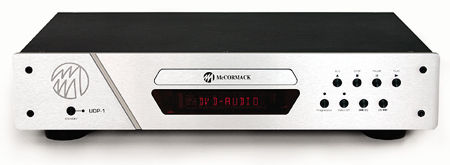
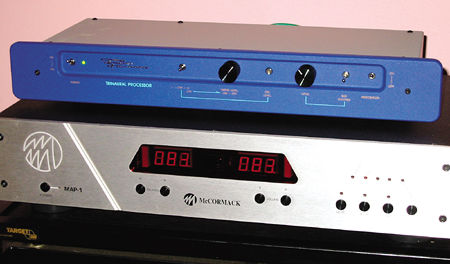
McCormack Audio UDP-1 universal disc player

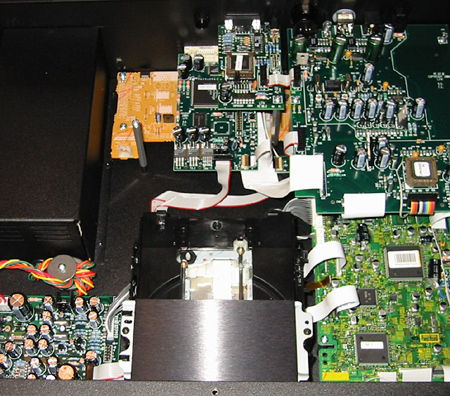
The modification of disc players is a hot topic on the various audio newsgroups, where the discussion includes do-it-yourself options and the recommendations of commercial modifiers. These range from tweak guys to such serious engineering firms as EMM Labs and everything in between. Not surprisingly, the objects of these endeavors are usually players made by one of the electronic behemoths: Sony, Philips, Technics, Toshiba, etc. In fact, it was just such a discussion that precipitated John Atkinson's purchase of and <A HREF="http://www.stereophile.com/digitalsourcereviews/904simaudio/index1.html… comments</A> on a stock Toshiba 3950 player, a popular target of modifiers.

Continue Reading »

Music in the Round #9

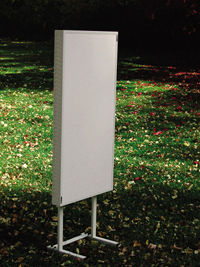
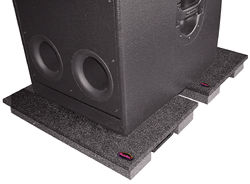
With the new power and furniture arrangements in my multichannel room, I've begun to reexamine all the other things that affect system performance, including power conditioning and signal cables. However, I could not get my wife to accept the presence in that room of an <A HREF="http://www.stereophile.com/musicintheround/904music/index1.html">ASC Sub Trap</A>, which lifted my <A HREF="http://www.stereophile.com/loudspeakerreviews/955">Paradigm Servo-15</A> subwoofer to eye level. Not that I protested the Trap's departure all that much&mdash;at that height, Trap and sub partly blocked direct radiation from my rear left speaker. But I felt its absence immediately, as my system returned to the usual somewhat boomy, overly punchy bass. The ASC left me with the determination to deal with room problems, particularly in the bass.

Continue Reading »

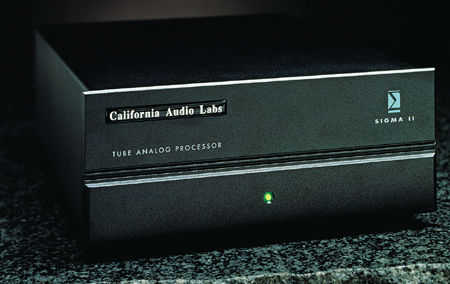
California Audio Labs Sigma II D/A converter

<B>HistoriCAL Introduction</B>
<BR>
California Audio Labs is a child of the digital age. Originally, they made a noise by offering <A HREF="http://stereophile.com/digitalsourcereviews/654">modified CD players with tube output stages</A>, a practice for which I found no intellectual justification. On the other hand, the results were successful, even if (probably) due to the CAL units' softening of the harshness of early digital sound.

Continue Reading »

Paradigm Reference Studio/60 v.3 loudspeaker

I am biased in favor of Paradigm loudspeakers. I've used them for 10 years; they offer good sound and good value, properties they share with a number of other Canadian makes who have taken advantage of Canada's National Research Council facilities in Ottawa. In fact, the first components I bought specifically for what is now my multichannel system were Paradigm Esprit/BP speakers, which had impressed me at a <I>Stereophile</I> show. When I took the step into multichannel and found that there wasn't a matching center-channel speaker for the Esprits, I replaced them with Paradigm's Reference Studio/60 v.2s. But while the smaller <A HREF="http://www.stereophile.com/loudspeakerreviews/628">Reference Studio/20</A>, and the larger <A HREF="http://www.stereophile.com/loudspeakerreviews/252">Studio/100</A&gt; have both been reviewed in <I>Stereophile</I>, the Studio/60 had not. The release of the v.2's successor, the Reference Studio/60 v.3 ($1699/pair), was an opportunity to fill that gap.

Continue Reading »

B&W Unveils New 800 Series

At nearly simultaneous press receptions in London and New York on November 17, B&W unveiled its new 800 series loudspeakers, the first complete redesign of this respected and venerable line in more than six years. Wisely, the presentation began with cocktails and a surprisingly entertaining technical description of the innovations. The latter offered many reassurances that, although all aspects of the 800 line were examined, no changes were made simply for the sake of change, and the basic design principles withstood this re-examination. Thus, when we were, at last, treated to the displayed speakers themselves, we were not surprised that they greatly resembled their predecessors, and we focused, instead, on the new features.

Continue Reading »

Classé Omega Omicron monoblock power amplifier

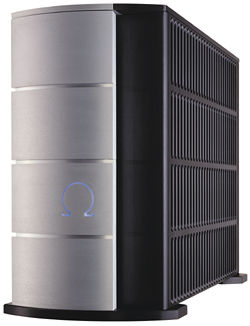
Non-audiophile friends and relatives raised their eyebrows when they saw the Class&#233; Omega Omicron monoblocks. Not only is the Omicron more expensive than any other amp I've used; at 108 lbs, it's heavier than some of the <I>speakers</I> I've used. The Omicron is Class&#233's next-to-top-of-the-line amp in its Omega series, but is still definitely a "statement" product. Brian Damkroger reviewed the Omicron's big brother, the Omega Mono, in the July 2003 <I>Stereophile</I>. I refer you to <A HREF="http://www.stereophile.com/amplificationreviews/878">that review</A> for a more detailed description of the Omicron's basic circuitry.

Continue Reading »

Music in the Round #7

My experience at last May's Home Entertainment 2004 East confirmed that even a big cheerleader for discrete, high-resolution multichannel music must be realistic about the vast heritage of two-channel recordings, which will dominate collections for years to come. Although we can enjoy these recordings with a good stereo system, a multichannel system can offer options that give them new life without superimposing false and disturbing directional effects or smearing the two channels around and behind the listener.

Continue Reading »

California Audio Labs CL-20 DVD-V/CD player

Recently, we've seen the digital "horsepower" race accelerate with the arrival of digital sources and devices with 24-bit and 96kHz sampling capability. Much of this has been spurred by the 24/96 labels emblazoned on the newer DVD players&mdash;and, within the purer confines of the audio community, by high-end DACs with this same ability. Indeed, it's possible that the <A HREF="http://www.stereophile.com/digitalsourcereviews/259">dCS Elgar</A> DAC, near and dear to John Atkinson's heart and a perennial Class A selection in <I>Stereophile</I>'s "Recommended Components," performs so well with standard 16-bit/44.1kHz sources because its wider digital bandwidth permits greater linearity within the more restricted range of regular CDs.

Continue Reading »
Advertisement
Advertisement
Advertisement