Wes Phillips

Meridian Acquires Sooloos

Meridian Audio Ltd. announced at 4pm December 5 that it had acquired media server manufacturer Sooloos LLC. "Basically, it comes from [Meridian founder] Bob Stuart's appreciation of great industrial design and innovative technologies," said Meridian's Chief Marketing Officer Graeme Taylor. "That combination is what Meridian has always attempted to offer and when Bob saw Sooloos' products, he realized that Peter Wellikoff [COO], Enno Vandermeer [CEO], and Danny Dulai [CTO] shared those values. Over time, it became obvious that, between what we shared and what we each could offer each other, the acquisition made tremendous sense."

Continue Reading »

The Two-Box Solution

My favorite audio product of 2008 isn't precisely an audio product—it's a home theater in a box. I'm referring to Polk's lovely SurroundBar 360, which sells for $1200 and gives you a low-profile 48" "sound bar" and a base station, which includes an optical disc player, DSP processing, and an AM/FM tuner. The base station, of course, contains all the amplification the sound bar requires. Also included is a special umbilical to connect the two pieces—and, in a savvy little detail that tells you a great deal about how much thought has gone into the SurroundBar 360, the connectors on that cable cannot be connected "wrong."

Continue Reading »

HeadRoom/Cardas Fat Pipe headphone cables

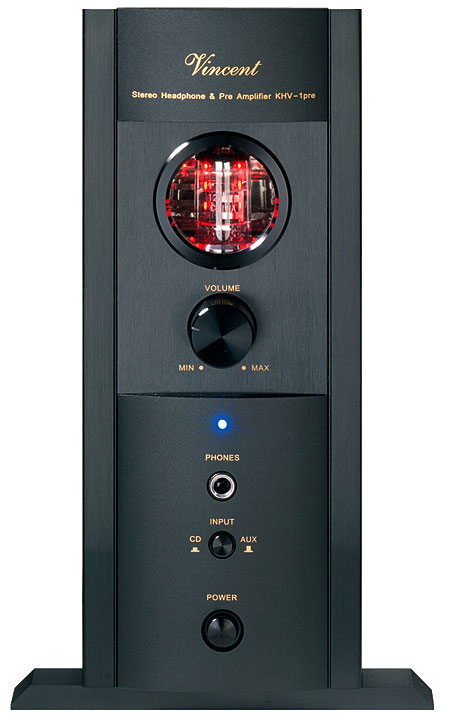
When Audio Advisor's Wayne Schuurman contacted me about reviewing the <A HREF="http://www.stereophile.com/headphones/1108vincent">Vincent Audio KHV-1pre</A> headphone amplifier, I felt confident that I had everything I needed to handle the task, owning, as I do, both the <A HREF="http://www.stereophile.com/headphones/806akg">AKG K701</A> and <A HREF="http://www.stereophile.com/thefifthelement/605fifth/index1.html">Sennhe… HD-650</A> headphones, which have long been my references. <I>That oughta get 'er done</I>, I thought.

Continue Reading »

Ayre KX-R line preamplifier

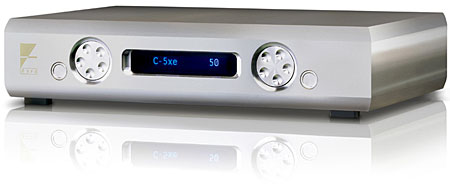
I can't think of a product that was as eagerly anticipated as was Ayre's KX-R preamplifier ($18,500). Following in the footsteps of Ayre's <A HREF="http://www.stereophile.com/solidpoweramps/407ayre">MX-R monoblock amplifier</A>, a <I>Stereophile</I> <A HREF="http://www.stereophile.com/features/1207poty/index9.html">2007 Product of the Year</A>, and milled, like the MX-R, from a 75-lb billet of aluminum, the KX-R also shares with its monoblock stablemate the Ayre ethos of zero feedback and fully balanced operation. But what really caused the buzz was the declaration by Ayre founder and chief designer <A HREF="http://www.stereophile.com/interviews/610">Charles Hansen</A> that the KX-R, with its use of a technology he calls Variable Gain Transconductance (VGT) to control the volume, would set new standards for signal/noise ratio.

Continue Reading »

Avalon Acoustics Indra loudspeaker

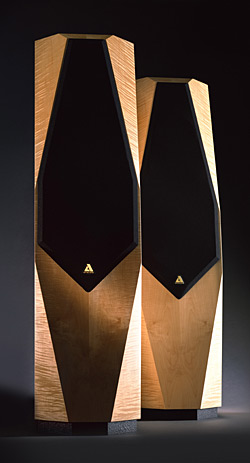
I first encountered Avalon Acoustics' loudspeakers about 20 years ago. The hi-fi shop I worked for sold Jeff Rowland Design Group electronics, and Jeff Rowland insisted that no loudspeaker better showcased his electronics than the Avalons. Rowland sent us a pair of Ascents, and we were startled by their gem-like, faceted cabinets and remarkable soundstaging. As we packed them up to return them to Colorado, I remember thinking, <I>I could live with these speakers.</I>

Continue Reading »

Wadia Digital 170iTransport digital iPod dock

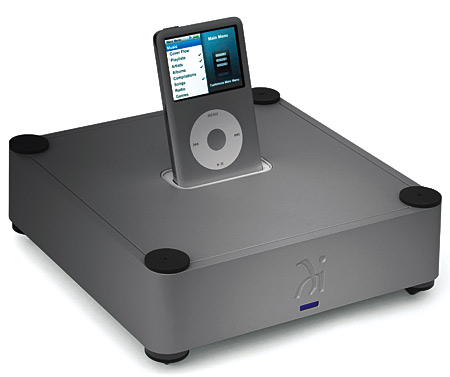
Last December, when Wadia Digital announced that it was releasing an iPod docking cradle that could access the digital signal <I>before</I> it had passed through the player's own D/A converter, many audiopundits were surprised. <I>I</I> was disbelieving, and nearly told Wadia's John Schaffer that he was shining me on. After all, Apple has tiptoed around the whole issue of consumers being able to digitally copy their iTunes files, going so far as to wrap its iTunes Music Store files in digital rights management (DRM) code.

Continue Reading »

If There Were No Sun, You Would Have This Song

Like many perpetually adolescent, emotionally-stunted hipsters, I had a radio show at the campus station back in the day. Crafting a show that had flow was an arcane art&#151;one that is virtually impossible to experience on commercial radio stations with limited play lists. Therefore, it was an art that, once mastered, would be of almost no practical use. It certainly wasn't going to get you a good paying job.

Continue Reading »
Advertisement
Advertisement
Advertisement