Duet: And Two to Carry Your Soul Away
<B>The Sessions: Wes Phillips</B>


<B>The Sessions: Wes Phillips</B>
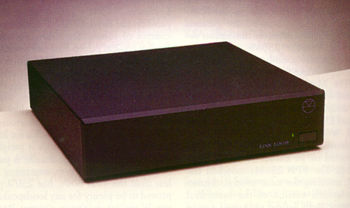
Audiophiles with budget restrictions (most of us, I imagine) could be forgiven for feeling we're afterthoughts to most manufacturers. Even though we probably keep many companies in business by buying their "entry-" or mid-level products, we're always hearing about products designed "without compromise." <I>Waiter, could you bring the reality check, please?</I>
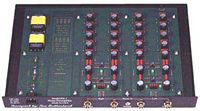
Audiophiles with budget restrictions (most of us, I imagine) could be forgiven for feeling we're afterthoughts to most manufacturers. Even though we probably keep most companies in business by buying their "entry-" or mid-level products, we're always hearing about products designed "without compromise." <I>Waiter, could you bring the reality check, please?</I>
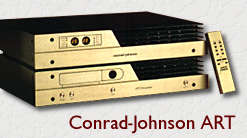
Almost two years ago, Conrad-Johnson's Lew Johnson came to Santa Fe while visiting his western dealers. We were chatting about acquaintances in the industry as I showed him the new house I'd barely moved into when he spread a blueprint across a stack of record boxes and showed me a design for a new product.
My wife's cousin Steve used to sell antiques. Whenever he would display in his shop's window an impeccable (and expensive) item such as a Colonial pie safe, someone would inevitably walk into the shop and demand to know its price. He'd quote a staggering figure, and the browser would get excited. "Why, I have a piece at home <I>exactly</I> the same as that one! Do you think I could get that sort of money for it?" Steve, having learned his lesson the hard way, would be noncommittal.
A few nights ago, John Atkinson and I played host to a speaker designer and a turntable manufacturer. We were all chewing over the 1998 Consumer Electronics Show, talking about different systems we'd heard there and speculating as to which designs would be around for the long haul. The speaker designer said he'd heard no truly bad sound at the Show. Nods all around the table—none of us had. The turntable manufacturer asked if any of us could recall hearing <I>any</I> spectacularly bad products recently. We all shook our heads.
<I>Stereophile</I> is, in one sense, like a family—us younguns have to make do sometimes because the house is straining at the seams. When I first arrived in Santa Fe, for instance, I was told not to come to the office for a few days—the good news, John Atkinson informed me, was that I had a desk; the bad news was that nobody had a clue where to put it. The dilemma was solved in Solomon-like fashion by shoehorning my desk into the "listening room," which was already serving double-duty as audition space and speaker-measurement lab. If manufacturers visited, we'd sweep up all the acoustic damping from the floor and stash it in JA's office; and if JA needed to take measurements, I would be asked to work at home. It was a manifestly fair solution: inconvenient for everyone involved.
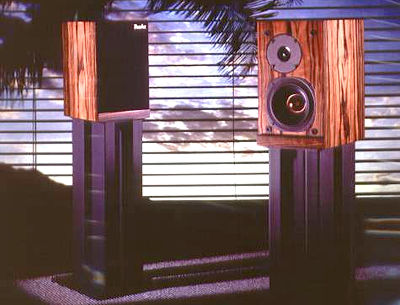
The ProAc Response One S was one of the very first products I reviewed for <I>Stereophile</I> back in 1994 (Vol.17 No.9). That review was such an over-the-top rave that John Atkinson felt obliged to audition the speakers himself before running my report. I assume he liked 'em too—after all, my review did see the light of day.
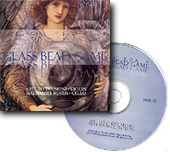
<B>ARTURO DELMONI & NATHANIEL ROSEN: <I>Music for a Glass Bead Game</I></B><BR> <B>J.S. Bach</B>: Two-Part Inventions 1, 3, 6, 7, 9, 10, 13. <B>Kodály</B>: Duo for Violin & Cello. <B>Giordani</B>: Duetto II. <B>Martinu</B>: Duo for Violin & Cello. <B>Handel</B>: <I>Passacaglia</I><BR> Arturo Delmoni, violin; Nathaniel Rosen, cello<BR> John Marks Records JMR 15 (CD). John Marks, prod.; Jerry Bruck, eng. DDD. TT: 62:34
Sometimes, the only thing that'll soothe the cares and lift the thoughts of man is kicking back and letting glorious music wash over you. Isn't that why we're all here? But no sooner do you sit yourself down in the sweet spot and cue up, say, Mozart's 40th, than you hear: