Steamin' in the Rain
It's Monday. It's raining. And people, tourists in particular, (excuse me, why don’t you just poke out the other eye while you're at it!) cannot walk with umbrellas, so let’s talk Ticketmaster.
Now that we're perched upon the precipice of the <I>Simpson Movie</I> opening—at least a decade too late—I, by chance, I caught the Hullabalooza episode with the Smashing Pumpkins this week, the one where Homer becomes part of the "pageant of the transmundane," by being shot in the stomach with a cannonball.
Here's a number to contemplate: 52% of recorded music sales at Sony/BMG are now via downloads.
It's too bad the word "jam" was ever invented, much less the concept it implies being attached to music.
Label heads—those at the very highest positions of power at music companies. To anyone who's spent time near the record business, they're a mythical breed. Like gnomes. Or dragons. Often, it's their vision that spells success or failure for the label they run. And what they say goes. Over the years, many a legendary creature has assumed the title: Goddard Lieberson, Clive Davis, Mo Ostin, to name just a few of those who have survived and prospered. The list of those who did not is at least twice as long.
The old saw about "the first album was their best" is often true, truer than most artists want to admit. And no where in music is that state more widespread than with singer/songwriters who only have a guitar, their voice and their material and no band to hide behind. Trying to hack out a career as a solo act is a bitch. Takes guts or overweening ego to get through it. Most soloists fall prey to the natural reaction which is to pour all their best ideas into the first project. That's cool until you're faced with coming up with a second and perhaps a third record. Yet sometimes the process can reverse itself, and after a fallow period a songwriter can recharge, again have something to say, and they come through with a late season masterpiece.
With increasing frequency, a litany of strange packages began arriving in my mail recently. Inside were, and continue to be, a series of very strange discs, entitled, Rockabye Baby!, that purport to be rock tunes made into lullabies. My first reaction? Smoking crack, as well all well saw in the 90's, can be a terrible, terrible thing.
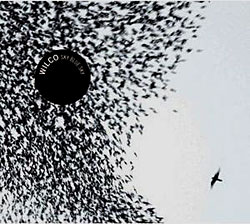
WILCO: <I>Sky Blue Sky</I><BR>
Nonesuch 131388 (CD). 2007. Wilco, prods.; TJ Doherty, eng.; Jim Scott, mix; Bob Ludwig, mastering. AAD? TT: 51:18<BR>
Performance *****<BR>
Sonics ****
You gotta hand it to <I>The New York Times<I>; they do try and cover the audio industry. And when it comes to dumbing it down, they truly aren't fucking around. Rather than have to read an article from last week's <B>Circuits</B> section on how MP3's <I>might</I> someday sound better, <B>A Quest for That Warm Sound of Old</B> (June 5, 2007), which was printed just above a piece entitled <B>Making Tunes a Fixture on the Patio</B> (snaring more Jersey readers is obviously an NYT priority) here are the some beauties, salient or otherwise.
"The more you turn it up, the punchier it sounds…"
"…tries to sweeten digital sound by putting back what compression has taken out."
"…what are people really going for, accurate reproduction or pleasing reproduction?"
"Our technology tricks your brain into hearing something that isn’t there."
"When you can't hear the difference anymore, it's overkill."
"The process is never perfect."
"With a good recording, the quality may be improved by tweaking the playback."
"Don’t throw away your records yet."
Forty years ago today, June 1, 1967, The Beatles taught the world what innovation really sounded like.