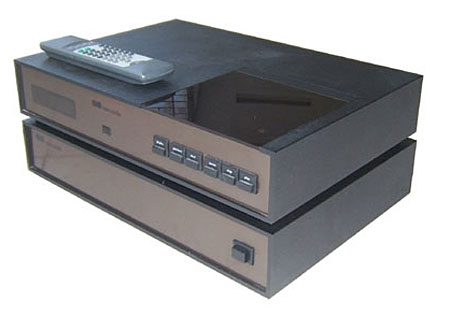
Naim NA CDS CD player
"A reasonable man adapts himself to the world around him. An unreasonable man expects the world to adapt to him. All progress, therefore, is made by unreasonable men."


"A reasonable man adapts himself to the world around him. An unreasonable man expects the world to adapt to him. All progress, therefore, is made by unreasonable men."
As an equipment reviewer, I find it helpful to talk to audiophiles and music lovers about their systems and upgrade plans. Fortunately, <I>Stereophile</I>'s computer supplier and troubleshooter, Michael Mandel, also happens to be an avid audiophile. I say "fortunately" because I rarely get a chance to talk to people who put down their hard-earned money for hi-fi components. Instead, I usually converse with equipment designers, technicians, and marketing types, hardly people who reflect the buying public. It is thus a valuable education to get feedback from real-world consumers to find out what kind of products they want, their priorities, and how much they're willing to spend for certain levels of performance. They have a view distinctly different from that of the often jaded reviewer who is used to enjoying the best (albeit temporarily) without agonizing over its cost.
During an Audio Engineering Society meeting where a former colleague of mine was giving an arcane technical discussion of the optical considerations of data retrieval from a Compact Disc, a longtime AES member whispered to me: "What happened to the good old days of AES meetings when we talked about things like tape bias and saturation?"
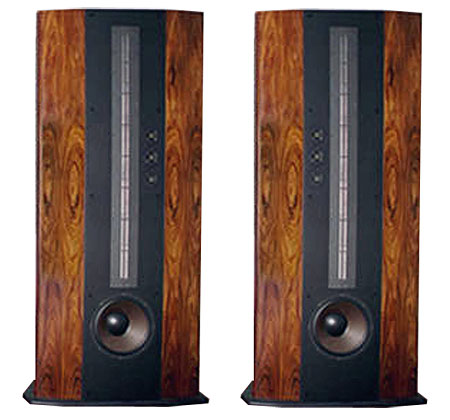
Whenever anyone marvels at the enormous Genesis II.5 loudspeakers in my house, I'm quick to tell them that the II.5 is the <I>smallest</I>, least expensive loudspeaker made by Genesis Technologies. In fact, the company makes two larger speaker systems, the $33,000 Genesis II and the $70,000 Genesis I (footnote 1).

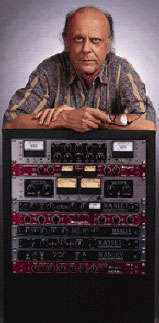
Doug Sax is undoubtedly one of the most controversial and outspoken figures in audio. As co-founder, with Lincoln Mayorga, of Sheffield Lab, Doug pioneered the first modern direct-to-disc recording. His perfectionist methods may be controversial, but the results certainly are not: Sheffield Lab recordings are nearly universally praised by the audiophile community, while the <I>Billboard</I> Hot 100 always features at least one Sax-cut disc.
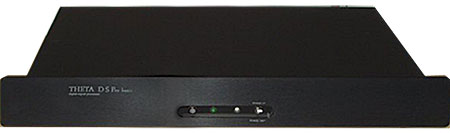
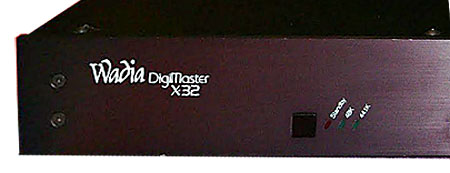
I find it more than a little ironic that in 1990 the only two digital-to-analog converters to employ a new state-of-the-art DAC also use vacuum tubes. Many in the audio community consider tubes an anachronism, and find it surprising and humorous that they are still used in newly designed audio products. The fact remains, however, that these two tubed digital processors achieve the best digital playback currently available—and by a wide margin. Moreover, their respective designers' technical savvy and passion for building leading-edge products is reflected in their choice of these superlative and <I>very</I> expensive new DACs. Is it mere coincidence that both designers also chose vacuum tubes to realize their vision of no-compromise digital playback?
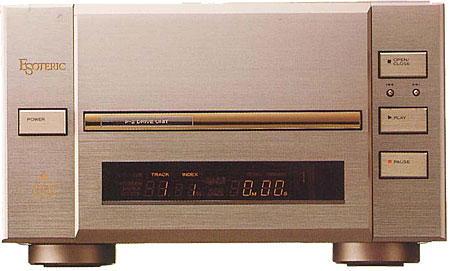
The whole idea that different CD transports have different sonic characteristics when driving the same digital-to-analog converter is a vexing problem. It is easy to prove that even the cheapest CD players recover the data stored on most CDs with bit-for-bit accuracy, thus disproving the widespread and erroneous belief that errors in the digital code are commonplace and affect presentation aspects such as imaging, soundstage depth, textural liquidity, etc (footnote 1). If the datastream driving the digital converter is comprised of the same sequence of ones and zeros, regardless of the transport, what other factors could account for the sonic differences between CD drives reported by many listeners?
"Experience which is not valued is not experienced....Value is at the very front of the empirical procession."</I>—Robert M. Pirsig, <I>Lila</I>
Audiophiles constantly seek ways to improve the experience of hearing reproduced music. Preamps are upgraded, digital processors are compared, turntables are tweaked, loudspeaker cables are auditioned, dealers are visited, and, yes, magazines are read—all in the quest to get just a little closer to the music.