Headphone Reviews

Sort By: Post DateTitle Publish Date

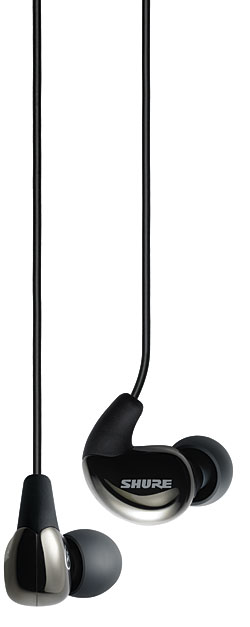
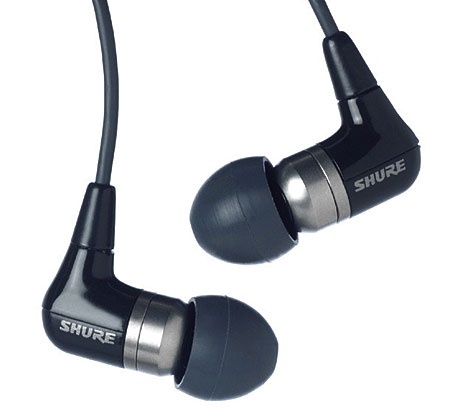
Shure E4 in-ear earphones

In New York and other major cities, I understand, bus accidents are a real problem. Buses turn right and failing to yield to pedestrians. Clueless pedestrians walk in front of buses. I haven't seen any statistics, but I'm guessing that in this era of cell phones and iPods, the problem has gotten worse: not only do such devices distract you, they make it harder to hear warning signs—such as the sound of a municipal bus bearing down on your ass.


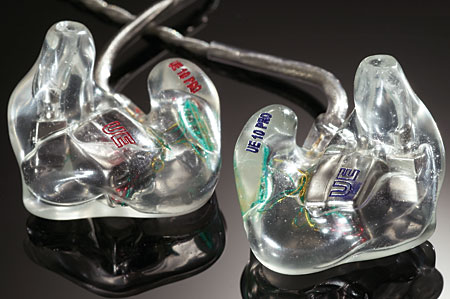
Ultimate Ears UE-10 Pro in-ear headphones

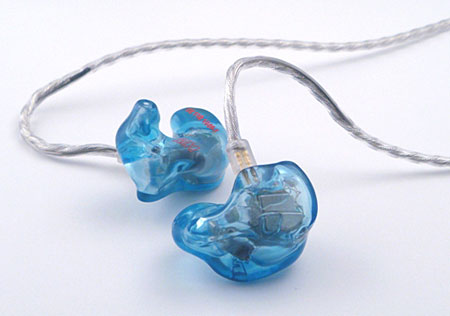
All of a sudden, it seems there's a renaissance in in-ear monitors. Used to be there was just Etymotichttp://www.stereophile.com/headphones/805">Etymotic;, but now Etymotic, Shurehttp://www.stereophile.com/headphones/504shure">Shure;, and Ultimate">http://www.stereophile.com/headphones/1204ultimate">Ultimate Ears are all producing high-performance in-ear headphones. It's almost enough to make me suspect we audiophiles have become a marketing juggernaut.


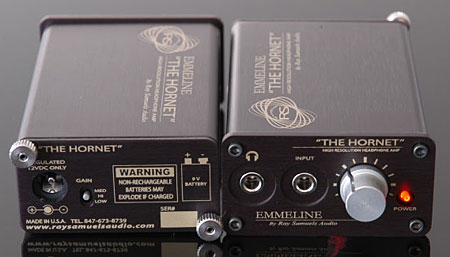
Ray Samuels Audio Emmeline The Hornet headphone amplifier

I've been a little remiss in writing about one of the best tools for travel I've experienced recently: Ray Samuels Audio's Emmeline The Hornet ($350), a tiny (3" L by 2" W by 1" H) rechargeable portable headphone amplifier. I tend to travel with my iPodhttp://www.stereophile.com/mediaservers/934">iPod; packed with hi-rez music files and a pair of low-impedance headphones. That's not a marriage made in heaven, so I also need a headphone amplifier. Over the years, portable headphone amps have gotten better and better while getting smaller and smaller. The Hornet is the smallest I've discovered so far and is my current favorite.


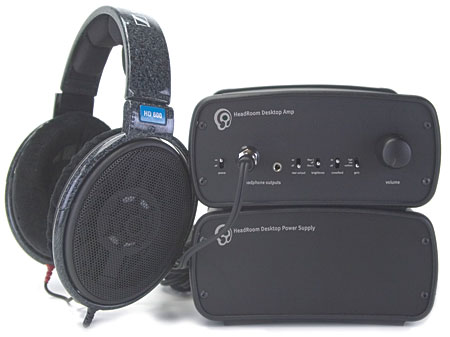
HeadRoom Desktop D/A headphone amplifier

Looking at all of the high-end headphones and headphone accessories available today, it's difficult to even remember how barren the head-fi landscape was in the early 1990s. Back then, headphones got no respect, except for exotic, expensive electrostatic models, yet most of the world listened to music through headphones all the time, mostly through crappy cans connected to portable players. (Well, maybe it wasn't that different a landscape.)


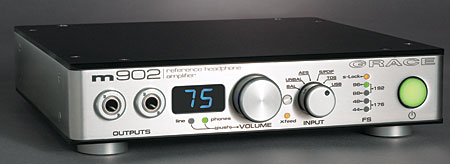
Grace Design m902 Reference D/A headphone amplifier

In his bimonthly column, "The Fifth Element," John Marks has tried to identify pro-audio components that would be of interest to audiophiles. In his June 2005 episode, John wrote about Grace Design's m902 D/A headphone amplifier ($1695), the Colorado company's replacement for the 901, which had long been a favorite of his. Changes include: the handling of single-wire sample rates of up to 192kHz; unbalanced analog outputs, controlled by the front volume control, to allow the unit to be used as a preamplifier; a cross-feed processing circuit licensed from www.meier-audio.de; power-supply revisions; and the provision of a USB digital input, in addition to S/PDIF, AES/EBU, and TosLink.

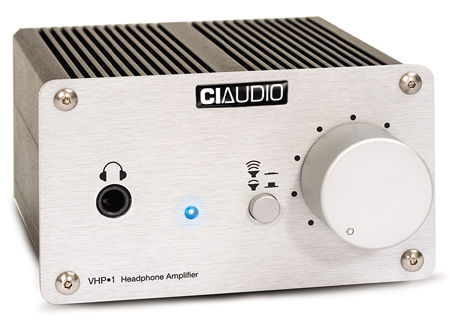
Channel Islands Audio VHP•1 headphone amplifier

Back in March, I wrote a reviewlethttp://www.stereophile.com/images/newsletter/305stph.html">reviewlet; of Channel Islands Audio's VHP•1 headphone amplifier for the Stereophile eNewsletter. (What—you aren't receiving that free download yet? Well, log on to www.stereophile.com and opt in.) The VHP•1 has continued to enchant me—reason enough to examine it in greater detail, I reckoned. But the real reason I returned to the VHP•1 ($349) is that CIA's Dusty Vawter recently sent me his new VAC•1 ($159), a replacement power supply for the VHP•1's stock wall-wart supply. Could a new power supply really offer a substantial improvement in performance?


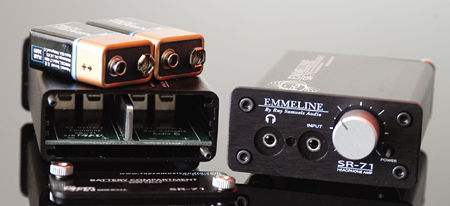
Ray Samuels Audio Emmeline SR-71 portable headphone amplifier

The Emmeline SR-71 portable headphone amplifier ($395) is small but not light. Housed in an extruded-aluminum chassis with a bolt-on faceplate and a rear panel and battery cover that attaches with a thumb-screw, it measures 3.5" by 2.5" by 1.5" and weighs 11oz. That sounds light, especially compared to some of the headphone amps I've carted around in the past—not to mention their four–D-cell extended power supplies—but in the iPod era, it's the portable equivalent of a class-A power amp. So why would anybody be willing to lug it around?


Advertisement
Advertisement
Advertisement