Digital Processor Reviews

Sort By: Post DateTitle Publish Date

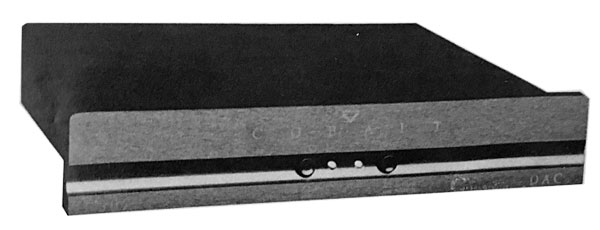
Timbre Technology TT-1 D/A processor
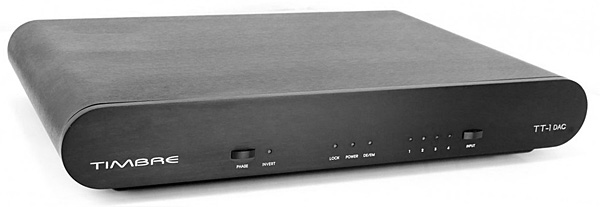
As the sides of the slim-line Timbre Technology TT-1 DAC are radiused rather than flat, it's elegant compared to its typical boxy competition. While the TT-1's handsome shape stands out more than your average audiophile device, its curved sides help create a stronger, less resonant shape than the usual box, and serve as just one of the many elements contributing to a high degree of mechanical integrity and damping.
Theta DS Pro Generation V digital processor

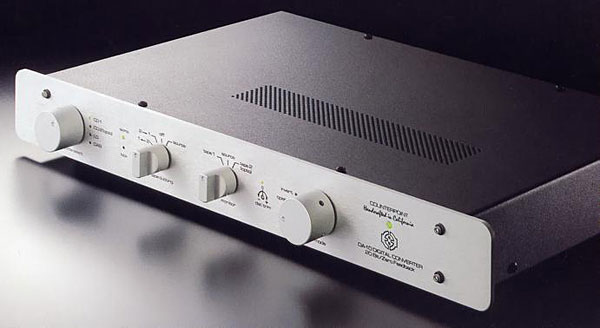
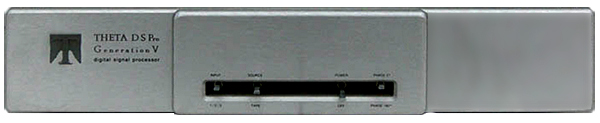
Some high-end audio companies develop reputations for having a particular "sound." This reputation develops when every product the company makes has a similar sonic flavor. These products appeal to certain customers who like the company's sound, and who therefore tend to stay with that company's products year after year. Unfortunately, such an approach can limit a manufacturer's appeal to a broader audience.

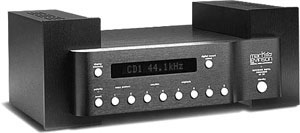
Mark Levinson No.30.5 Reference digital processor

The arrival of the Mark">http://www.stereophile.com/digitalprocessors/mark_levinson_no30_referen… Levinson No.30 digital processor more than 2½ years ago marked a turning point in digital-audio reproduction. Although the No.30's $13,950 price tag put it out of reach of all but a few audiophiles, its stunning performance suggested that much more musical information was encoded on our CDs, waiting to be recovered by better digital processors. Further, it was inevitable that this level of performance would become less expensive over time. I was more excited by the No.30 than I've been over any other audio product. In fact, its musical performance was so spectacular that it alone occupied the Class A category in Stereophile's "Recommended Components."


Theta Digital Cobalt 307 digital processor

One measure of a high-end product designer's talent is the musical success of his top-of-the-line product. This is his statement to the world of what he can accomplish—a kind of "personal best" that defines the upper limits of his talent. Because he knows of no way to make the product better, the component stands as the ultimate testimonial to his skill.

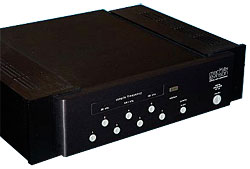
Mark Levinson No.35 D/A processor

When a manufacturer sets out to design and build a product, be it in high-end audio or any other field, the final retail price is usually a prime consideration. Parts and assembly are only part of the equation; there also must be enough buyers to amortize the design and development costs. If the product is to be a flagship model—something a company hopes will give a lift to its entire line—engineers will sometimes throw caution to the winds, designing a product without thought to its ultimate price, which is only set after the design is complete. When Madrigal Audio Laboratories set out to design their No.30 Reference Digital Processor, they appear to have chosen exactly this approach.
Meitner IDAT D/A processor

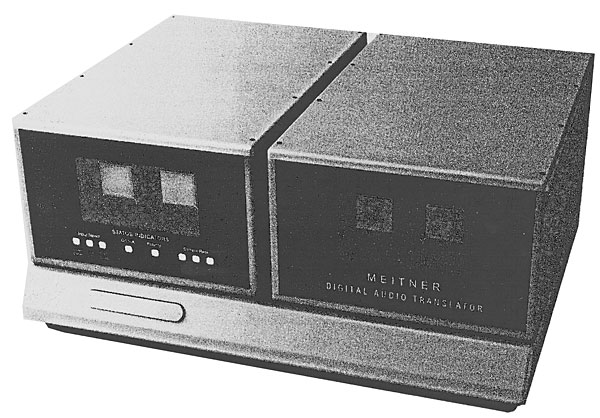
There are as many ways of designing a digital-to-analog converter as there are engineers. One approach is to select parts from manufacturers' data books and build the product according to the "application notes" provided by the parts manufacturers. This is the electronic equivalent of a paint-by-numbers kit.


A more creative engineer may add a few tricks of his own to the standard brew. Bigger and better regulated power supplies, careful circuit-board layout, tweaky passive components, and attention to detail will likely make this designer's product sound better than the same basic building blocks implemented without this care. Indeed, the vast range of sonic flavors from digital processors containing very nearly the same parts attests to the designer's influence over a digital processor's sound.

Advertisement
Advertisement
Advertisement