PC Magazine just posted a fairly in depth article entitled "How to Buy the Right Headphones". Being that the article is published by a computer technology. it's not all that bad. It falls way short many, many areas but at least it states right at the beginning just how important a good pair of headphones are and just how badly those white Apple earbuds suck. They also take a few swipes at Bose:
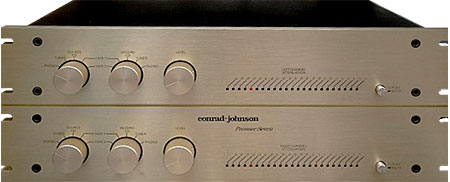
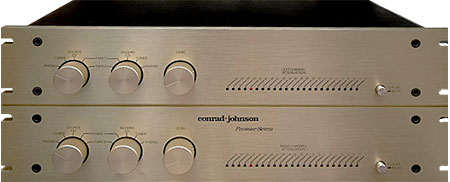
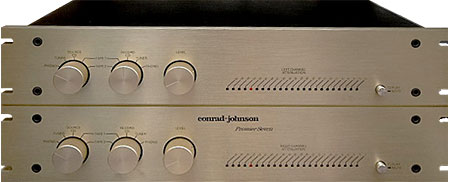
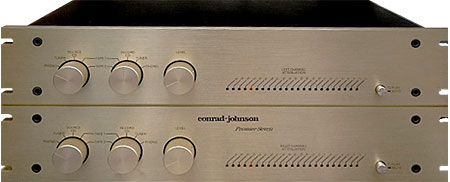
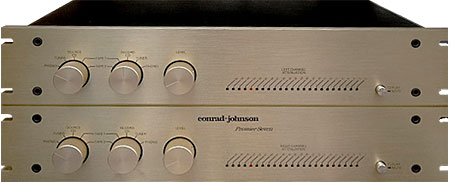
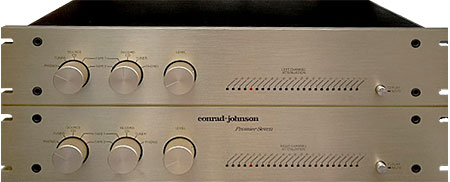
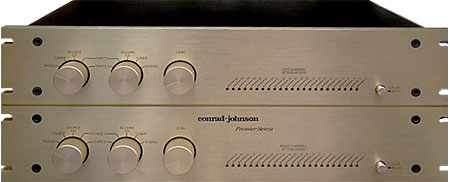
Conrad-Johnson Premier Seven preamplifier John Atkinson August 1989
Whenever an audio high-ender thinks about tubes, he usually thinks about Audio Research. This is only natural, because Audio Research Corporation was almost single-handedly responsible for saving tubes from oblivion in the early '70s when everyone else switched to solid-state. But ARC was soon joined in its heroic endeavor by an upstart company called Conrad-Johnson, which entered the fray in 1977 with its PV-1 preamp, priced at an affordable (even then) $500.
Conrad-Johnson Premier Seven preamplifier Measurements
Whenever an audio high-ender thinks about tubes, he usually thinks about Audio Research. This is only natural, because Audio Research Corporation was almost single-handedly responsible for saving tubes from oblivion in the early '70s when everyone else switched to solid-state. But ARC was soon joined in its heroic endeavor by an upstart company called Conrad-Johnson, which entered the fray in 1977 with its PV-1 preamp, priced at an affordable (even then) $500.
Conrad-Johnson Premier Seven preamplifier Specifications
Whenever an audio high-ender thinks about tubes, he usually thinks about Audio Research. This is only natural, because Audio Research Corporation was almost single-handedly responsible for saving tubes from oblivion in the early '70s when everyone else switched to solid-state. But ARC was soon joined in its heroic endeavor by an upstart company called Conrad-Johnson, which entered the fray in 1977 with its PV-1 preamp, priced at an affordable (even then) $500.
Conrad-Johnson Premier Seven preamplifier Tape Loops
Whenever an audio high-ender thinks about tubes, he usually thinks about Audio Research. This is only natural, because Audio Research Corporation was almost single-handedly responsible for saving tubes from oblivion in the early '70s when everyone else switched to solid-state. But ARC was soon joined in its heroic endeavor by an upstart company called Conrad-Johnson, which entered the fray in 1977 with its PV-1 preamp, priced at an affordable (even then) $500.
Whenever an audio high-ender thinks about tubes, he usually thinks about Audio Research. This is only natural, because Audio Research Corporation was almost single-handedly responsible for saving tubes from oblivion in the early '70s when everyone else switched to solid-state. But ARC was soon joined in its heroic endeavor by an upstart company called Conrad-Johnson, which entered the fray in 1977 with its PV-1 preamp, priced at an affordable (even then) $500.
Whenever an audio high-ender thinks about tubes, he usually thinks about Audio Research. This is only natural, because Audio Research Corporation was almost single-handedly responsible for saving tubes from oblivion in the early '70s when everyone else switched to solid-state. But ARC was soon joined in its heroic endeavor by an upstart company called Conrad-Johnson, which entered the fray in 1977 with its PV-1 preamp, priced at an affordable (even then) $500.
Whenever an audio high-ender thinks about tubes, he usually thinks about Audio Research. This is only natural, because Audio Research Corporation was almost single-handedly responsible for saving tubes from oblivion in the early '70s when everyone else switched to solid-state. But ARC was soon joined in its heroic endeavor by an upstart company called Conrad-Johnson, which entered the fray in 1977 with its PV-1 preamp, priced at an affordable (even then) $500.
Determined to find out more about <A HREF="http://www.stereophile.com/floorloudspeakers/608revel">Revel's Ultima Salon2</A>, I tracked down designer <A HREF="http://www.stereophile.com/interviews/390voecks">Kevin Voecks</A> late on the second day of the <A HREF="http://blog.stereophile.com/ces2008">2008 Consumer Electronic Show</A>. I persuaded him to step outside the demonstration suite of Harman International Industries, Revel's owner, high atop the Las Vegas Hilton. We spent an hour chatting about Voecks's design goals for Revel's new flagship. I asked Kevin what had led his team at Revel to develop a new Ultima Salon loudspeaker after 10 years?
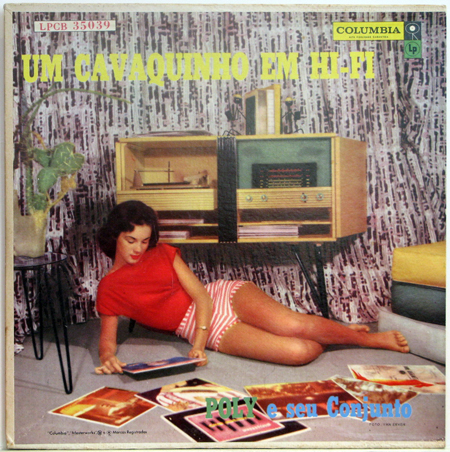
I don't have to tell you that LP covers are cool. Right? You're already very much aware of all the bold colors and furious fonts and completely outrageous concepts. Photo editors back in the day must have had mad freedom. <i>Alright, cats, here's the plan: We're going to start with a gorilla. He's dressed in a tux. Give the gorilla a gigantic banana. But it's not really a banana. The gorilla will peel the banana to reveal an extremely voluptuous bartender. In one hand, she'll have a tray of martinis, while, with her other hand, she'll be lighting the gorilla's giant cigar. Dig?</i>


PC Magazine just posted a fairly in depth article entitled "How to Buy the Right Headphones". Being that the article is published by a computer technology. it's not all that bad. It falls way short many, many areas but at least it states right at the beginning just how important a good pair of headphones are and just how badly those white Apple earbuds suck. They also take a few swipes at Bose: