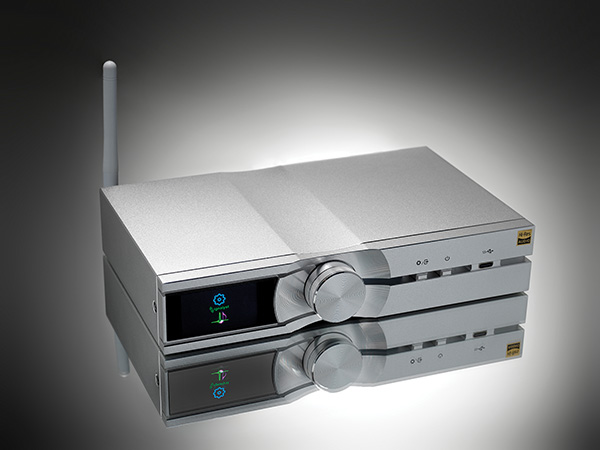
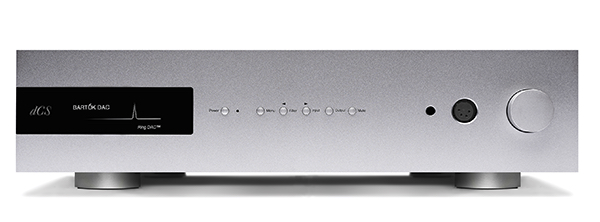
Stereophile writers and website commentors often speak to the topic of the ongoing rise in retail pricing at the upper levels of the hi-fi market. Companies producing cost-no-object designs make regular appearances in the hardware reviews published here. However, a countervailing vector is also at play in the consumer hi-fi sector: a trend toward bringing to market products that are smaller and more economical than the competition while offering an ever-increasing variety of features and continually improved performance, notably in terms of measurable specifications.
This dialectic can sometimes play out within the same company. Abbingdon Music Research (AMR), which is based in Southport, UK, was founded in 2000. At first, under the AMR brand, the company focused on high-end audio component separates with price points toward the upper end of the spectrum. The world has a way of intervening, though, even with the best-laid business plans. AMR Director Vince Luke describes in a video how his company made a deliberate choice to "pivot from high end to low end" following the financial crash of 2008. AMR's iFi Audio division debuted at the Rocky Mountain Audio Fest in 2012, offering a handful of portable products. They were a hit. The iFi line has since expanded to include more than 50 designs, and new products are introduced with impressive frequency.
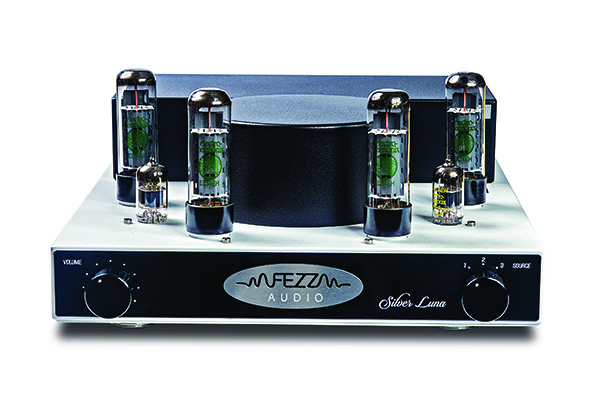
Fezz Audio Silver Luna Prestige integrated amplifier
Aug 04, 2023
The last time I had to box up my roughly 2600 records, during a move, I cursed up a storm and drank almost an entire bottle of tequila. I struggled to keep the vinyl alphabetized and kept running out of boxes, markers, and tape. And I discovered that I had more LPs of music by Miles Davis and Bach than by anyone else. In third place was George Jones.
The vectors of tradition, originality, and talent came together in Jones to produce a strange and unlikely gift. His music can make you feel things as suddenly and deeply as just about anyone's, but on top of this Jones had the greatest instrument of any male vocalist in country music, almost outlandish in its range and power. Then there was his technique: He could wring four syllables out of a four-letter word, and even when performing the same hit night after night, he varied the stresses and melismatic leaps depending on his mood. Sinatra called him "the second-best singer in the world."
I view poetry as more than a literary genre. It's a worldview and a state of being that frames my daily experience in the supernal. I've consumed a lifetime keeping my senses peeled for authentic, manmade mysteries, especially in art and music. Music is my favorite hunting ground, and nowhere have I found mysteries as DNA-deep as the 59 takes of 29 songs recorded in only five days by Delta blues legend Robert Johnson (19111938). I've played the Columbia Records 1961 anthology King of the Delta Blues Singers (Columbia LP CL 1654) 100 times since my days in Chicago as a teenager, and I still haven't grasped more than a portion of its juke-joint poetics.
Audio engineers never get the credit they deserve. The same is true for music arrangers, who are also an unheralded but hugely fundamental part of any musical success. As a composer, conductor, and inventive arranger of popular music, the modest but multitalented Vince Mendoza says he's most focused on enhancing the song he is arranging and the story it is trying to tell.
"Young arrangers are very concerned with their own voice and spinning their own melodies and turning things upside down and backwards, and they forget what a song really is about," he told me in a recent Zoom conversation from his home in Los Angeles. "You could be writing about heartbreak, and there are a million and one ways to tell that story, but the listener still has to feel it."