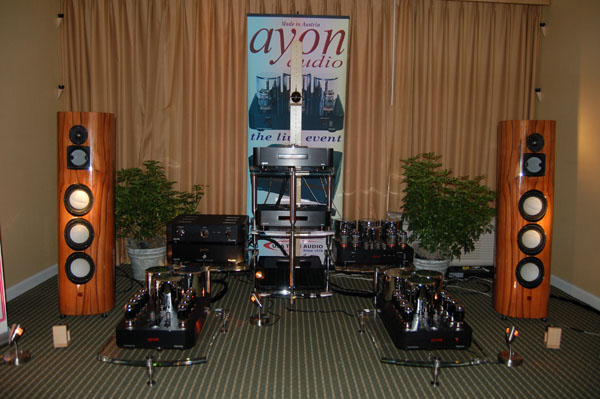
The Ayon Audio room used a pair of gracefully curved LumenWhite Artisan speakers ($35,000/pair) with the Ayon Orthos II monoblock amplifiers ($24,000/pair) and the Ayon CD-5 CD Player with integrated preamplifier ($11,380). The CD-5 features USB, AES/EBU, S/PDIF, i2S and Toslink inputs and S/PDIF (RCA), i2S, and AES/EBU digital outputs. Cable was from Synergistic Research and the equipment rack was the Bassocontinuo ($10,000) from Italy, shown here with German Plexiglas shelves. Around the room you’ll also notice the Synergistic Research Art devices inviting comment.
I noted a very strong center image, lots of body/weight, and a physical yet nimble presentation.
San Pedro, CA-based retailer Audio Summa brought along a bunch of gear from Silverline Audio, Conrad-Johnson, Parasound, Brown Electronic Labs (BEL), Blue Circle Audio, and Analysis Plus. While I was in-room, we listened to the Silverline Audio Bolero Supreme loudspeakers ($12,000/pair standing on the inside in the picture), BEL 1001 MkIV class-A solid-state amplifier (not for sale), a tube-based preamp designed and built by Alan Yun of Silverline Audio ($20,000) and the Ecstasy Model 20 tube CD player also from the mind and hands of Alan Yun ($12,000). Cables were from Analysis Plus and BEL "The Wire."
The sound in the Audio Summa room was fast and a bit furious, leaving little time for decay. "Pace-y" read my notes.
More to get excited about: FatCat Records, the Brighton, UK-based label, home to some of my favorite bands and artists (Hauschka, Animal Collective, Black Dice, Johann Johannsson, Sylvain Chauveau, to name a few), has announced the new Palmist imprint, “a project dedicated to releasing limited, vinyl-only runs of artists we love who are home-recorded or otherwise steeped in the DIY tradition.”
The first three releases will be 12” split singles, scheduled for US release on August 16th:
To write about music, you must first come to terms with your fanboy urges. You must brush off the fairy dust and see your heroes for who they really area picture that in many cases is all too human. Yet that first blush of idolatry is an experience you never quite forget, no matter how many times you interview a person.
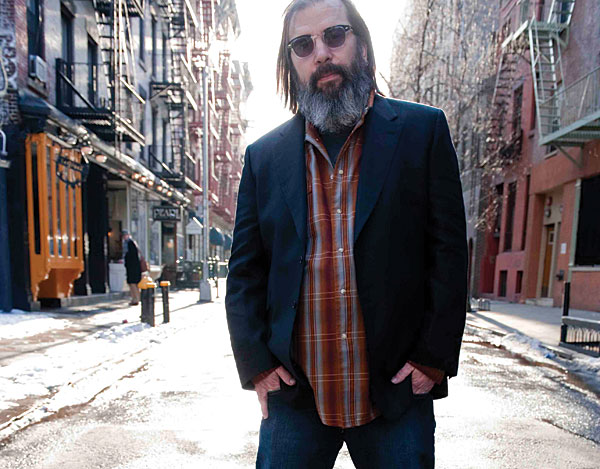
There was a time, back in the St. Elmo's Fire 1980s, when Steve Earle's first album, Guitar Town, was an object of abject slobbery for a generation of rock critics. Turning a near-mint LP copy of that album over in his hands, Earle begins to reminisce about a record that changed Nashville and country-rock music and, for many, remains his undisputed career masterpiece.
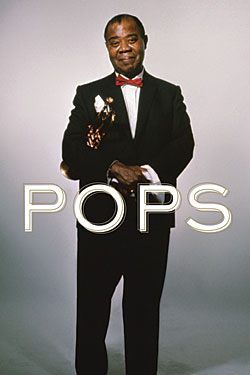
Pops: A Life of Louis Armstrong, by Terry Teachout (Houghton Mifflin Harcourt, 2009): 475pp. Hardcover, $30; paperback, $16.95.
If you plan to read just one book about Louis Armstrong, whose virtuosic cornet solos pushed jazz past rudimentary ensemble playing and launched his phenomenal career as an instrumentalist and singer, make it Pops. Teachout built it on brickwork laid by authors who preceded him, so you'll benefit from their research, as well as from narrative on 650 previously private reels of tape that Armstrong recorded and archived. Moreover, Teachout is a musician and music critic who offers opinions on his subject's discography.
Few people seem to realize that Armstrong (19011971) called himself LOU-iss. "All White Folks call me Louie," he once noted, and in some instances that may have been patronizing. In others, it was surely an instinctive response to the man's infectious warmth and informality.
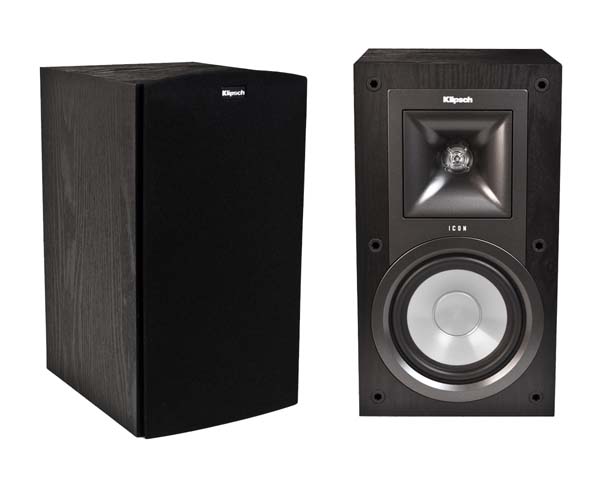
Klipsch recently launched their new Icon series, a family of relatively affordable loudspeakers to be sold exclusively in Best Buy stores throughout the US. The five models include two floorstanders (KF-28, $900/pair; KF-26, $700/pair), one bookshelf (KB-15, $249/pair), one center channel (KC-25, $249 each), and one surround (KS-14, $279 each). Matching SW-350 ($350) and SW-450 ($450) subwoofers are also available at Best Buy.
Said Mark Casavant, vice president of product development for Klipsch:
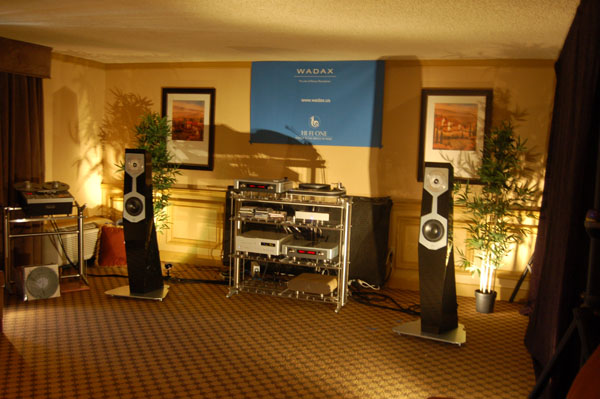
So you want cutting edge? Innovation? I’d say the team in the HiFi One room have you covered. I hope I can do this elevator-speech version justicethe Wadax PRE1-Phono solution provides you with a custom RIAA curve optimized for your turntable to nanovolt level signal precision. They refer to this process as "mapping." How do they do it? Wadax created a laquer "master" that is played on your turntable and the Wadax musIC chip in the PRE-1 captures the associated data and sends it, wirelessly via the Internet, back to Wadax where they analyze and optimize the RIAA curve in your PRE1-Phono based on the data they captured directly from your turntable. Or maybe I should say!
And really, that's not even half the story since that PRE1 can be configured as a line-level preamplifier, preamp with integrated DAC, with the above mentioned phono stage, with "WADA optimized PureDAC mode," and as a phono stage with step-up amplifier. You should visit the Wadax website for the whole story.
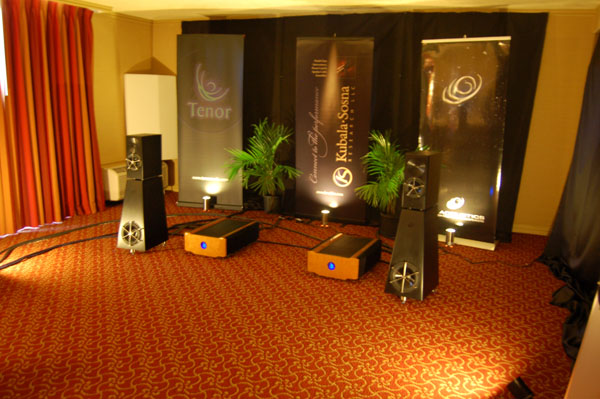
"Tons of body, weight, speed, great, big and open. How big can a flamenco guitar be?" read my notes from the sonically impressive YG Acoustics room. Speakers were the YG Kipod 2 ($49,000/pair). Associated electronics: Tenor 350M monoblocks (Cdn$100,000/pair), Tenor Line 1/Power 1 preamplifier (Cdn$75,000), Bryston BDP-1, dCS Scarlatti DAC, with cable by Kubala-Sosna.




 Pops: A Life of Louis Armstrong, by Terry Teachout (Houghton Mifflin Harcourt, 2009): 475pp. Hardcover, $30; paperback, $16.95.