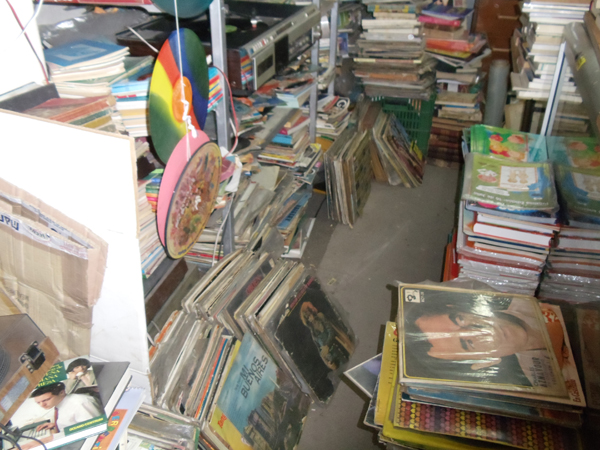
“Dude, I have a huge stack of records you should probably take a look at, tons from Tía Viví, Dad, Mom, and Bobe. There’s probably some stuff in there you can take with you,” Alberto advised.
“It’s fine bro. We’re gonna go record shopping on Saturday.”
“Dude. Just look!”
“I’m good for now. Trust me.”
My brother should not have tickled the monster’s belly.
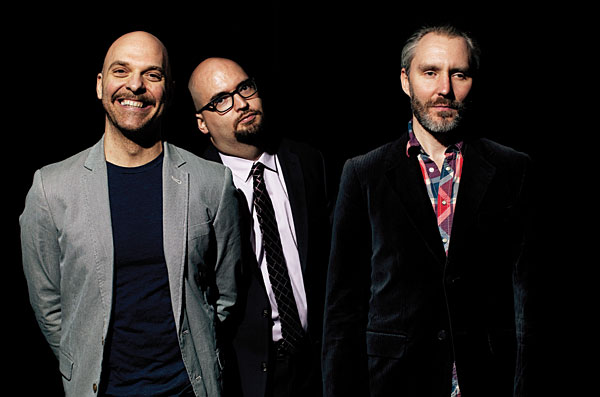
In a discussion about what their music isand is notDave King, drummer for the Bad Plus, remembers opening a show for free-jazz patriarch Ornette Coleman at the New Jersey Performing Arts Center. After their set, the band joined the audience to watch Coleman.
"After the first couple tunesand this was in a seated theaterI swear, half the audience had left. Fifty years into your career, and he's still making people want to check it out and then decide if they can take it. And that's every night, I bet.
There I was, sitting on the orange couch, with just a few hours to kill before my scheduled departure to Denver, ColoradoI'd been invited to the eighth annual Rocky Mountain Audio Fest, where surely I'd be moved to tears by some of the greatest, most advanced, most expensive hi-fi systems known to manand I could not believe the awesome sound coming from my modest little stereo.
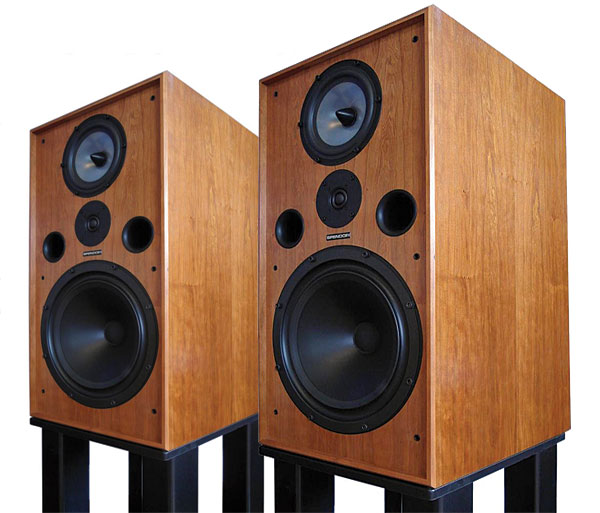
In late 1996, as Listener magazine entered its third year of existence, the Spendor SP100 became my reference loudspeaker, and would remain so for a considerable time. My decision to try the SP100 was influenced by John Atkinson's review of its antecedent, the nearly identical Spendor S100, in the December 1991 issue of Stereophile. But my purchase decision came down to two things: The SP100 did virtually everything one could ask a modern loudspeaker to do, requiring in the process far less amplifier power than usual. Just as important at the time, it sold for only $3300/pairwhich explains how I could afford them on the spotty salary of a teacher turned fledgling publisher.