There is a war of words—and numbers—being waged in the struggle over copyright infringement and the illegal copying of music. Downloading music is a boon to the music industry, claim some, because it leads to increased sales of CDs. Others present statistics that undeniably prove that downloading will be the death of the music business.
Back in 1979, most of us had never seen a digital audio product, much less heard one, but J. Gordon Holt knew what was coming: "The beginning of 1979 saw the introduction of the first samples of what will finally, after 79 years of supremacy, lower the curtain on the mechanically-traced disc: The digital recording." In "<A HREF="http://www.stereophile.com//asweseeit/240/">High Fidelity at the Crossroads</A>," Holt looks at the new twinkle in Sony's eye and makes some sage observations.
When spying this press release a couple of days ago, I had to read it twice—this was too good to be true. A couple of years back in the September 1997 (or as JA likes to put it: Vol.20 No.9) <I>Stereophile</I> "Industry Update," I had reported on the then-discovered "synchronicities" phenomena: playing certain classic rock albums, when sync'ed up with certain classic films yielded several uncanny coincidences twixt music and screen. Watching and listening this way could lead one to almost believe that the albums were created as soundtracks to the films.
According to numbers just released by the <A HREF="http://www.ce.org">Consumer Electronics Association</A> (CEA), April audio factory-to-dealer sales shot up by 13% to $611 million, representing a year-to-date increase of 10%. The CEA says that audio revenues in all categories except aftermarket autosound experienced double-digit growth in both monthly and year-to-date sales. Aftermarket autosound remained steady, keeping pace with its record-breaking sales in 1999.
CD changers holding hundreds of discs at a time have found their place in a sizable percentage of consumer homes, and have proven especially useful in the custom installation market. Fans of these mega-changers love to drop their discs into one place, never having to crack open a CD case again. Drawbacks, however, include not being able to easily move the disc from home to car or portable, and the mechanical whirring and clanking the machines make as they slowly plow through the user's playlist.
With the music industry in retreat from classical music, dozens of the nation’s symphony orchestras, opera and ballet companies have decided to bring their work directly to the people. On June 12, an association of 66 orchestras and opera groups signed an agreement with the <A HREF="http://www.afm.org/">American Federation of Musicians</A> (AFM) that will let them put their music on the Internet, without interference or fee extraction by the recording business.
Richard Gray's Power Company 400S AC line conditioner Michael Fremer, November 2004
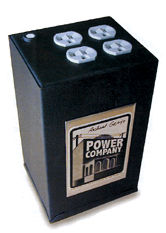
The Richard Gray's Power Company 400S arrived on the audiophile scene last year with a bang. Weighing in at a hefty 20 lbs and at $700 a pop, this four-outlet power conditioner, according to the paperwork, "effectively 'positions' audio, video, and home theater equipment 'electronically closer' to your utility company transformer, without introducing any type of series electronic 'traps' or capacitors into the circuit, which we feel degrade the performance of certain equipment, and severely limit the amount of current they can handle."
Richard Gray's Power Company 400S AC line conditioner Letters part 4
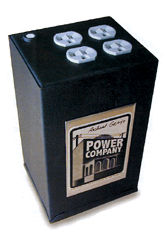
The Richard Gray's Power Company 400S arrived on the audiophile scene last year with a bang. Weighing in at a hefty 20 lbs and at $700 a pop, this four-outlet power conditioner, according to the paperwork, "effectively 'positions' audio, video, and home theater equipment 'electronically closer' to your utility company transformer, without introducing any type of series electronic 'traps' or capacitors into the circuit, which we feel degrade the performance of certain equipment, and severely limit the amount of current they can handle."
Richard Gray's Power Company 400S AC line conditioner Letters part 3
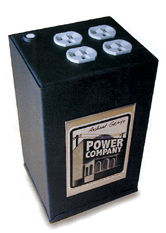
The Richard Gray's Power Company 400S arrived on the audiophile scene last year with a bang. Weighing in at a hefty 20 lbs and at $700 a pop, this four-outlet power conditioner, according to the paperwork, "effectively 'positions' audio, video, and home theater equipment 'electronically closer' to your utility company transformer, without introducing any type of series electronic 'traps' or capacitors into the circuit, which we feel degrade the performance of certain equipment, and severely limit the amount of current they can handle."