I recently bought a turntable, the first I've owned in about 15 years. I had sold my vinyl collection—a mix of classic rock, early 1980s pop, and the odd jazz or classical LP—when I was in grad school, for economic reasons: I needed the money for rent, or food, or beer, or something. Nor do I know what happened to my old plastic turntable; more than likely, I left it curbside for anyone strolling by who was able to appreciate its value.
A grainy film is said to exist that proves the viability of a mechanical antigravity device. The inventor, a native of Syracuse, New York named Harry W. Bull (footnote 1) placed his so-called "bootstrap machine" on a bathroom scale, focused a borrowed home movie camera on the dial, powered up the machine, and watched as the numbers spun backward. This event, and the development work that led to it, were the basis for a series of articles—and a subsequent exchange of heated letters—in <I>Popular Science</I> magazine. The year was 1935.
A grainy film is said to exist that proves the viability of a mechanical antigravity device. The inventor, a native of Syracuse, New York named Harry W. Bull (footnote 1) placed his so-called "bootstrap machine" on a bathroom scale, focused a borrowed home movie camera on the dial, powered up the machine, and watched as the numbers spun backward. This event, and the development work that led to it, were the basis for a series of articles—and a subsequent exchange of heated letters—in <I>Popular Science</I> magazine. The year was 1935.
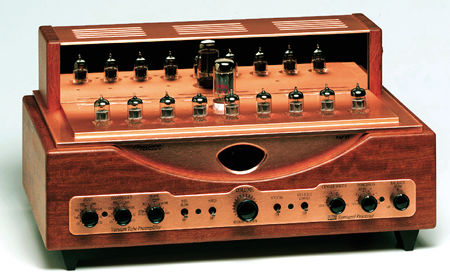
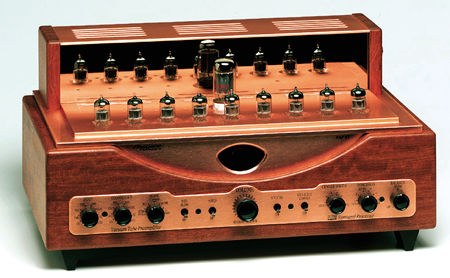
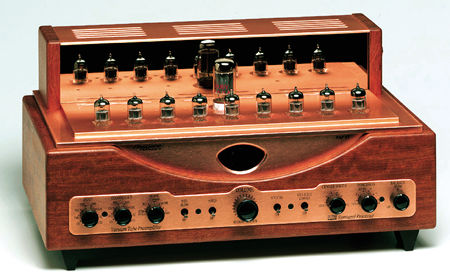
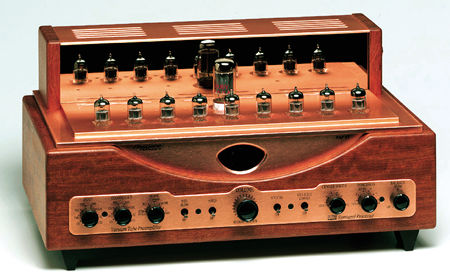
When PR guy Adam Sohmer first told me about the Fosgate Audionics FAP V1, I thought that the impressive-looking device would be the first all-tube preamp-processor—heck, the first tube <I>anything</I>—in my multichannel system. Then I looked closer at the user's manual I'd downloaded from Fosgate's website. Hmmm. No Dolby Digital, no DTS—just Dolby Pro Logic. Of course, the FAP V1 is Jim Fosgate's signature expression of Dolby Pro Logic, and I guess that counts for something. But the more I thought about it, the more interesting a prospect the FAP V1 seemed.
When PR guy Adam Sohmer first told me about the Fosgate Audionics FAP V1, I thought that the impressive-looking device would be the first all-tube preamp-processor—heck, the first tube <I>anything</I>—in my multichannel system. Then I looked closer at the user's manual I'd downloaded from Fosgate's website. Hmmm. No Dolby Digital, no DTS—just Dolby Pro Logic. Of course, the FAP V1 is Jim Fosgate's signature expression of Dolby Pro Logic, and I guess that counts for something. But the more I thought about it, the more interesting a prospect the FAP V1 seemed.
When PR guy Adam Sohmer first told me about the Fosgate Audionics FAP V1, I thought that the impressive-looking device would be the first all-tube preamp-processor—heck, the first tube <I>anything</I>—in my multichannel system. Then I looked closer at the user's manual I'd downloaded from Fosgate's website. Hmmm. No Dolby Digital, no DTS—just Dolby Pro Logic. Of course, the FAP V1 is Jim Fosgate's signature expression of Dolby Pro Logic, and I guess that counts for something. But the more I thought about it, the more interesting a prospect the FAP V1 seemed.
When PR guy Adam Sohmer first told me about the Fosgate Audionics FAP V1, I thought that the impressive-looking device would be the first all-tube preamp-processor—heck, the first tube <I>anything</I>—in my multichannel system. Then I looked closer at the user's manual I'd downloaded from Fosgate's website. Hmmm. No Dolby Digital, no DTS—just Dolby Pro Logic. Of course, the FAP V1 is Jim Fosgate's signature expression of Dolby Pro Logic, and I guess that counts for something. But the more I thought about it, the more interesting a prospect the FAP V1 seemed.
Velodyne Digital Drive DD-18 powered subwoofer Associated Equipment
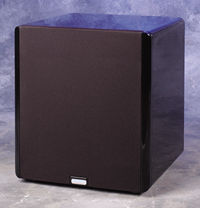
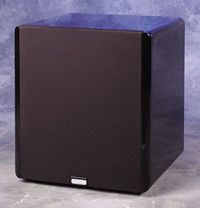
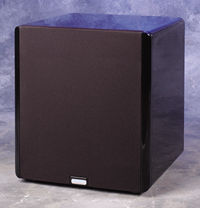
It's common to read ads for new audio hardware that crow about "revolutionary" breakthroughs in sound performance, and that's how Velodyne crowed about their new Digital Drive DD-18, servo-controlled, powered 18" subwoofer. The ads suggested that the DD-18 can be digitally equalized to one's room with a resultant in-room frequency response of 20-200Hz, ±3dB.
Velodyne Digital Drive DD-18 powered subwoofer Specifications
It's common to read ads for new audio hardware that crow about "revolutionary" breakthroughs in sound performance, and that's how Velodyne crowed about their new Digital Drive DD-18, servo-controlled, powered 18" subwoofer. The ads suggested that the DD-18 can be digitally equalized to one's room with a resultant in-room frequency response of 20-200Hz, ±3dB.
Velodyne Digital Drive DD-18 powered subwoofer Page 2
It's common to read ads for new audio hardware that crow about "revolutionary" breakthroughs in sound performance, and that's how Velodyne crowed about their new Digital Drive DD-18, servo-controlled, powered 18" subwoofer. The ads suggested that the DD-18 can be digitally equalized to one's room with a resultant in-room frequency response of 20-200Hz, ±3dB.