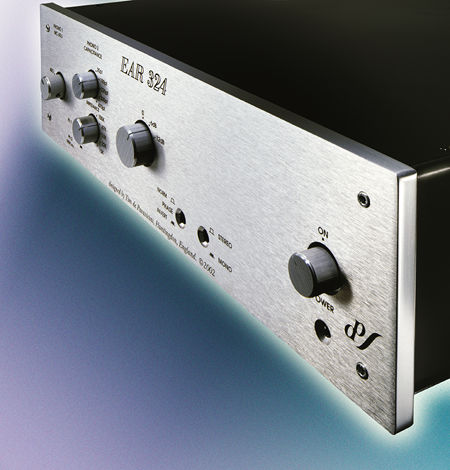
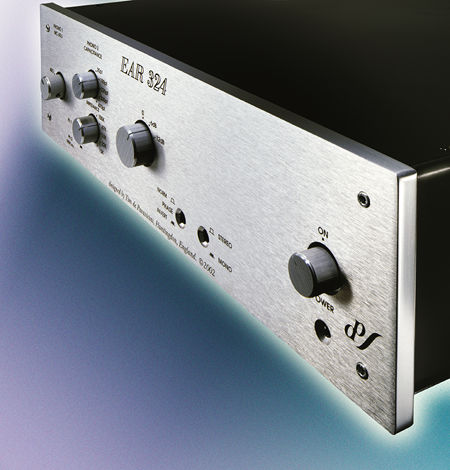
When we last heard from Englishman <A HREF="http://www.stereophile.com/interviews/990paravicini">Tim de Paravicini</A>, whose <A HREF="http://www.stereophile.com/amplificationreviews/404ear">EAR 890</A> amp I reviewed in <I>Stereophile</I>'s April 2004 issue, the veteran audio designer suggested that he could make a transistor amplifier equal in performance to any of his successful tube designs. Whatever else it may be, the new EAR 324 is my first chance to test that claim: a stereo phono preamplifier without a single tube in sight. It isn't TdP's first all-solid-state product: That would be the line-plus-phono EAR 312 preamplifier, introduced to no small fanfare a little over three years ago. For all intents and purposes, the 324 is a standalone version of the phono section of that $18,000 flagship: The designs are virtually identical—excepting, of course, their casework and power supplies.
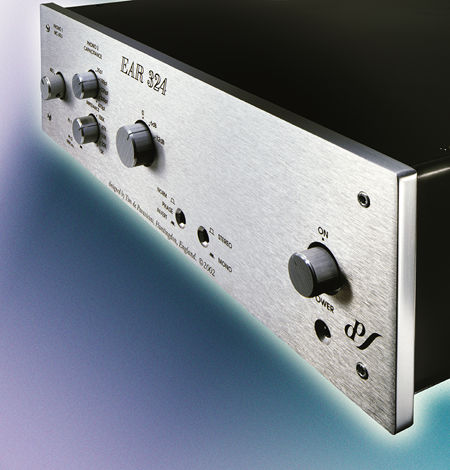
When we last heard from Englishman <A HREF="http://www.stereophile.com/interviews/990paravicini">Tim de Paravicini</A>, whose <A HREF="http://www.stereophile.com/amplificationreviews/404ear">EAR 890</A> amp I reviewed in <I>Stereophile</I>'s April 2004 issue, the veteran audio designer suggested that he could make a transistor amplifier equal in performance to any of his successful tube designs. Whatever else it may be, the new EAR 324 is my first chance to test that claim: a stereo phono preamplifier without a single tube in sight. It isn't TdP's first all-solid-state product: That would be the line-plus-phono EAR 312 preamplifier, introduced to no small fanfare a little over three years ago. For all intents and purposes, the 324 is a standalone version of the phono section of that $18,000 flagship: The designs are virtually identical—excepting, of course, their casework and power supplies.
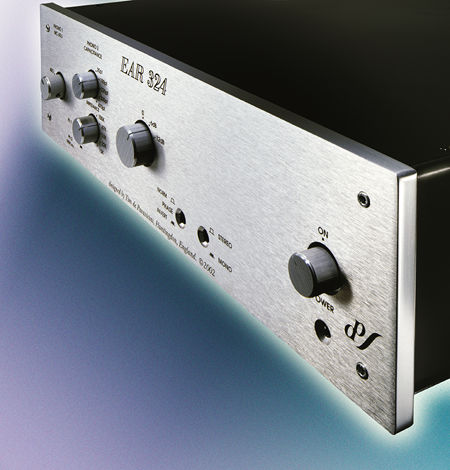
When we last heard from Englishman <A HREF="http://www.stereophile.com/interviews/990paravicini">Tim de Paravicini</A>, whose <A HREF="http://www.stereophile.com/amplificationreviews/404ear">EAR 890</A> amp I reviewed in <I>Stereophile</I>'s April 2004 issue, the veteran audio designer suggested that he could make a transistor amplifier equal in performance to any of his successful tube designs. Whatever else it may be, the new EAR 324 is my first chance to test that claim: a stereo phono preamplifier without a single tube in sight. It isn't TdP's first all-solid-state product: That would be the line-plus-phono EAR 312 preamplifier, introduced to no small fanfare a little over three years ago. For all intents and purposes, the 324 is a standalone version of the phono section of that $18,000 flagship: The designs are virtually identical—excepting, of course, their casework and power supplies.
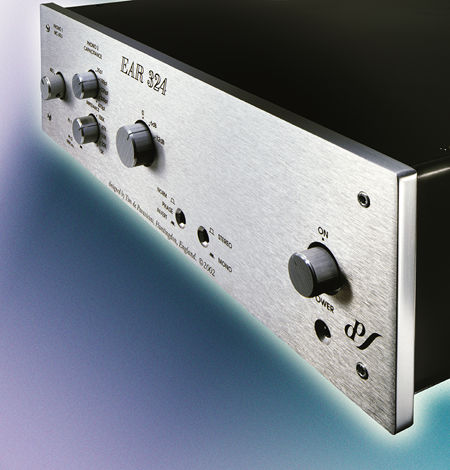
When we last heard from Englishman <A HREF="http://www.stereophile.com/interviews/990paravicini">Tim de Paravicini</A>, whose <A HREF="http://www.stereophile.com/amplificationreviews/404ear">EAR 890</A> amp I reviewed in <I>Stereophile</I>'s April 2004 issue, the veteran audio designer suggested that he could make a transistor amplifier equal in performance to any of his successful tube designs. Whatever else it may be, the new EAR 324 is my first chance to test that claim: a stereo phono preamplifier without a single tube in sight. It isn't TdP's first all-solid-state product: That would be the line-plus-phono EAR 312 preamplifier, introduced to no small fanfare a little over three years ago. For all intents and purposes, the 324 is a standalone version of the phono section of that $18,000 flagship: The designs are virtually identical—excepting, of course, their casework and power supplies.
When we last heard from Englishman <A HREF="http://www.stereophile.com/interviews/990paravicini">Tim de Paravicini</A>, whose <A HREF="http://www.stereophile.com/amplificationreviews/404ear">EAR 890</A> amp I reviewed in <I>Stereophile</I>'s April 2004 issue, the veteran audio designer suggested that he could make a transistor amplifier equal in performance to any of his successful tube designs. Whatever else it may be, the new EAR 324 is my first chance to test that claim: a stereo phono preamplifier without a single tube in sight. It isn't TdP's first all-solid-state product: That would be the line-plus-phono EAR 312 preamplifier, introduced to no small fanfare a little over three years ago. For all intents and purposes, the 324 is a standalone version of the phono section of that $18,000 flagship: The designs are virtually identical—excepting, of course, their casework and power supplies.
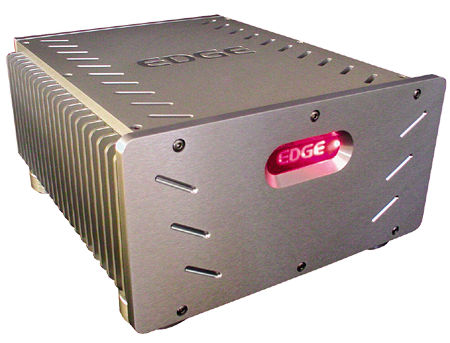
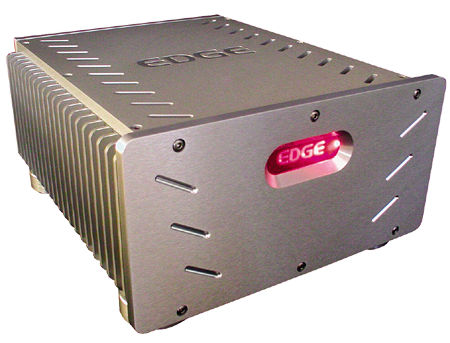
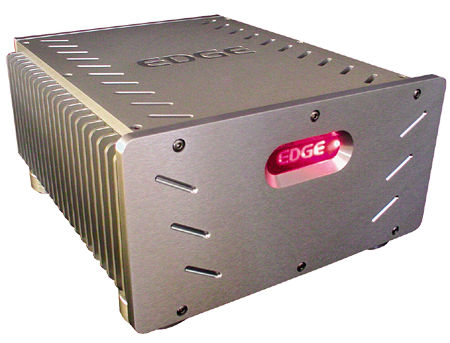
Consider the plight of solid-state muscle amps. Often derided as brutes lacking sophistication or subtlety, particularly by the SET set (<I>ie</I>, fans of single-ended triodes), these powerhouses are taken for granted and often, like Rodney Dangerfield, they get no respect. And once upon a time, the stereotypes were true. Every veteran audiophile has at some time heard an immensely powerful transistor amp that had the soft sonic allure of a sheet of sandpaper, a lumbering oaf of a component with nothing whatsoever to recommend it save for a bulging set of mighty moose muscles.
Consider the plight of solid-state muscle amps. Often derided as brutes lacking sophistication or subtlety, particularly by the SET set (<I>ie</I>, fans of single-ended triodes), these powerhouses are taken for granted and often, like Rodney Dangerfield, they get no respect. And once upon a time, the stereotypes were true. Every veteran audiophile has at some time heard an immensely powerful transistor amp that had the soft sonic allure of a sheet of sandpaper, a lumbering oaf of a component with nothing whatsoever to recommend it save for a bulging set of mighty moose muscles.
Consider the plight of solid-state muscle amps. Often derided as brutes lacking sophistication or subtlety, particularly by the SET set (<I>ie</I>, fans of single-ended triodes), these powerhouses are taken for granted and often, like Rodney Dangerfield, they get no respect. And once upon a time, the stereotypes were true. Every veteran audiophile has at some time heard an immensely powerful transistor amp that had the soft sonic allure of a sheet of sandpaper, a lumbering oaf of a component with nothing whatsoever to recommend it save for a bulging set of mighty moose muscles.
Consider the plight of solid-state muscle amps. Often derided as brutes lacking sophistication or subtlety, particularly by the SET set (<I>ie</I>, fans of single-ended triodes), these powerhouses are taken for granted and often, like Rodney Dangerfield, they get no respect. And once upon a time, the stereotypes were true. Every veteran audiophile has at some time heard an immensely powerful transistor amp that had the soft sonic allure of a sheet of sandpaper, a lumbering oaf of a component with nothing whatsoever to recommend it save for a bulging set of mighty moose muscles.
Consider the plight of solid-state muscle amps. Often derided as brutes lacking sophistication or subtlety, particularly by the SET set (<I>ie</I>, fans of single-ended triodes), these powerhouses are taken for granted and often, like Rodney Dangerfield, they get no respect. And once upon a time, the stereotypes were true. Every veteran audiophile has at some time heard an immensely powerful transistor amp that had the soft sonic allure of a sheet of sandpaper, a lumbering oaf of a component with nothing whatsoever to recommend it save for a bulging set of mighty moose muscles.