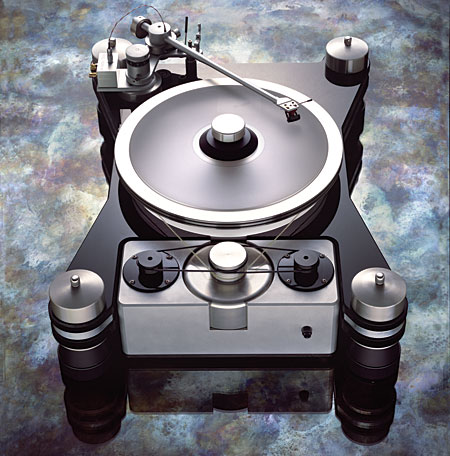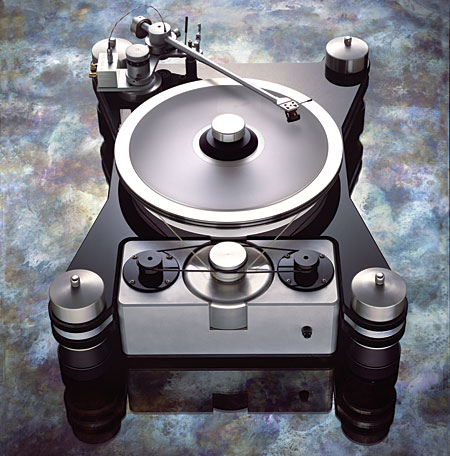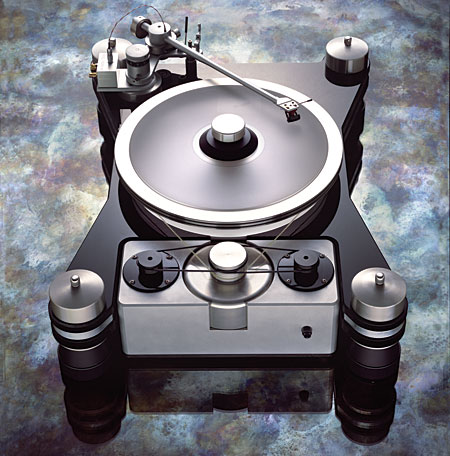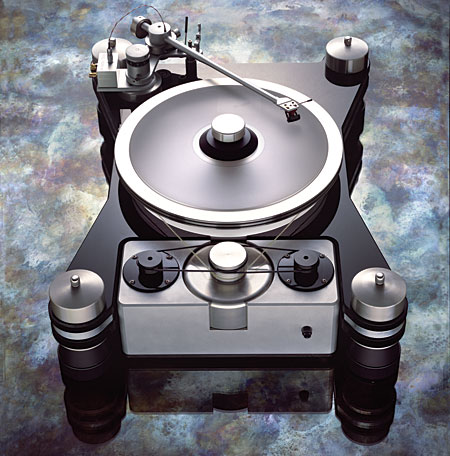
VPI Industries' TNT turntable and JMW Memorial tonearm have evolved through several iterations over the last two decades. Some changes have been large, such as the deletion of the three-pulley subchassis and the introduction of the SDS motor controller. Others have been invisible—a change in bearing or spindle material, for example, or the way the bearing attaches to the plinth. And, as longtime <I>Stereophile</I> readers know, I've been upgrading and evolving along with VPI, most recently reporting on the <A HREF="http://www.stereophile.com/turntables/498">TNT V-HR turntable</A> (<I>Stereophile</I>, December 2001).
On Monday, May 22, federal judge Naomi Reice Buchwald granted final approval to the settlement of the class action suit brought against Sony BMG for embedding intrusive and crippling digital rights management (DRM) software into its CDs. Not only did the software load secretly onto users' computers, it opened them to malware invasions, in addition to reportedly sending Sony information about consumers' computers.
It was announced this week that Hans Fantel, a founding editor of <I>Stereo Review</I> and long-time consumer electronics columnist at <I>The New York Times</I>, died in early May from injuries sustained in a automobile accident.
Yes, it's the same Canon—the Japanese photography, photocopier, and laser-printer giant whose logo for so many years adorned the rear wings of Williams Formula 1 racing cars. Canon's venture into the unknown waters of audio was instigated by the head of the UK-based research center, Hiro Negishi. I have been seeing Negishi-san, one of the world's leading minds in optical technology, at Audio Engineering Society conventions since the early '80s, so I was only half-surprised to see Canon launch first one loudspeaker, then a full range (footnote 1).