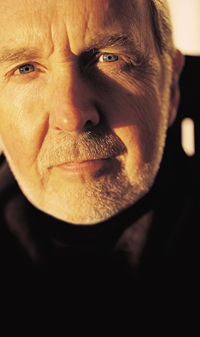
Tom Jung's career has been dotted with numbers. In 1969, he and a partner founded Sound 80, a Minneapolis recording studio named by an advertising wizard who had previously conjured up the appellation Cure 81 for a Hormel ham, supposedly while sipping Vat 69 scotch. Some years later, engineers from another Midwestern company with a numeral in its name, 3M, stopped by with an experimental tape recorder that also employed digits. Those zeros and ones proved critical to the recordings Jung went on to engineer and produce at his next company, Digital Music Products, better known as DMP.
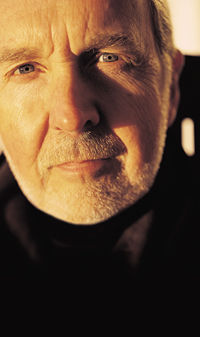
Tom Jung's career has been dotted with numbers. In 1969, he and a partner founded Sound 80, a Minneapolis recording studio named by an advertising wizard who had previously conjured up the appellation Cure 81 for a Hormel ham, supposedly while sipping Vat 69 scotch. Some years later, engineers from another Midwestern company with a numeral in its name, 3M, stopped by with an experimental tape recorder that also employed digits. Those zeros and ones proved critical to the recordings Jung went on to engineer and produce at his next company, Digital Music Products, better known as DMP.
Placette Audio Remote Volume Control passive preamplifier Brian Damkroger, January 2006
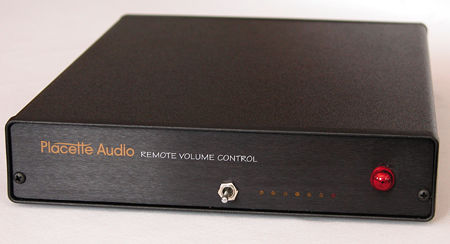
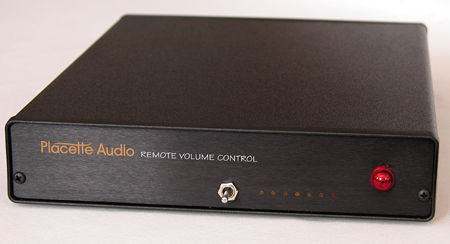
The Placette Audio Remote Volume Control is simplicity itself: a paperback-sized black box with one set of unbalanced inputs and outputs, a toggle switch (and a remote) to change the level, and a row of LEDs that light up to indicate the relative volume level. The signal path, too, is simple, with only a stepped attenuator between input and output. But this is not just any attenuator—it's a 125-step model built entirely with super-premium Vishay S-102 foil resistors.
Placette Audio Remote Volume Control passive preamplifier Specifications
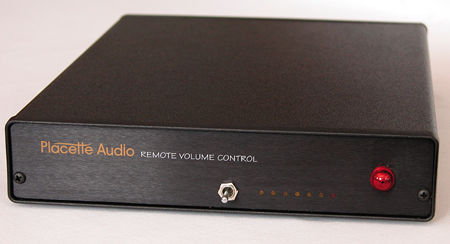
The Placette Audio Remote Volume Control is simplicity itself: a paperback-sized black box with one set of unbalanced inputs and outputs, a toggle switch (and a remote) to change the level, and a row of LEDs that light up to indicate the relative volume level. The signal path, too, is simple, with only a stepped attenuator between input and output. But this is not just any attenuator—it's a 125-step model built entirely with super-premium Vishay S-102 foil resistors.
Placette Audio Remote Volume Control passive preamplifier
Jun 27, 2004First Published:Jun 01, 2004
The Placette Audio Remote Volume Control is simplicity itself: a paperback-sized black box with one set of unbalanced inputs and outputs, a toggle switch (and a remote) to change the level, and a row of LEDs that light up to indicate the relative volume level. The signal path, too, is simple, with only a stepped attenuator between input and output. But this is not just any attenuator—it's a 125-step model built entirely with super-premium Vishay S-102 foil resistors.
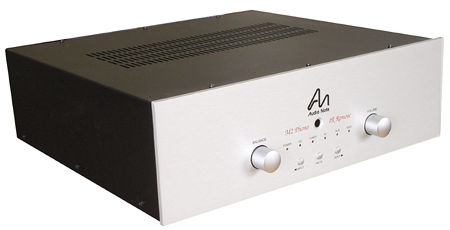
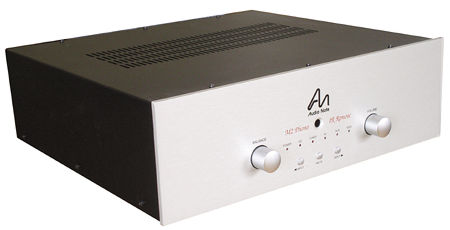
The first time I heard an Audio Note preamp was seven or eight years ago, when I sampled their entry-level M1—a refreshingly musical thing that brought the same kind of color and drama to preamplification that Audio Note's more famous products brought to the driving of speakers. And the M1 cost only $1250 at the time, with phono stage. (Newcomers, please don't wince: That's awfully cheap for what it was.)
The first time I heard an Audio Note preamp was seven or eight years ago, when I sampled their entry-level M1—a refreshingly musical thing that brought the same kind of color and drama to preamplification that Audio Note's more famous products brought to the driving of speakers. And the M1 cost only $1250 at the time, with phono stage. (Newcomers, please don't wince: That's awfully cheap for what it was.)
The first time I heard an Audio Note preamp was seven or eight years ago, when I sampled their entry-level M1—a refreshingly musical thing that brought the same kind of color and drama to preamplification that Audio Note's more famous products brought to the driving of speakers. And the M1 cost only $1250 at the time, with phono stage. (Newcomers, please don't wince: That's awfully cheap for what it was.)
The first time I heard an Audio Note preamp was seven or eight years ago, when I sampled their entry-level M1—a refreshingly musical thing that brought the same kind of color and drama to preamplification that Audio Note's more famous products brought to the driving of speakers. And the M1 cost only $1250 at the time, with phono stage. (Newcomers, please don't wince: That's awfully cheap for what it was.)
The first time I heard an Audio Note preamp was seven or eight years ago, when I sampled their entry-level M1—a refreshingly musical thing that brought the same kind of color and drama to preamplification that Audio Note's more famous products brought to the driving of speakers. And the M1 cost only $1250 at the time, with phono stage. (Newcomers, please don't wince: That's awfully cheap for what it was.)