Jimmy Smith: 1928–2005
We were saddened to learn that the great jazz organist Jimmy Smith died in his sleep on February 8. He was 76.


We were saddened to learn that the great jazz organist Jimmy Smith died in his sleep on February 8. He was 76.
EMI drops: The EMI Group, the British music company, sent its stock prices plummeting 16% with its announcement last week that sales for the fiscal year ending next month would be as much as 9% below those of last year.
At last week's International Solid-State Circuits Conference, IBM, Toshiba, and Sony unveiled details of their new Cell processor chip—a device that <I>The New York Times</I> proclaimed would create "a new digital computing ecosystem that includes Hollywood, the living room and high-performance scientific and engineering markets."
On the face of it, 99¢ per track low-rez music downloads don't seem like a good deal. For the same price, or maybe even less, you can get an entire CD of the same music, along with a booklet, and without the Digital Rights Management crippleware that hobbles paid downloads.
Responses were surprisingly evenly distributed in last week's Vote, so this week we'll focus on your AC outlets and wiring. Have you upgraded your AC path from the pole to the socket you plug your equipment into?
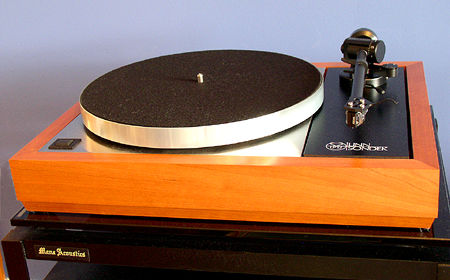
It's a strange sort of progress: As culture and commerce evolve, most people look for simple, easy solutions to their needs. Enthusiasts, however, go out of their way to complicate matters, often choosing products that are expensive and difficult to use. Nowhere is this more obvious than in the world of home audio, where typical consumers have embraced the notion of smallish, self-contained music systems—yet audiophiles, who are surely as crazy as bedbugs, seem bent on parsing an ever-increasing number of individually distinct products from the basic concept of a music system.
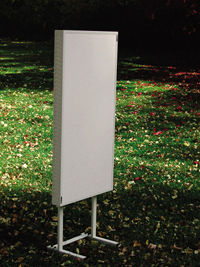
Along with speakers and their placement, the greatest influence on the sound of a music system are the acoustics of the room itself. With two-channel stereo, some reflections and reverberations are necessary in order to maintain the perception that one is listening in a real space. So, while many experts recommend having a "dead" end behind and near the speakers that absorbs most sound, few suggest such treatment for the rest of the room. With too few sonic reflections, the stereo image would narrow; without the aid of "room gain" to enrich the bass, the sounds of instruments and voices would be thin. Listening in an anechoic chamber is interesting and informative, but far from pleasurable.
<I>"Most people really don't like music—they just like the way it sounds"</I>

<B>Hasil Adkins: <I>Out to Hunch</I></B><BR>
Norton Records (no catalog # whatso-a-ever) LP, no CD. No producer, no engineer, no studio, no stereo, no mikes that weren't carbon police dispatcher models, no other people at all in fact—just Hasil Adkins, vocals and guitars and one-man drums and some weird rhythmic screeching that may or may not be LP surface noise. TT: infinite, as I can't stop hearing it in my head hours after I raised the needle off it.<BR>To order, send $10 to <A HREF="http://www.nortonrecords.com">Norton Records</A>, Box 646, Cooper Station, New York, NY 10003. If you don't, you shall burn in hellfire eternal. <A HREF="http://members.tripod.com/~Hasil_Adkins/">Hasil Adkins Fan Club</A>; <A HREF="http://www.grandrapidsrocks.com/haze">Hasil Adkins Headquarters</A>.

<B>U2: <I>How To Dismantle An Atomic Bomb</I></B><BR>
Interscope B0003613-02 (CD). 2004. Steve Lillywhite, prod.; Carl Glanville, eng.; Brian Eno, Daniel Lanois, Chris Heaney, others, asst. engs. AAD? TT: 49:08<BR>
Performance <B>****½</B><BR>
Sonics <B>****</B>